Category Archives: Uncategorized

Art and About: Motherhood


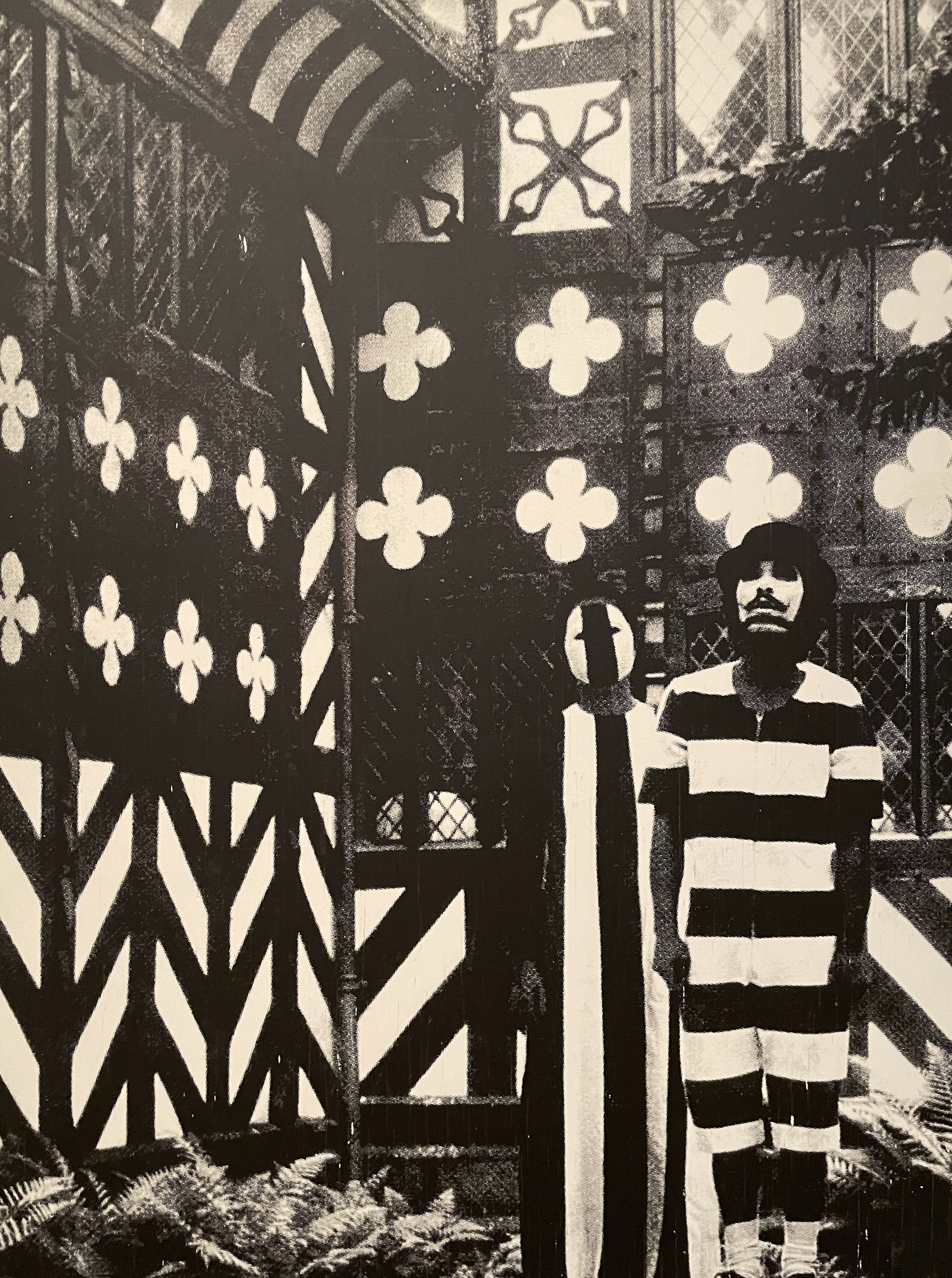
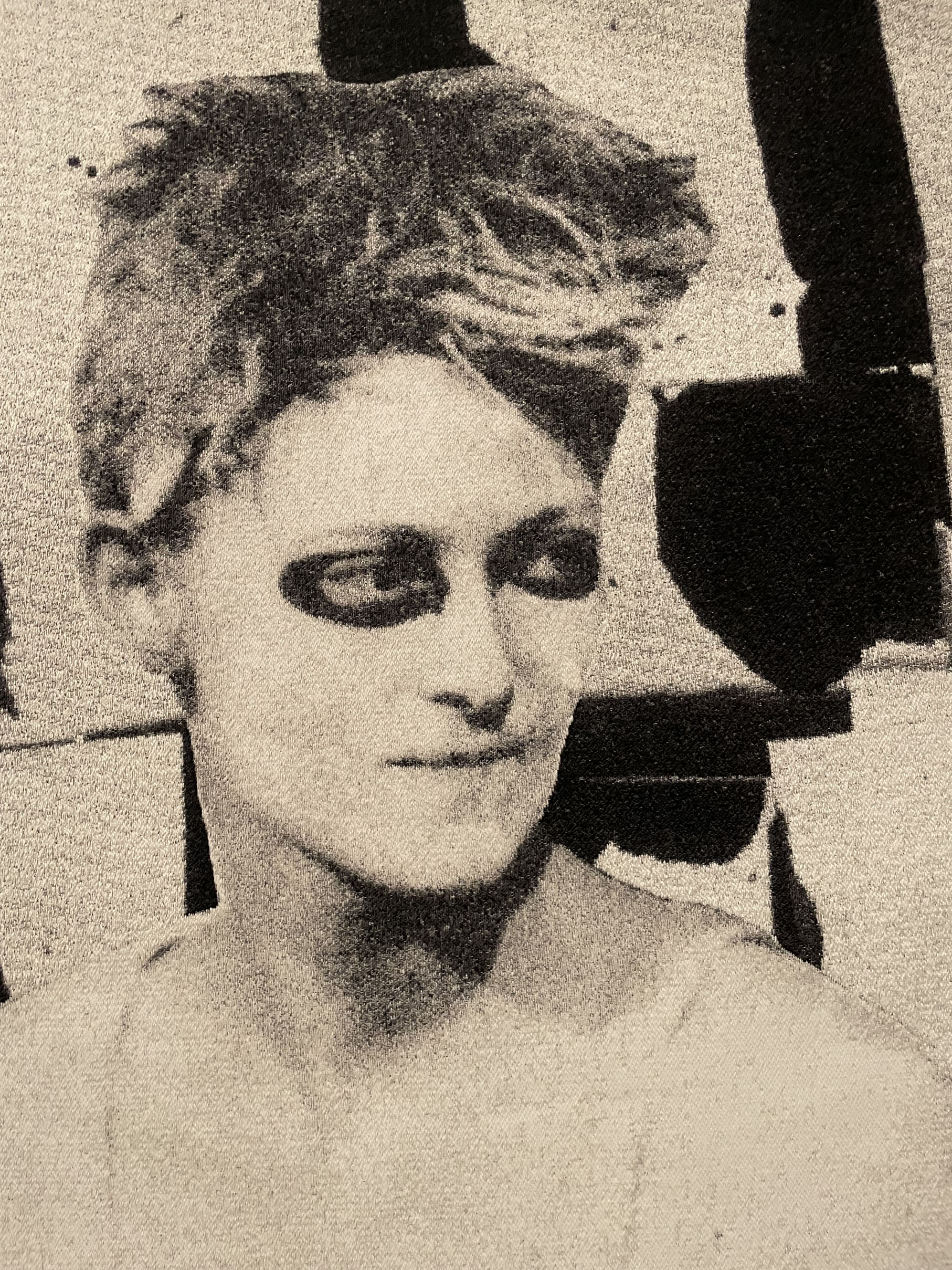
Detail from Anguish (Fr. Angoisse) by August Friedrich Schenck. 

As a Mother and Artist, I was keen to see the National Gallery of Victoria’s newly curated exhibition from their collection, Mother.

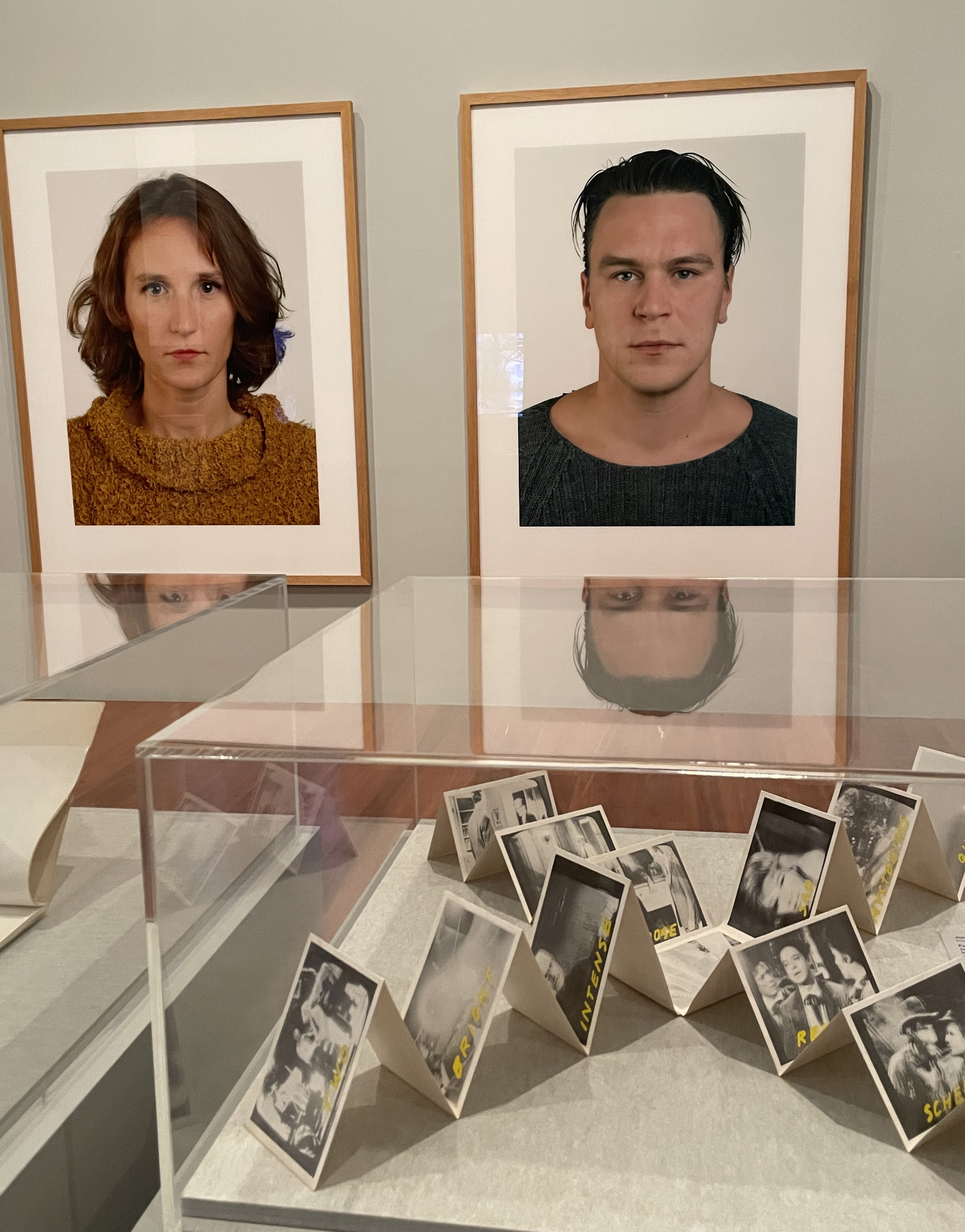
Before entering, I see a wall that reads, ‘It is tough to be a Mother’ – Tracey Moffatt, 2009.  OK, this is not going to be a religious-led Madonna and Child iconography showcase or images of the romanticised mother.  Entering an a/v room, falling into a bean bag, I watched a twenty minute montage of memorable images from film and television, a collaboration between Tracey Moffatt and Gary Hillberg. It was stirring, poignant, and then some well-known comedy mothers with child.

          
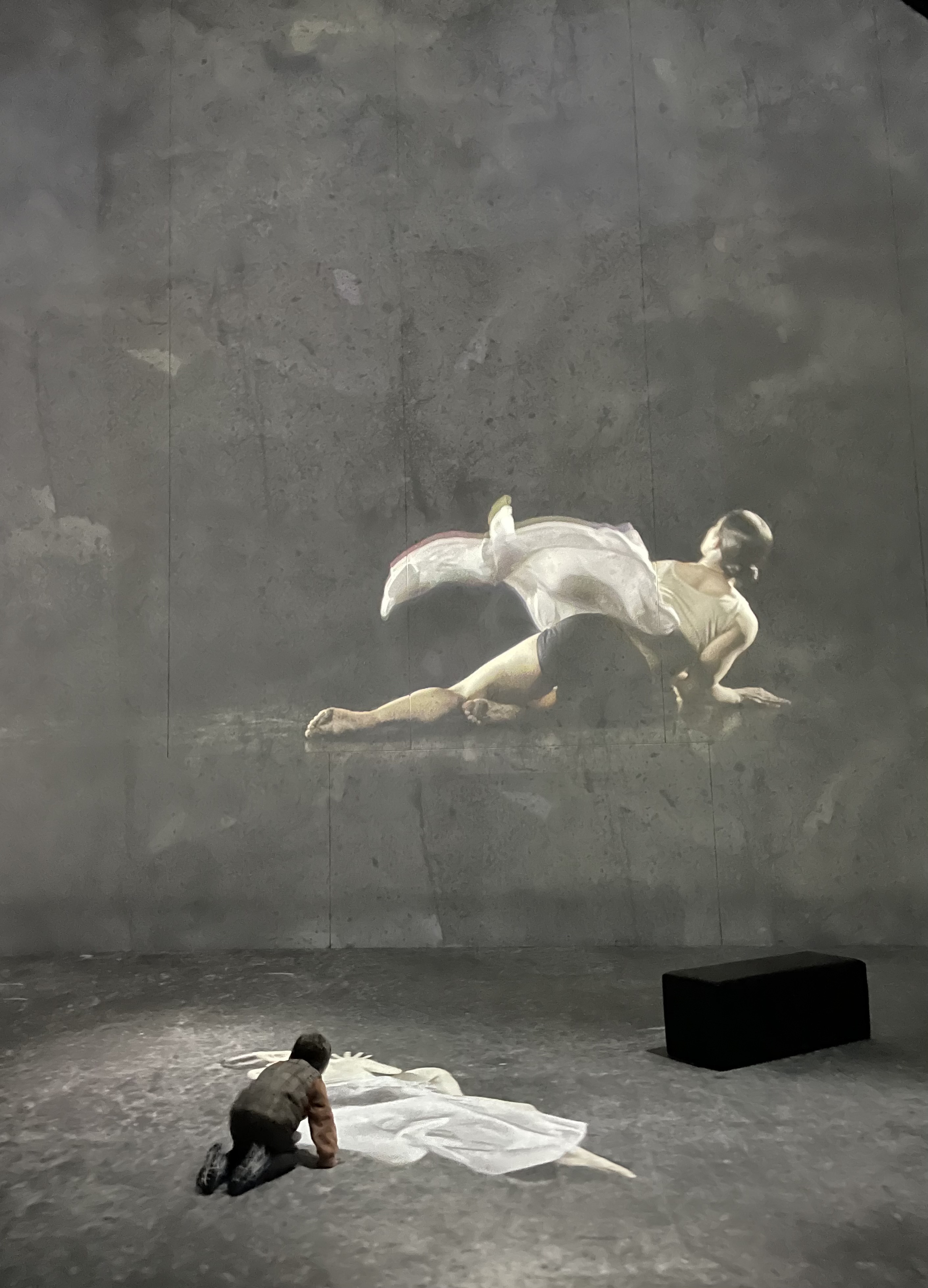
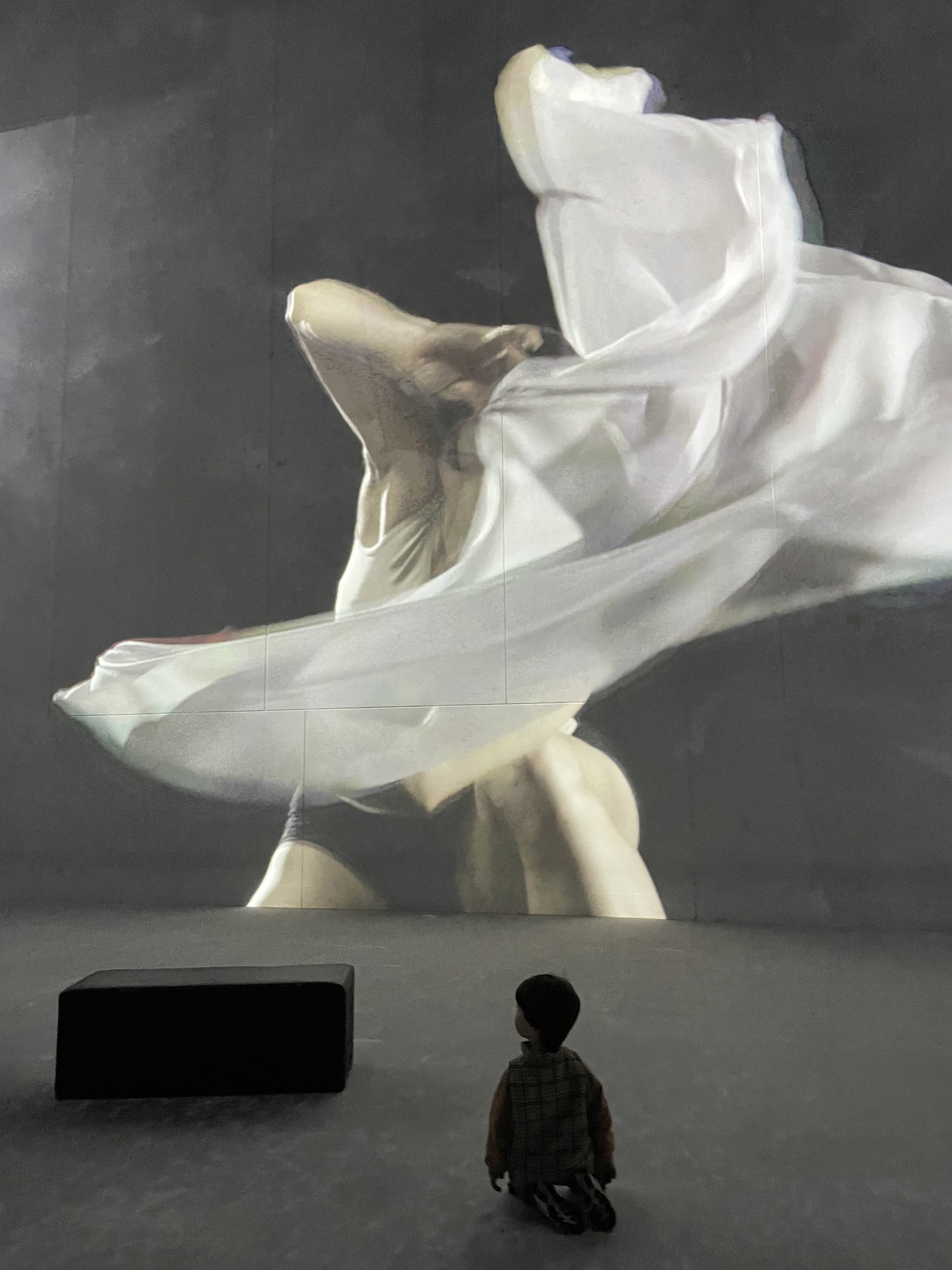
Photos:  Film and television “mother’ scenes from Tracey Moffatt and Gary Hillberg.

“Mother” covers the breadth and maternal breath from pregnancy through birth, love, loss, grief. It is a commanding exhibition.

Religious works are included. Jesus and his mother Mary are perhaps the most well-known mother and son across Christian Western and Eastern worlds.  There are many throughout art history. The descent from the cross interests me, seeing how an artist will interpret Mary when her son is placed in her arms after being crucified. Usually, her face is sorrowful, forlorn, eyes downcast as in (German-Flemish artist) Hans Memling’s The Man of Sorrows in the arms of the Virgin in oils and gold leaf on a wood panel.  It’s a beautiful artwork.

The “descent” image that has stayed with me is in Basilica of Montserrat outside Barcelona. Unusually, Mary’s eyes look upwards, despairing, asking “why?”.  It’s compelling.
     
Photos:  Flanders “The Virgin and Child”; Bernardo Cavallino “The Virgin Annunciate”; Hans Memling “The Man of Sorrows in the arms of the Virgin”:  (not in exhibition)  Basilica of Montserrat, Barcelona. 

Lullaby
To me, a lullaby is a gentle song, often while cradling your baby, or singing them to sleep. John Henry Lorimer’s Lullaby portrays a typical upper class Victorian setting, when nannies were responsible for raising the children from the time of birth. His painting depicts the artist’s family nanny, watching over his newly born nephew.

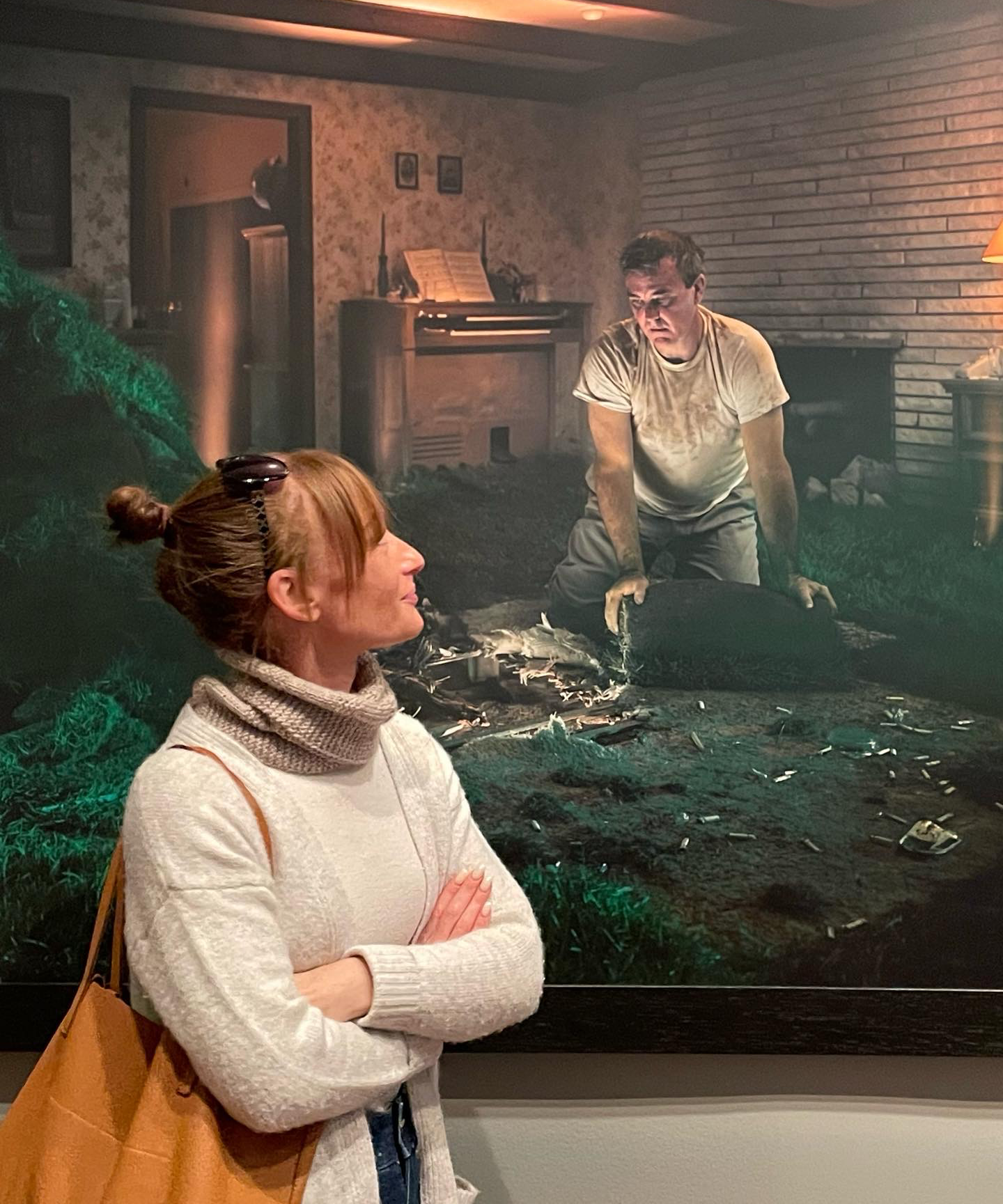
In shocking contrast, Karla Dickens’ The Weight of Grief illustrates our shameful ‘stolen generation’ history. An indigenous mother falls to her knees as her baby is taken away by a white man.   Alongside the artwork, is Karla’s lullaby-like poem, Lost Milk (below).
     
Photos:  John Henry Lorimer “Lullaby”; Karla Dickens “The Weight of Grief”

Lost Milk
Hush a-bye
the glowing moon lights sad songs
across old countries
sinking in shallow sleep
dreams of endless lost
I hold you in my arms
Hush a-bye
the new moon rises over dry tears
across old rivers
for my sweet lonely one
hidden by strange lands
I hold you in my arms
Hush a-bye
the dark moon grieves
across old western skies
connected to my breast
crying to unknown smiles
I hold you in my arms
Hush a-bye
the blue moon weeps
across old barren valleys
searching for your smell
cords wrapped around deep wombs
I hold you in my arms
Hush a-bye
the waxing moon searches
across old warrior paths
nestling arching breasts
memories keep eye contact
I hold you in my arms
Hush a-bye lullaby
never goodbye
I hold you in my arms
Karla Dickens

MY MOTHER, MY CHILD
Exhibiting more than 200 artworks, Mother is an intelligent and emotional journey that crosses cultures and generations.  If is difficult to select only a couple of artworks to grasp this, but here are a couple that resonated with me:

David Mowaijarlai I am Banggai”  (natural pigments on canvas).  This is his own conception relative to his Ngarinyin beliefs that a child’s spriit lives in waterholes until found by their mother. The spirit child calls out to the mother in a dream before entering her womb. What a remarkable tribute to his mother, so deeply moving.

David HockneyMy Mother with a Parrot.” (etching and aquatint).  Everything Hockney does impresses.  This is an engaging sketch, and I’m a bird lover. I could have afternoon tea with his mum.

George Browning Marsupial Mother” (oil on paper on cardboard). Animals are represented in the exhibition.  The deep earthy tones and textures, a mother keeping her babies safe underground, leaped out at me.
       
Photos: David Mowaijarlai “I am Banggai”; David Hockney “My Mother with a Parrot.”; George Browning “Marsupial Mother”

THE DEPTHS OF MOTHERHOOD
Some of the language and descriptive images in the Mother exhibition is intense: anger, silenced, trauma, invisible.

“Entre’acte”. Hayley Millar Baker writes, “She is conditioned to suppress her emotions, project strength and persevere in a society that offers little space or understanding for her experiences.”

Joanne Leonard’s 29 pc collage prints, “Journal of a Miscarriage” is palpable as you walk through her pain.

Judith Wright’sA Journey” is a procession of figures made from various objects, representing the death of her young daughter.  The installation envisages a life beyond her personal loss.

Anguish” by August Friedrich Schenck is usually housed across the road in NGV’s International 19thC salon. It is one of the gallery’s earliest acquisitions. Painted in oils (1878) Anguish is large and startling. A ewe stands over her dead lamb as an ominous murder of crows encircles them (detail above).
        
Photos: Hayley Millar Baker “Entre’acte”’; Joanne Leonard “Journal of a Miscarriage” (2 images); Judith Wright “A Journey”; August Friedrich Schenck “Anguish”.

I sketched Davida Allen’s colourful “Baby”

Photo: Gallery sketching

The exhibition is a deep exploration of the many parts that make a “Mother”.  At the Ian Potter Centre: NGV Australia, Fed Square, Level 3, until 26 July 2026.

Yvonne Koolmatrie
“This is for all mothers who just want to keep their babies close and safe.”

Photo: Yvonne Koolmatrie “Weaver’s baby in coolamon”.

© 2026 text and photography Pamela Reid


Mother Earth: First Nations art at NGV Australia


Photo: NGV Australia’s Wurrdha Marra 

Exploding with cultural impact, NGV Australia’s Wurrdha Marra (‘Many Mobs’ in the Wurundjeri Woi Wurrung language) gallery space is breathtaking.  These vast and vibrant works from First Nations peoples are stop you in your tracks symbolic, storytelling of past and present. Artworks include both recognised and emerging artists.  Stylistically too there are new, bolder forms of expression while retaining traditional iconography and practices.

One gallery holds Timo Hogan’s large black & white salt lake landscapes of his sacred ancestral territory, Lake Baker in Western Australia.


Photo: Timo Hogan “Lake Baker”

Lindsay Harris’ “Ngan-karlap Coaring (My place Kwolyin)” painting is striking. He grew up in Kwolyin (WA), a once thriving community, now deserted. This work Some Cry Longer than Others #2 depicts a remembered home landscape. Gosh it’s good, I was immobilised with admiration!


Photo: Lindsay Harris  Some Cry Longer than Others #2

In the quiet of The Artist Room, there’s a collection titled “The Colour of Memory” by Sally Gabori. The exhibition commemorates ten years since (Mirdidingkingathi Juwarnda) Gabori passed away. I sat in the dark, in awe, contemplating the authenticity in narrative.
          
Photos: Sally Gabori’s “Colour of Memory”

The Sally Gabori “Colour of Memory” Exhibition is on until 26 August.

The Bark Salon
As if there wasn’t enough wonder in Wurrdha Marra, at the back of the gallery is The Bark Salon – over 150 works, inspiration in abundance requiring time to take it all in.

Bark painting is significant in preserving Aboriginal culture. Traditionally on bark from eucalyptus trees, these paintings have meanings for identity, storytelling of creation, ancestral beings, social structures, as well as for burial rituals and other ceremonies.

With the eucalypt bark as ‘canvas’, natural ochres, minerals and clays are used for pigments. Brushes too are made from bark, along with natural materials including human hair for painting detail.

Historically prominent in Arnhem Land, bark painting has expanded amongst First Nations artists into a wider creative form of much interest to museums, galleries and collectors.  While maintaining traditional methods, contemporary artists incorporate other techniques and materials such as acrylic and polymer paints.
          
Photos:  The Bark Salon

I’m going back. I want to sit in The Bark Salon with a sketch pad, focussing on what individually captivates, learning from the textures and brushstrokes.

Wurrdha Marra is at The Ian Potter Centre: NGV Australia
Ground Level.  Open daily 10am–5pm    www.ngv.vic.gov.au

“We were born on the Manta, 
born on the Earth.
And never mind our country is in the desert, that’s where we belong,
in the beautiful desert country.
The learning isn’t written on paper…
…we carry it instead in our heads and we’re talking from our hearts, for the land.”
Fighting for Culture – Emily Munyunkga Austin
“Elders” – Wisdom from Australia’s Indigenous Leaders


Photo: Art in Wurrdha Marra, The Ian Potter Centre: NGV Australia


© 2025 text and photography Pamela Reid


Art and about: Going to the Chapel (part one)


Photo: Hazel & Thomas marry on the Isle of Man, 2017

Religion, romance, art and architectural history, the chapel (from the Latin capella), is a small place of worship with an altar, usually inside a larger church.  I’ve unashamedly named this blog after The Dixie Cups’ 1964 pop song “Going to the Chapel” to write about going to church.

Growing up Catholic meant prayers, confession, communion, learning Latin and always the weekly gathering at Sunday Mass (we were threatened with damnation if we didn’t attend). Life and times evolved, bringing education in theology and art history. Travelling had new significances and understanding.  Family life meant the happiest and saddest of occasions in church: weddings, baptisms and funerals.

In country areas, the Chapel gathers communities. Fictionally, it inspires literature, movies and television series where we see small-town gossip, trickery, murders (lots) and menacing in surrounding graveyards late at night.

Churches and their history fascinate me. They plot much of my life’s learnings and travels. Going to the Chapel Part One blogs about memorable times in Britain.

Crosthwaite Church, Keswick, Lakes District, UK
Keswick on Derwentwater is “where my heart sings”.  I’ve visited many times since living in UK during the 70s, gratified by the breadth of water, might of Skiddaw, picturesque village and surrounds. While I roam the landscape, there’s looming fells for the serious hikers.

My morning walks often lead me through the village to Crosthwaite (St Kentigern) Church. It’s a solid looking building, with square tower and one hour hand only. Robert Southey (Poet Laureate) is buried in the graveyard.

St Kentigern (known at St Mungo in Scotland) was driven out of Glasgow by a pagan prince and set up his cross in a clearing or “thwaite’ in 553AD, hence Crosthwaite. Nothing remains of the earliest church. There have been several re-constructions, with the present church being built in 1523 and further restored in 1844.

On one trip in 2005, Melbourne friend, Sheri, and I attended a Sunday morning service. It felt like a scene from The Vicar of Dibley. With a total congregation of nine, we were by far the youngest. An experience to remember, we wrote in the visitors book. Twelve years later, re-visiting Keswick, I searched for our signatures – and found them, 9th October!

In the ringing chamber, under the tower, is this delightful verse (in part):

He who in ringing interrupts a Peal,
For such an offence shall pay a Quart of Ale.
In falling Bells one penny must be paid,
By him who stops before the signals made.
And he who takes Gods holy Name in vain,
Shall pay one Shilling and this Place refrain.
You ringers all take care, you must not fail,
To have your forfeitures spent in Ale.
With Heart upright let each true Subject ring,
For Health and Peace, to Country, Church, & King.
         
Photos: Welcome to Keswick; Derwentwater; lofty Skiddaw; pathway to Crosthwaite Church with one-hour hand in the bell tower; the altar; Sheri and I signed the visitors book.

Rosslyn Chapel, Scotland
Perhaps better known from Dan Brown’s The Da Vinci Code – several movie scenes were filmed here – Rosslyn Chapel is a bit spooky.   Photography isn’t allowed inside, but visitors are sent on a mystery history tour, hunting for gargoyles, symbolisms of death and devils, lovers and knights.

Founded in 1446 by Sir William St Clair, Rosslyn Chapel is in Midlothian, less than half an hour’s drive from Edinburgh.   A medieval landmark, it is predominantly Gothic architecture, with rising flying buttresses, intricate stonemason works on the exterior.

Inside too, is an abundance of stonework throughout the crypt, baptistery, Lady Chapel, aisles and around the alter. The pillars and almost every stone tell a story. It is amassed with master craftmanship.  How many green men can you find? visitors are asked.  There’s around 100 of these eerie-but-cheeky faces, with leafy surrounds. Their meaning is varied from great goodness to significant evil, the foliage representing nature, growth and fertility.  Perhaps that’s why the face has ‘mixed messages’?
(Photos from the Chapel interior and the green man are from the internet.)

While Rosslyn always held mystical and historical intrigue, the release of The Da Vinci Code brought international curiosity.  Dan Brown wrote, “When I decided to write The Da Vinci Code, I knew that its finale would have to take place at the most mysterious and magical chapel on earth, Rosslyn.”  The book and film suggested links to the location of the Holy Grail, an enthralling but imaginary fascination.
     
Photos: the exterior of Rosslyn Chapel; on a mystery tour; the ‘crazy’ interior; a green man.

St Mark’s, Isle of Man
What a wedding it was!  My Godson, Thomas, married Hazel on the Isle of Man in September, 2017.

The Island is known worldwide for the annual TT (Tourist Trophy) motorcycle races around its hairy 37.73 mile course. It’s fast and dangerous. My fellow passengers on the ferry from Liverpool to Heysham carried bike helmets and riding gear, anticipating a high-speed weekend.

Geographically, the Isle is in the Irish sea between Great Britain and Ireland. While it isn’t part of the UK, the Isle of Man has been a British Crown Dependency since 1828.  It has a coastline of 160kms (99 miles), with a population of near 85,000.

Thomas, a pilot, met Hazel when they were both working on the Isle of Man.  They married at St Mark’s (1772), a small white church building with stone constructed bell tower. Situated in a hamlet with an old schoolhouse and church cottages either side, St Mark’s characterises “quaint”.

My closeness to the family dates back to the 1970’s, those same times when I visited the Lake District with flatmates, John and Jen.  Back then, Margaret (see photo) and I were John and Jen’s bridesmaids.  They had two children, Kate and Thomas. Four and half decades later, we were all together again for Thomas and Hazel’s wedding celebrations.  The reception was celebrated in a marqee alongside a cliff face, with sweeping landscape views.
      
Photos: Morning walk, Douglas; the tram car from Douglas to the top of the Isle; St Mark’s Church from the graveyard; Interior with Kate and Margaret (my fellow bridesmaid from the ’70s); wedding service; at the wedding reception.

We partied well into the night. It was a jolly bus ride back to seaside Douglas, with lasting memories of a wonderful wedding on the Isle of Man.                                                 Photo: Wedding bells ring, St Mark’s Church

© 2025 Text and photos:  Pamela Reid


Art and about: COLIN SHEPPARD “Keeping him on the Streets”


Photo: Colin Sheppard

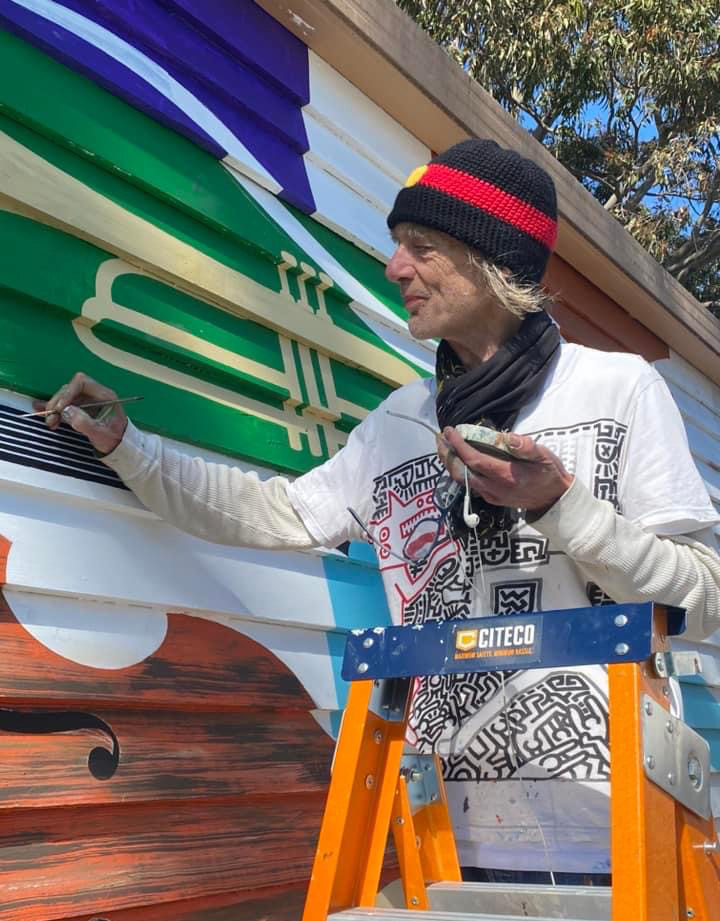
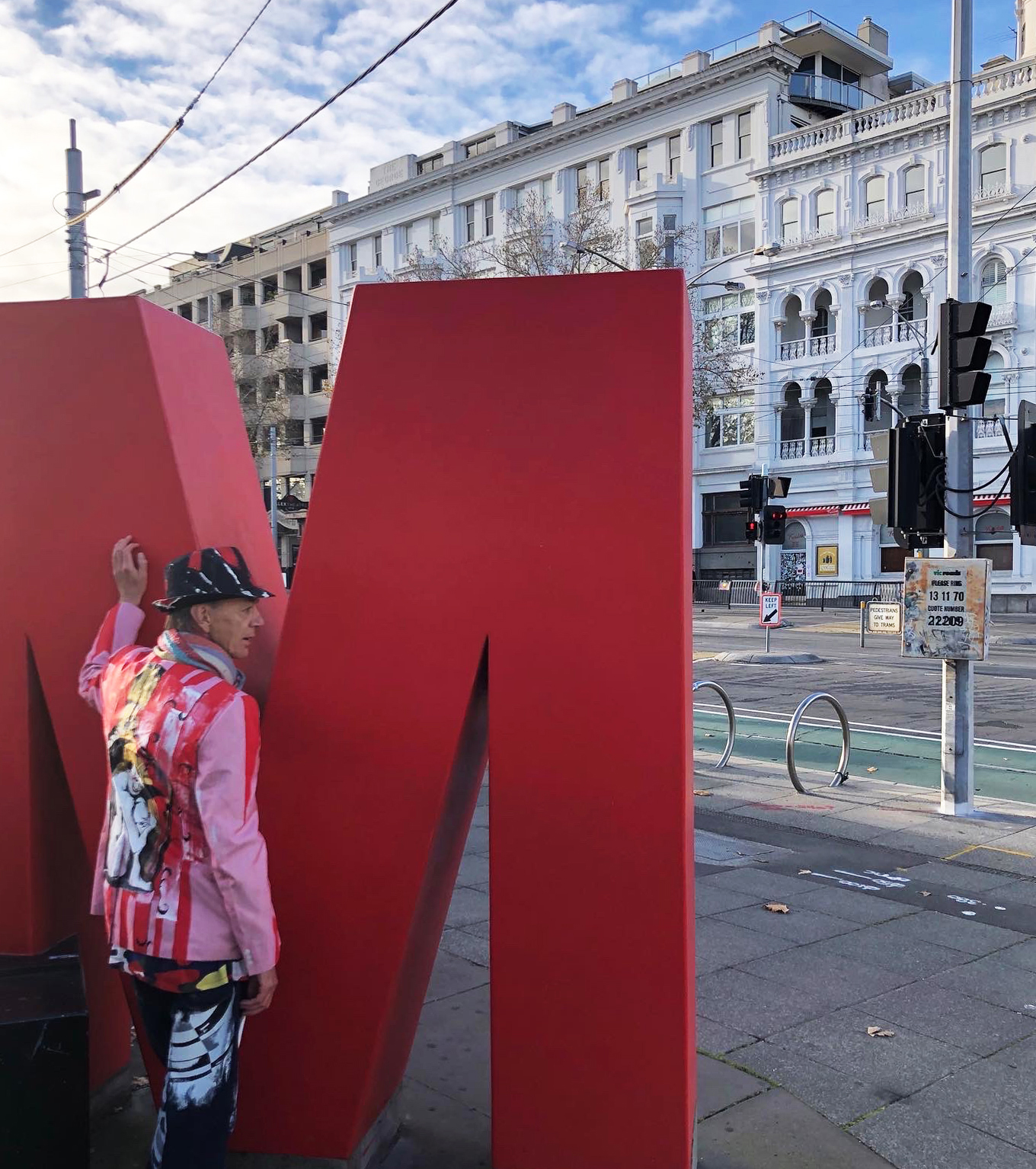
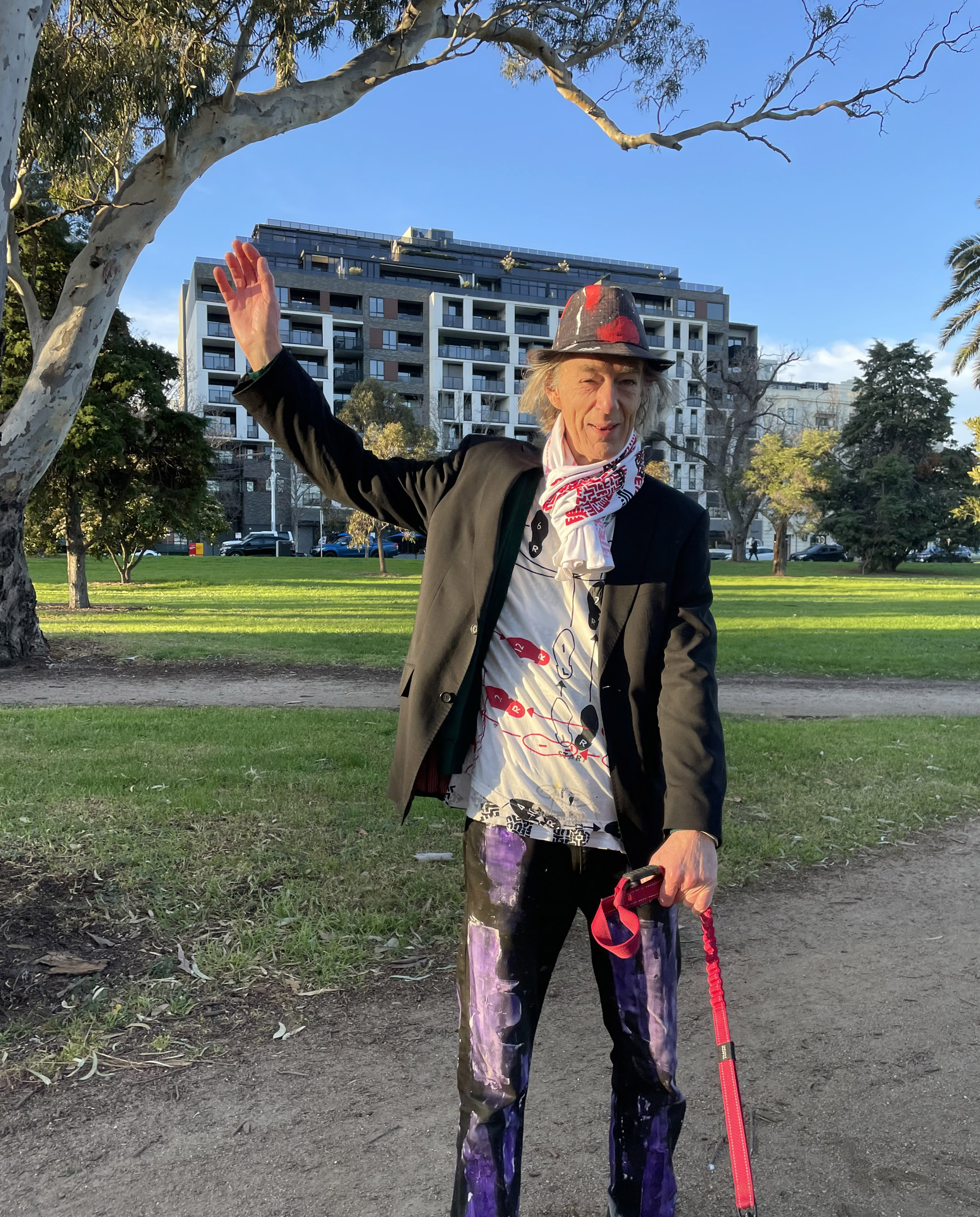
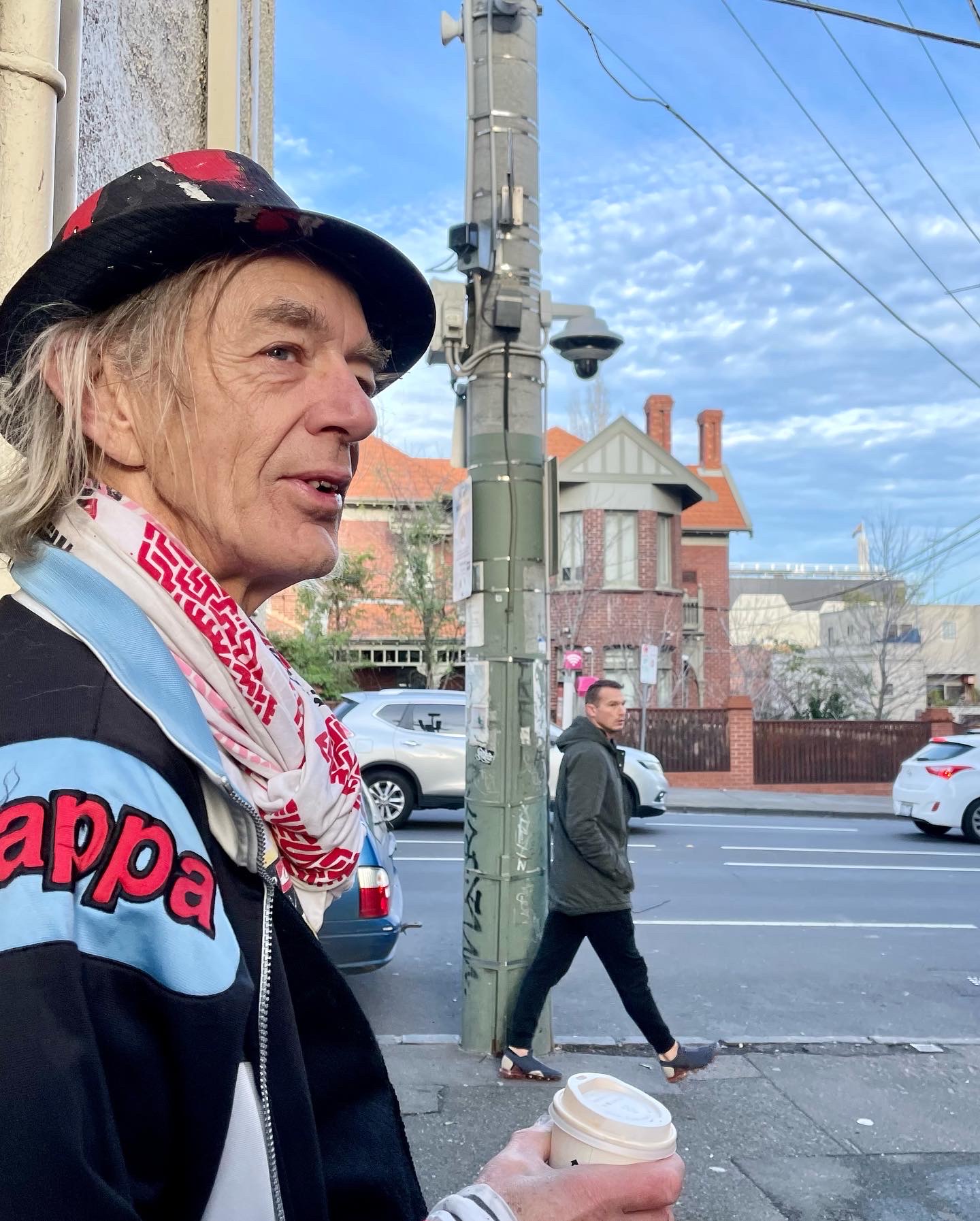
Stroll Fitzroy Street any morning and you’ll greet much-loved St Kilda artist, Colin Sheppard and his dog, Disco. Even on approach, Colin’s sartorial splendour – hand-painted hat, pants, shirt, jacket – is a happy sight.

A man of many community layers, Colin’s personal history in St Kilda dates back to the 80’s. In those early days, he was window dressing for Aerial retail fashion. With eight stores across Melbourne, Colin travelled regional Victoria searching for specifically religious props.  “I was looking to be provocative,” Colin tells. “The deliberately themed Bible according to Aerial windows caused a protest march down Chapel Street. ”   Success!!

He also opened a second-hand clothing outlet, Swamp Thing, in a garage off Smith Street, then the Do it Baby fashion store on Barkly Street.  Learning signwriting from bikies was the beginnings of what went on to be an extensive career as an artist, with cafes, shopfronts, homes, laneways and buildings being enlivened and restored by Colin’s accomplished hand-painted style.
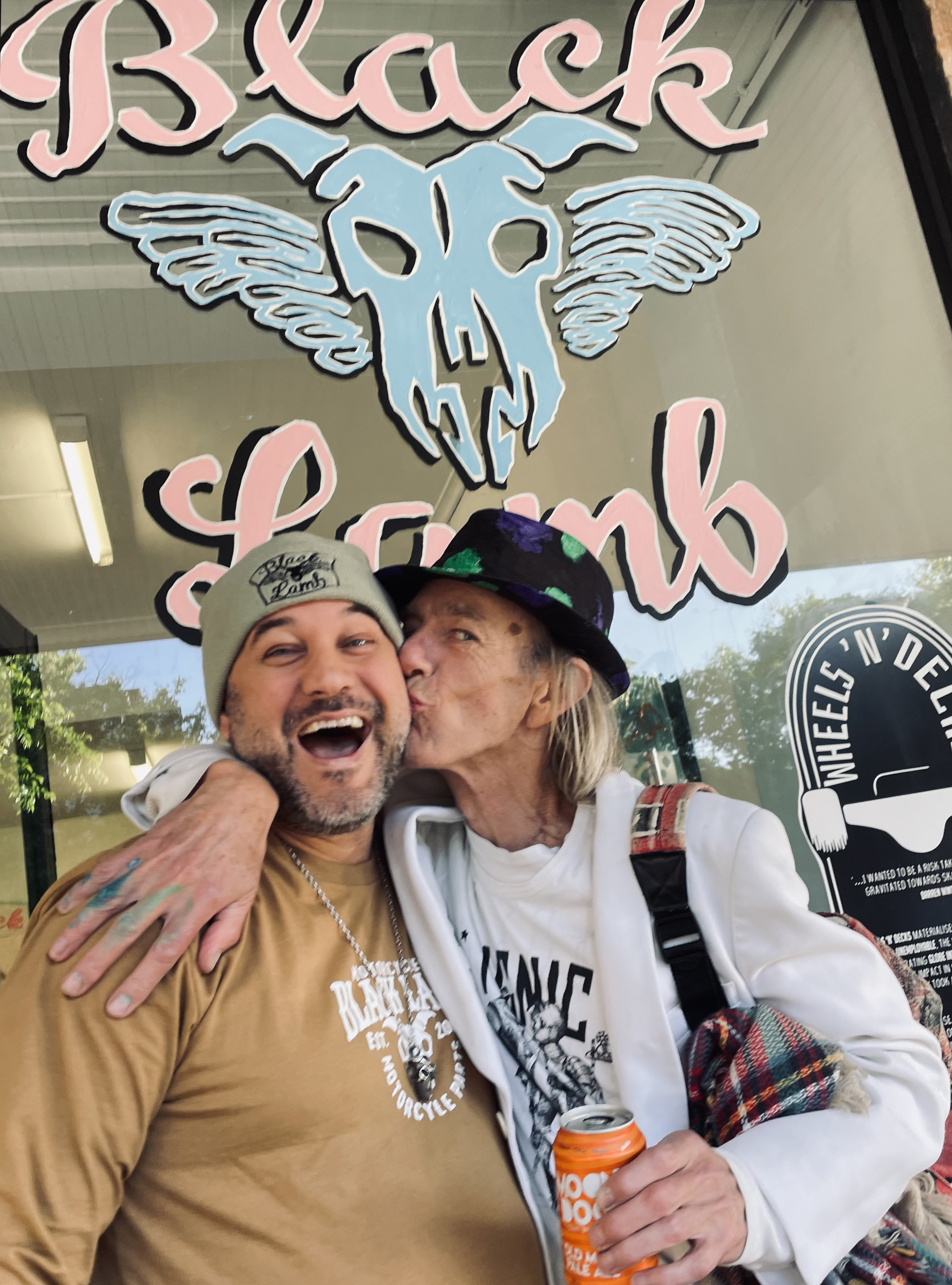
             
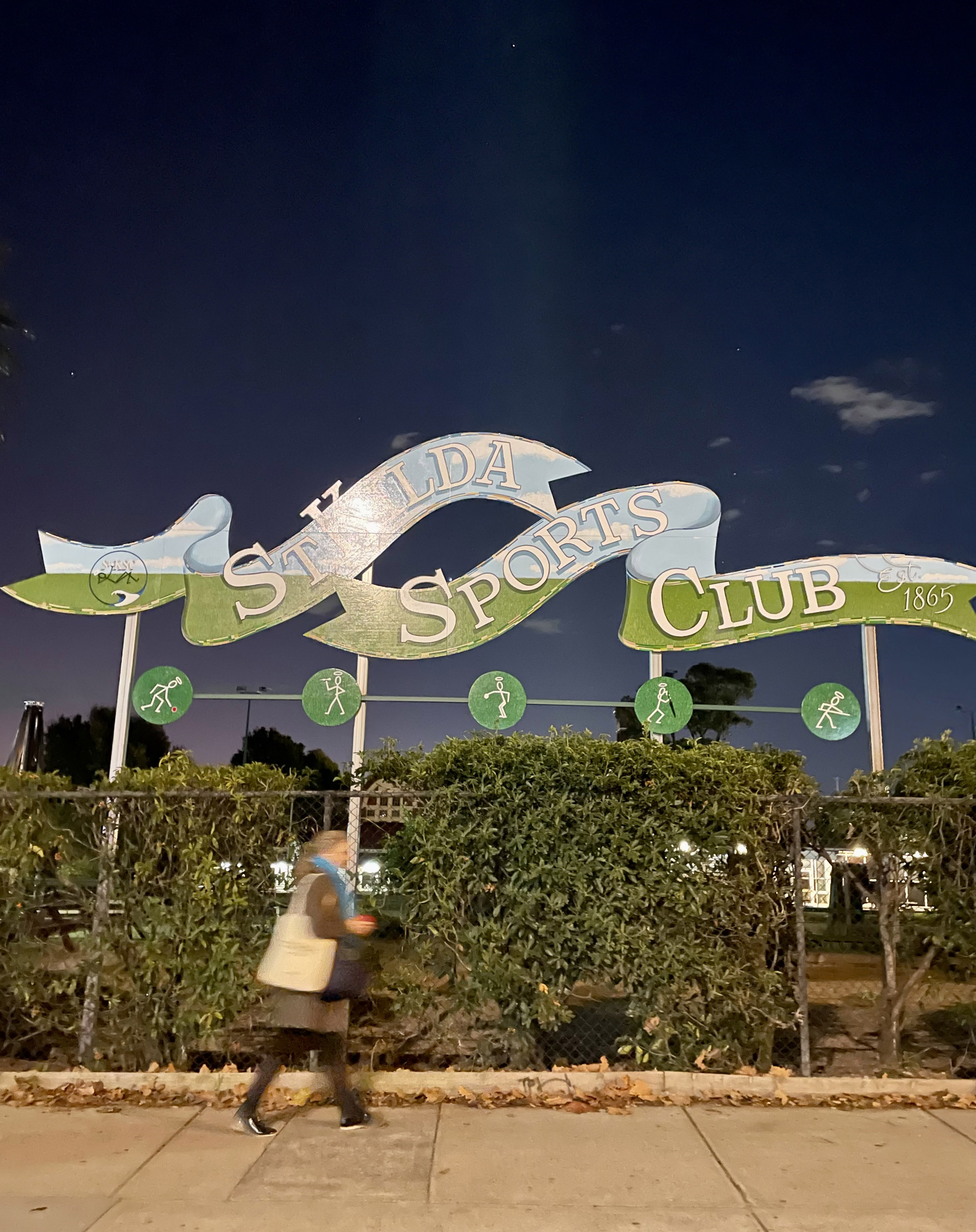
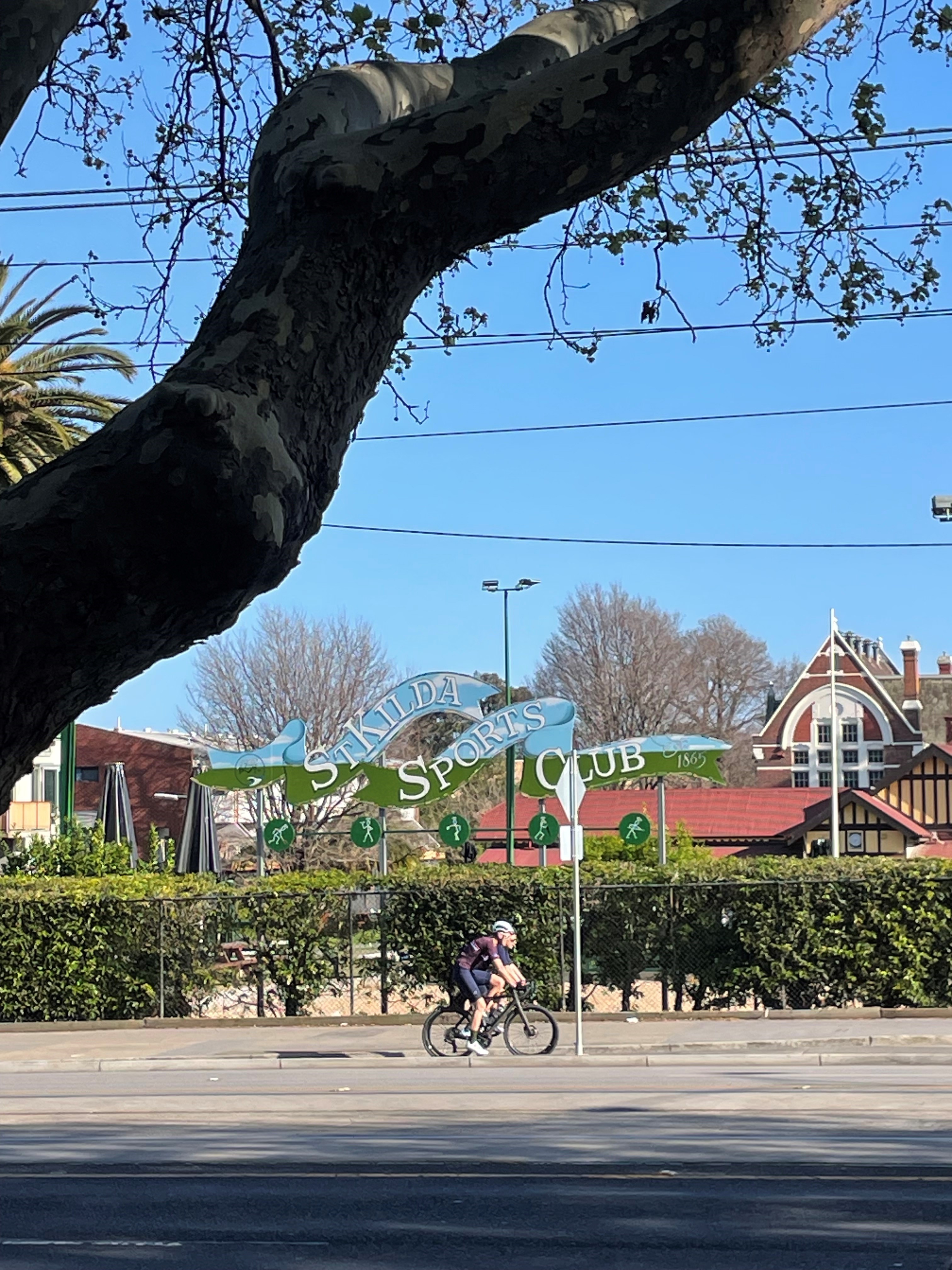
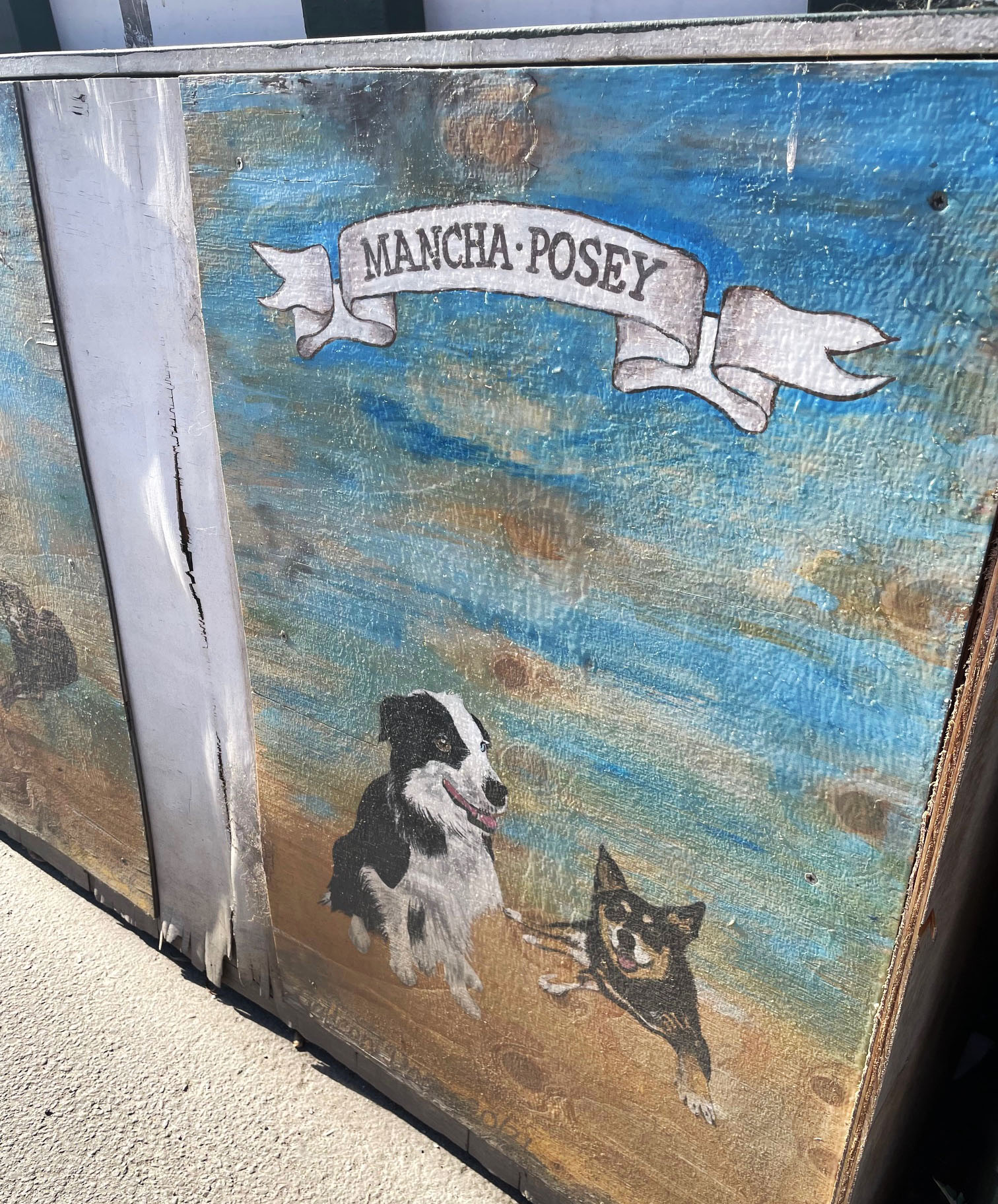
Photos: with Simon Lamb from Black Lamb (Colin’s window signwriting); signage out front of St Kilda Sports Club, a.k.a. the Bowls Club; one of Colin’s series of local doggy portraits at the Galleon cafe.

St Kilda’s life stories are vibrant and diverse: Acland Street thronged with the temptation of bakeries and deli smells, bespoke fashion and jewellery shops for gift buying, the best in fruit’n’veg, meat and fish. I know, because I’ve lived in the area (Middle Park before moving to St Kilda) for 45 years.  On weekends, I walked to meet my Dad for early morning coffee. Rotund, cigar-smoking Jewish men stood chatting outside Scheherazade, coffee aroma wafting along the strip.

Up and over the Esplanade, I went to lots of shows at The Palais. I remember Shirley McLaine, seeing ‘heartthrob’ Richard Harris as King Arthur in Camelot, with a 21 year old Marina Pryor in her first musical theatre lead role as Guinevere. Godspell too was at The Palais.  Across the road at The Espy, well it rocked for as long as I can remember.

Around the corner in Fitzroy Street was another world.  Italian night clubs, strip and drag at The Ritz, Pokies at the Prince, Tolarno’s Restaurant and Gallery (it’s not possible to count the fun dining we had at Mirka’s Tolarno Restaurant).

I digressed intentionally, because Colin and I share cultural, social and flamboyant memories of St Kilda. Importantly, Colin not only fondly reminisces, but he records our local history through his artistic skills.

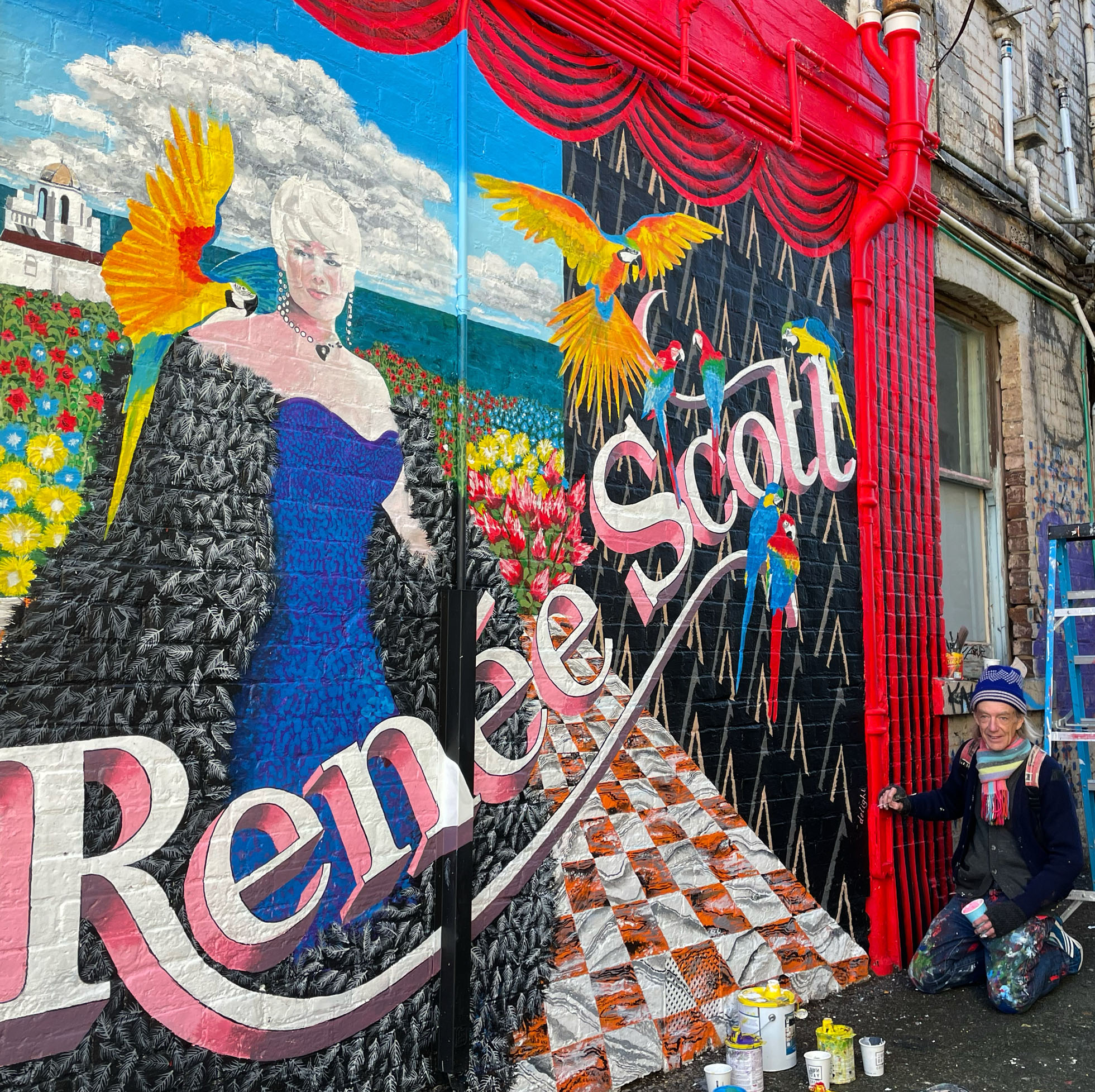
Going back to those days in the 80’s, Colin shared an apartment with drag performer, Renee Scott. Nightly, Renee worked with Les Girls at The Ritz, and The Prince. “During the day, Renee would stroll down Fitzroy Street in high heels and a gown, walking two long-legged Afghan hounds,” says Colin. “She was a beautiful person, not shy to say what she was thinking.” There were sequinned, feather-bowered comings and goings at that apartment in Victoria Street.  A couple of years ago, Colin recreated his dear friend Renee in a mural on Little Grey Street, behind Fitzroy Street and her stage home at The Ritz.

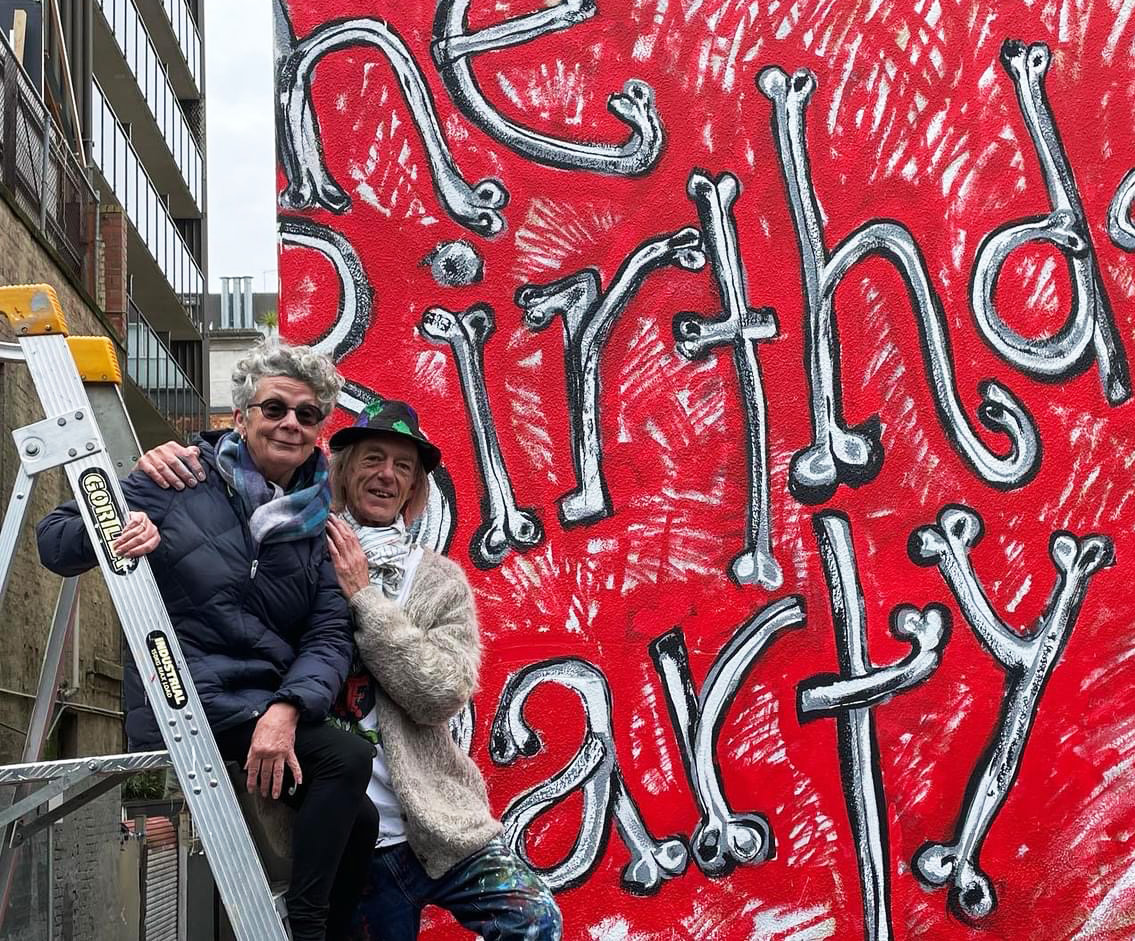
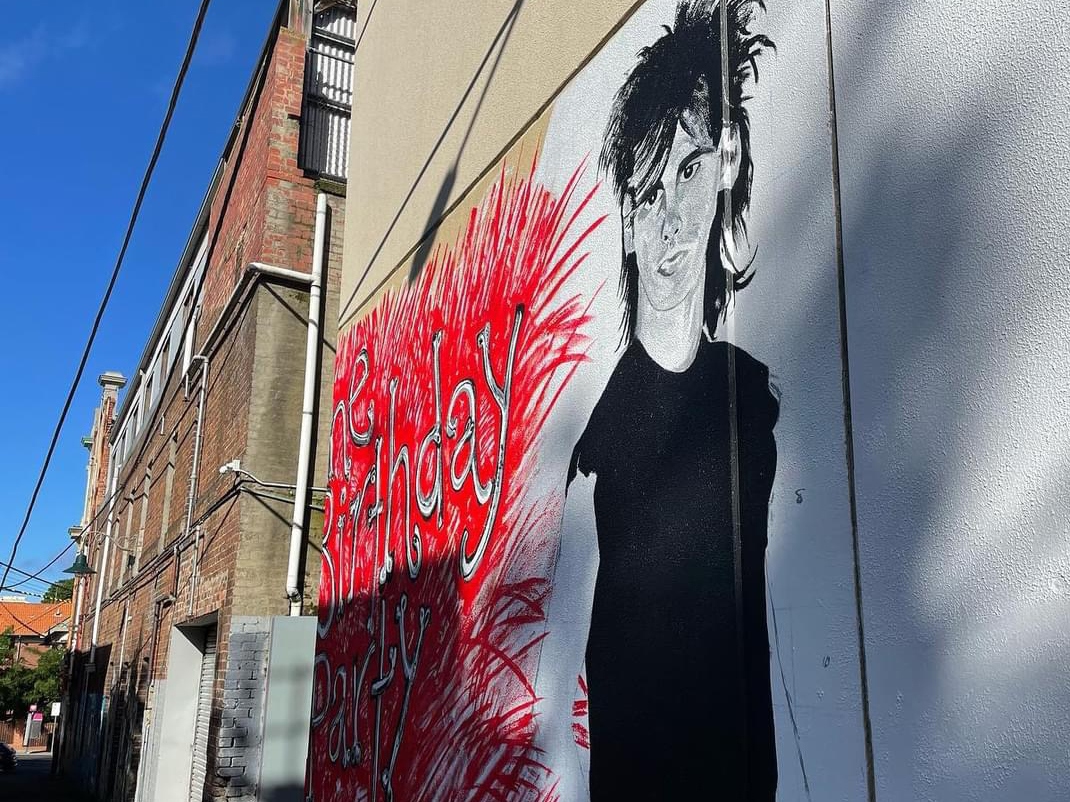
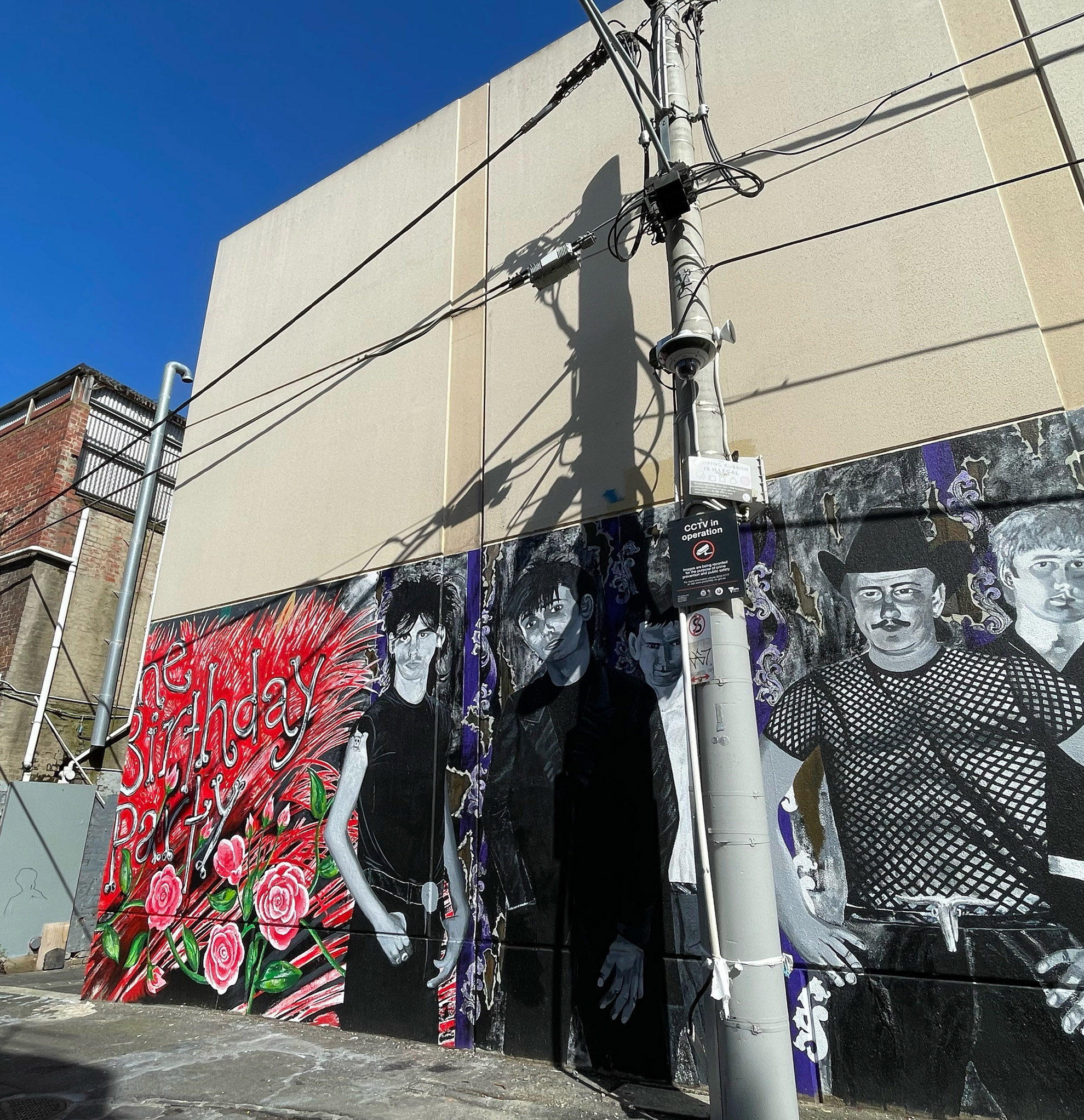
Further along Little Grey Street, Colin then completed a mural depicting Nick Cave and the Birthday Party, again appropriately situated behind The George where the band played during the Crystal Ballroom’s punk era, late 70’s-early 80s.
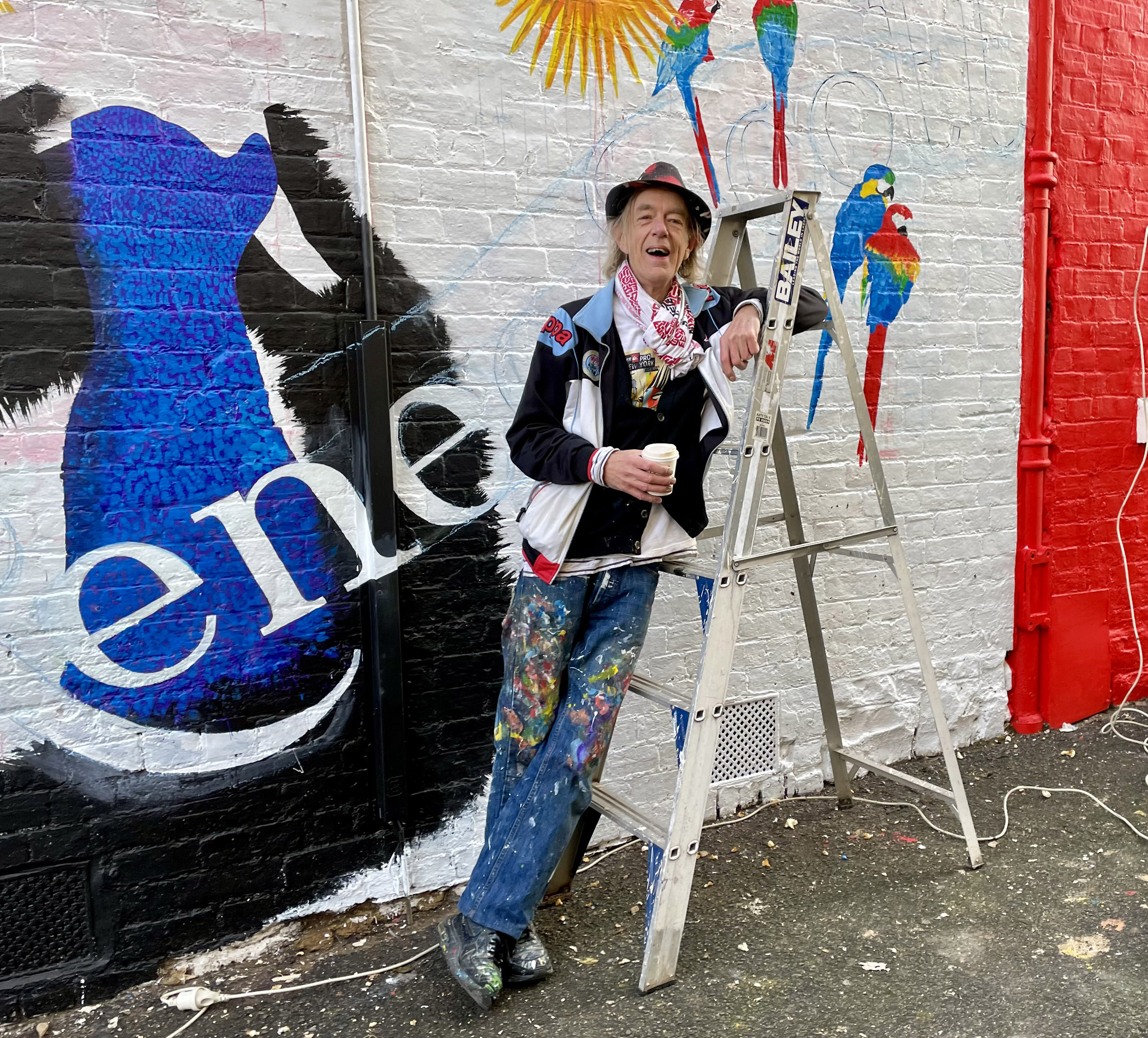
            
Photos:  Little Grey Street murals. Remembering his dear friend, Renee; mid-winter, me up a ladder with Colin, Nick Cave and the Birthday Party.

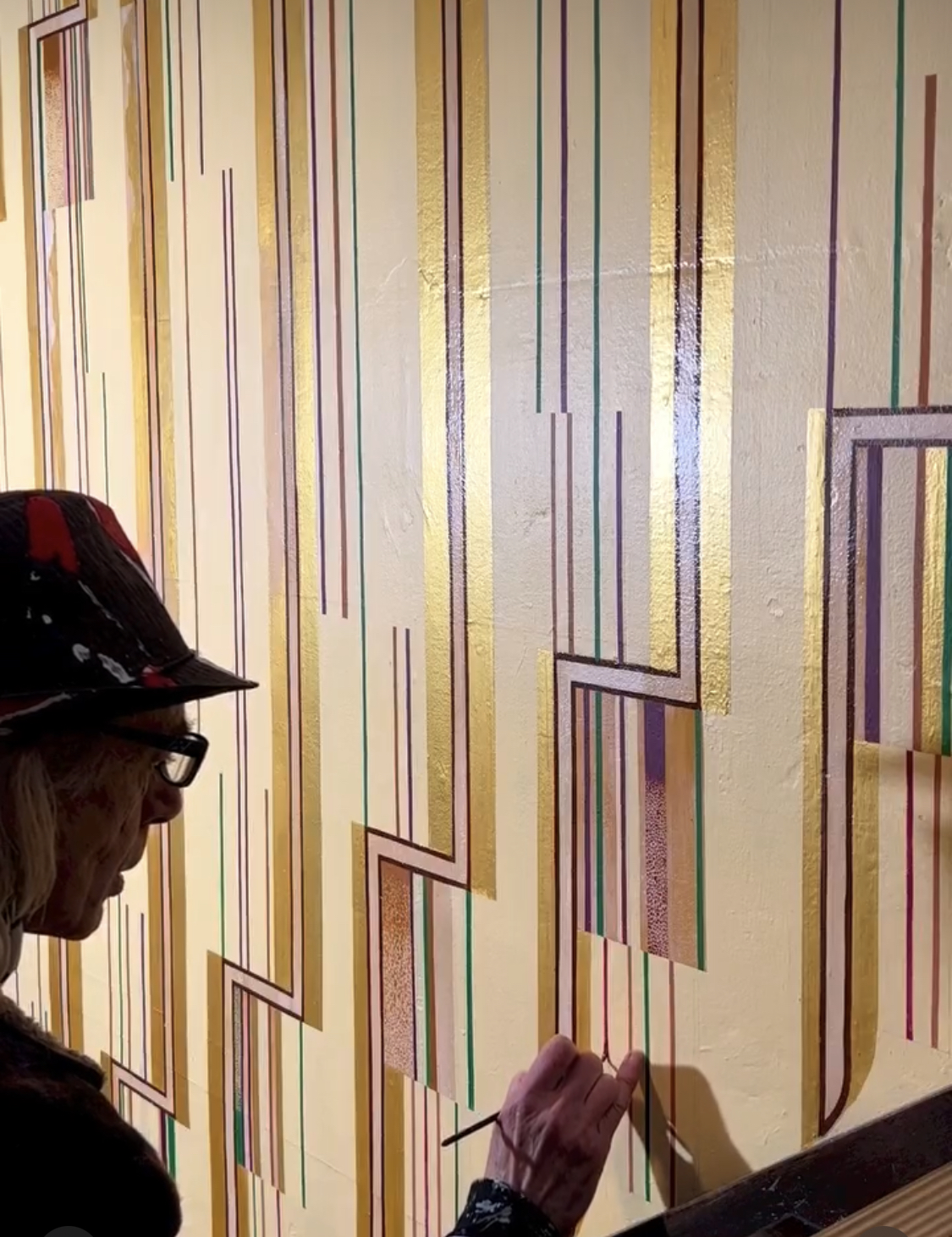
Over several months last year, Colin worked meticulously at The Palais Theatre, revitalising the backstage area and staircase walls with decorative depictions of the iconic venue.  Other works, beyond the street, include Luna Park, The Esplanade Hotel and his exceptional gilt gold deco painting at The Dog’s Bar which won First Prize at Melbourne Design Week (2017).

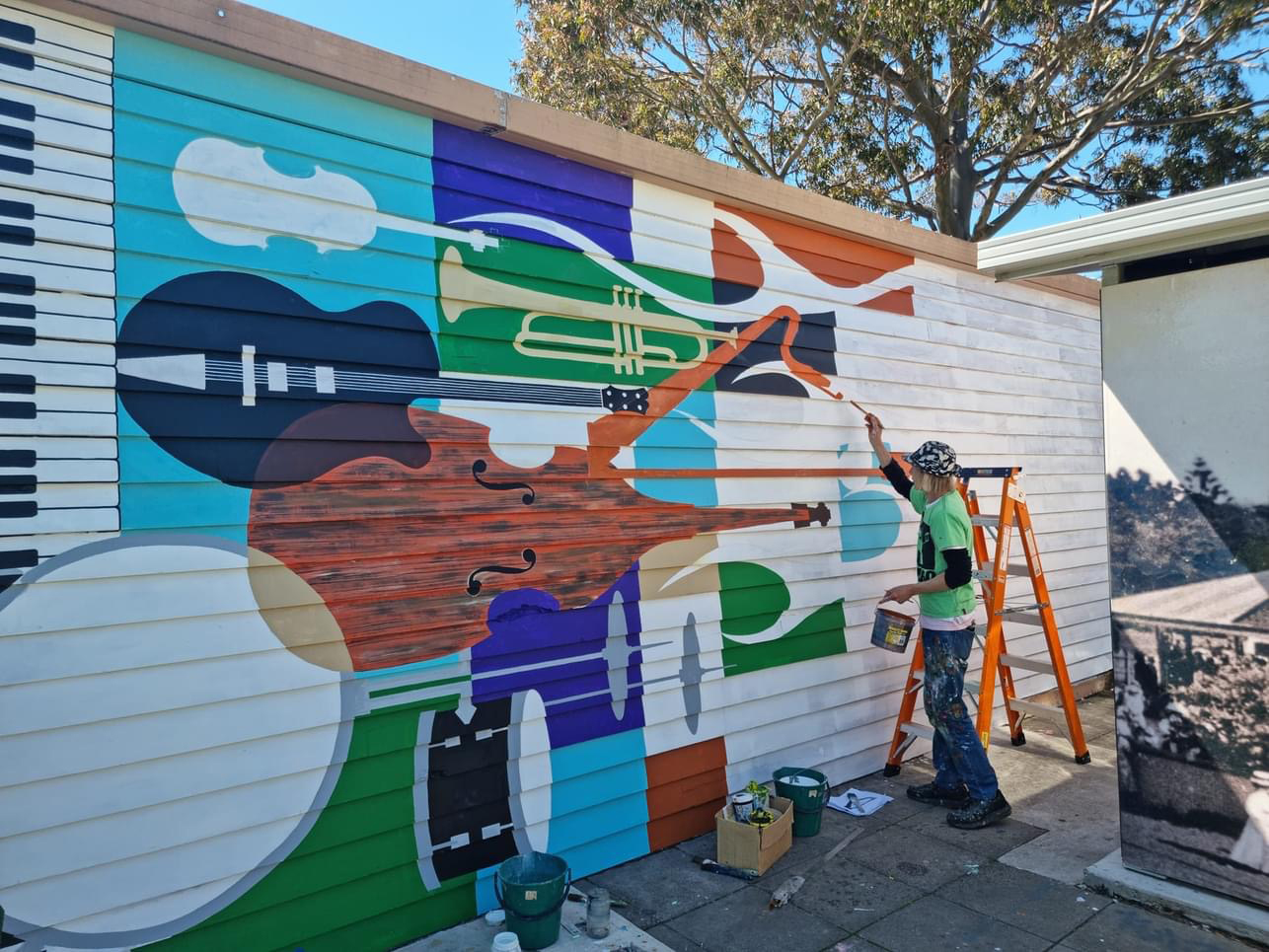
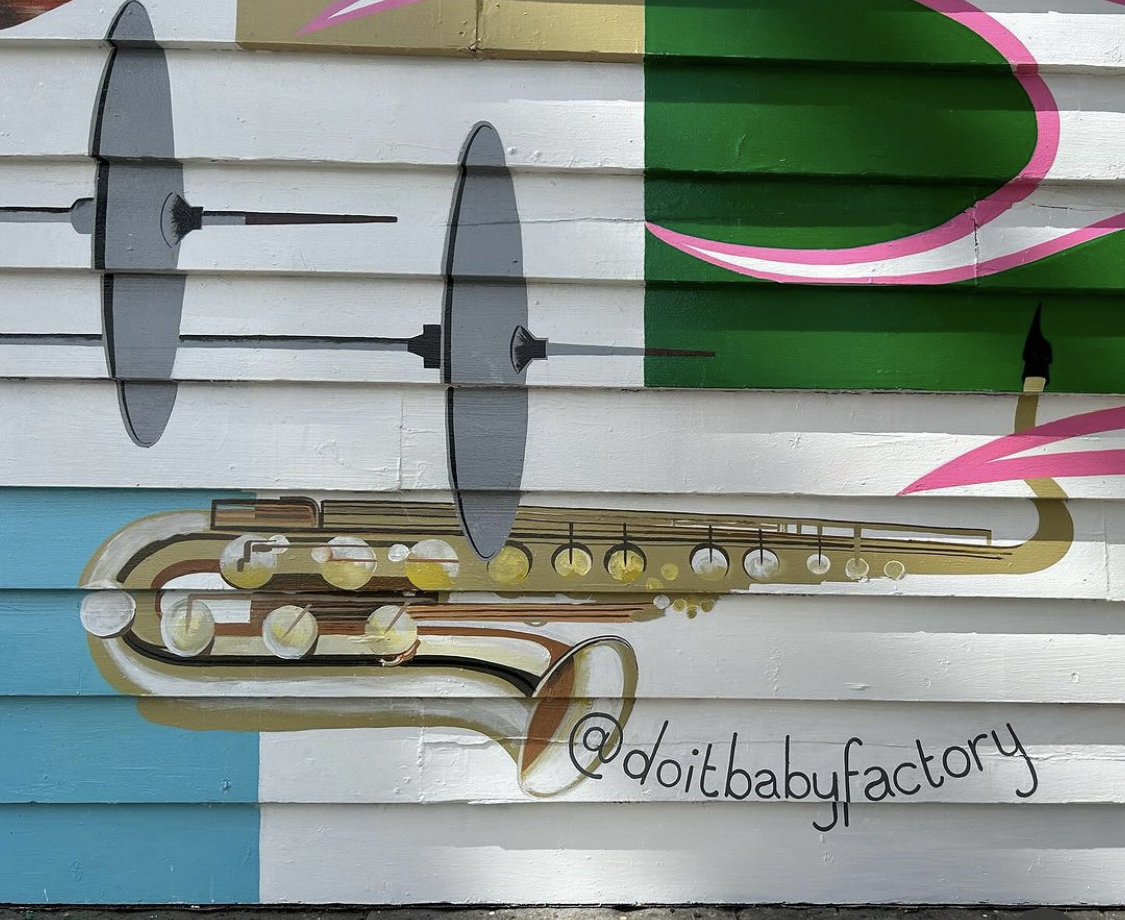
A recent challenging project, The Wall of Sound painted on weatherboard in O’Donnell Gardens, required intricate artistic skill, accuracy and continuity. It looks splendid!
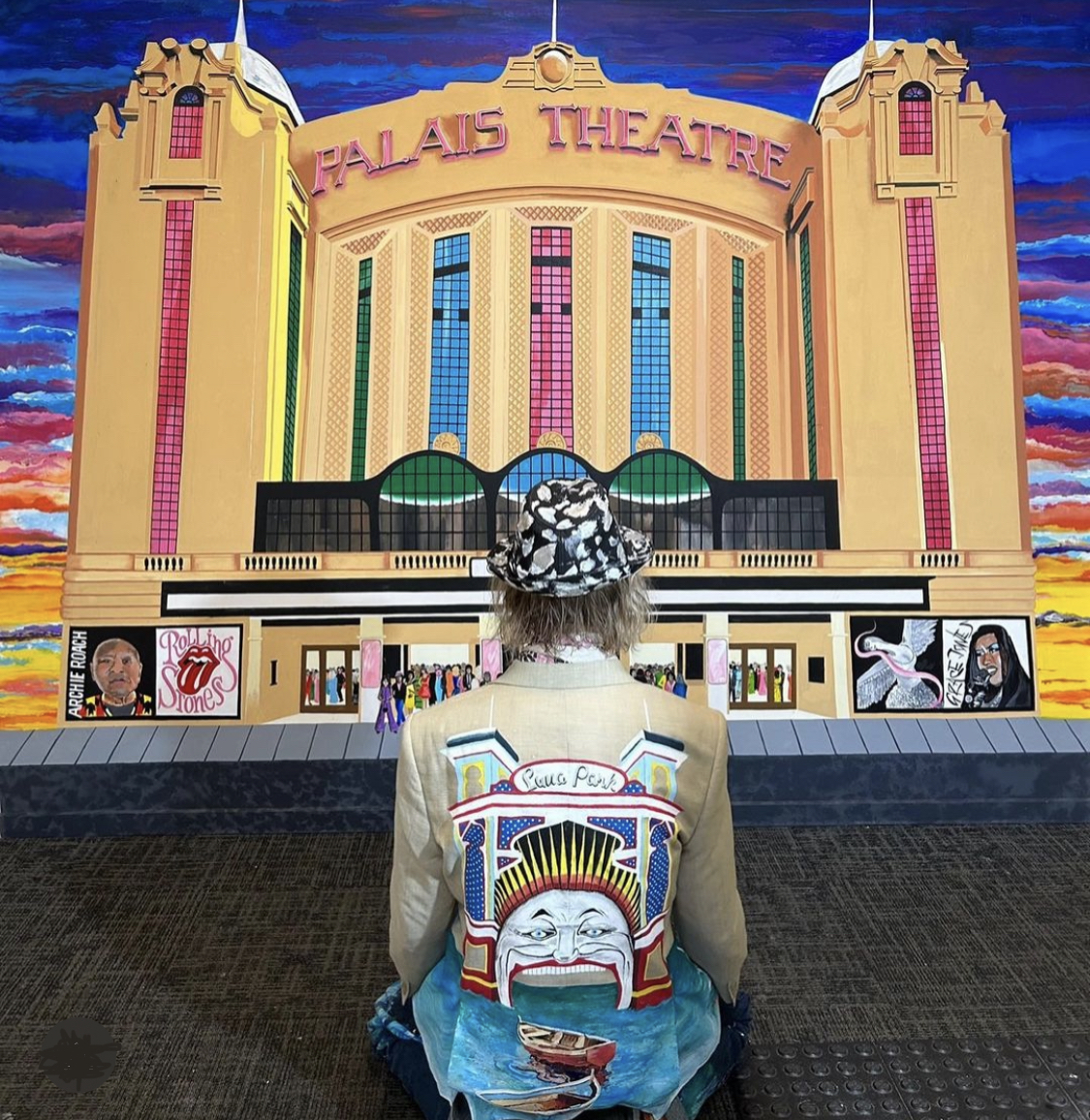
            
Photos:  Backstage at The Palais (Colin Sheppard pics); working on the Wall of Sound in O’Donnell Gardens (Deb Nightingale and Rosie Haenson pics); detail of Wall of Sound.

Colin’s diligence is such that he continues through changing weathers conditions – some chilly days – with pride and artistic integrity. The joy he brings to our community is evidenced by the friends and passers-by who stop to talk while he works, want to be photographed and share his lively art on their social media. “Street art gives everyone an opportunity to see it in exactly the same way, it separates the hierarchy in how they view, everyone’s on the same level,” Colin explains. “And, the stories I get. When I first started thinking about Renee’s mural, I didn’t think many would know her, but I was overwhelmed. There were easily 200 people who came up to me when I was working on it. Some had 30 seconds to comment, others spent 20 minutes telling their stories.”

Importantly to me – and what I believe is measurable – is that Colin’s craftsmanship records St Kilda’s luminous past to present, ensuring its longevity.  As an artist, he’s an historian, an ‘on the street’ archivist. Colin paints the faces of his St Kilda community. “I’m in love with the whole place. In the past, I thought about moving, looked on the other side of the city, but always wanted to come back. St Kilda is home.”
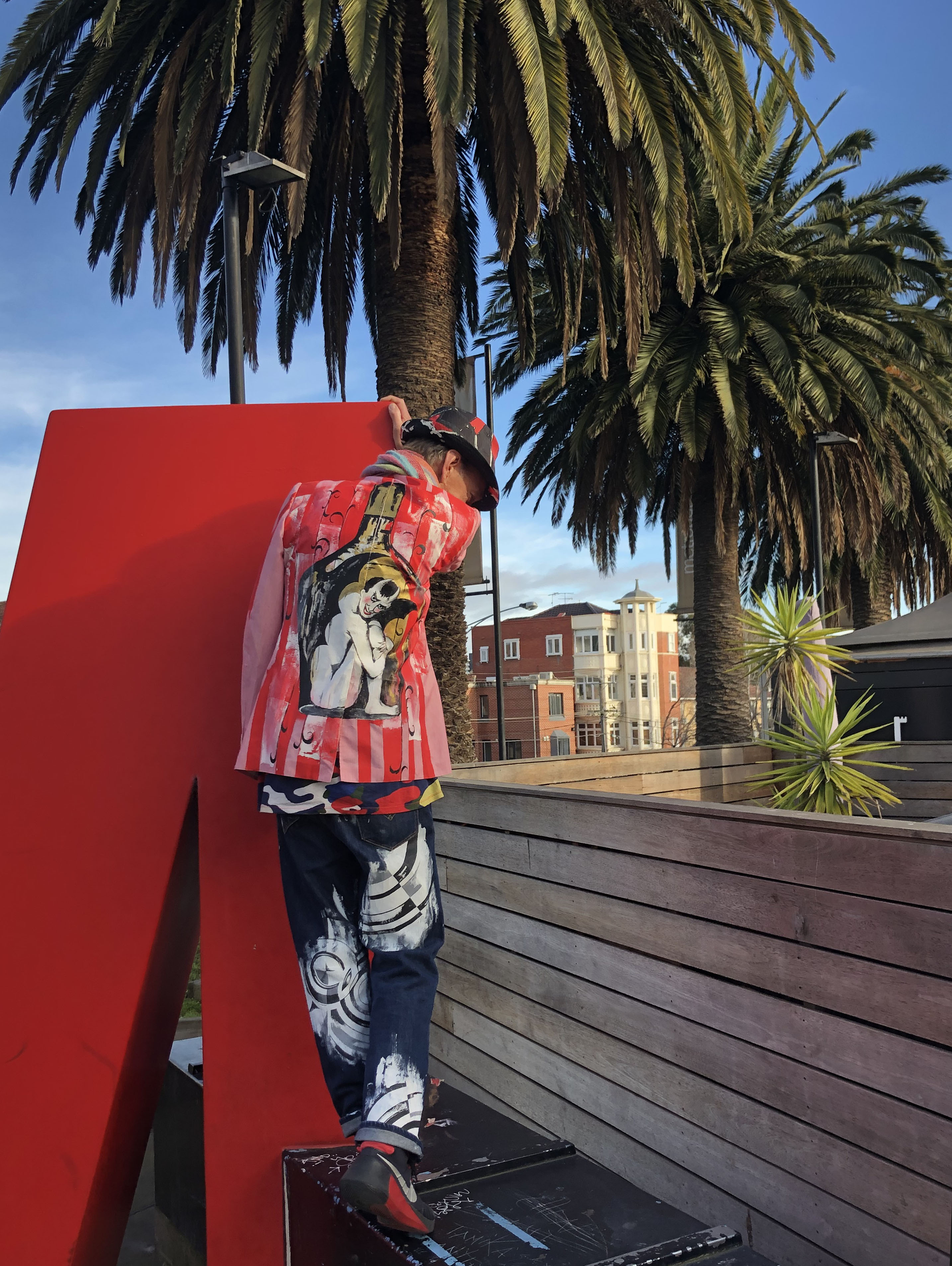
         

How lucky is St Kilda to have Colin, our very own Man of Colours.
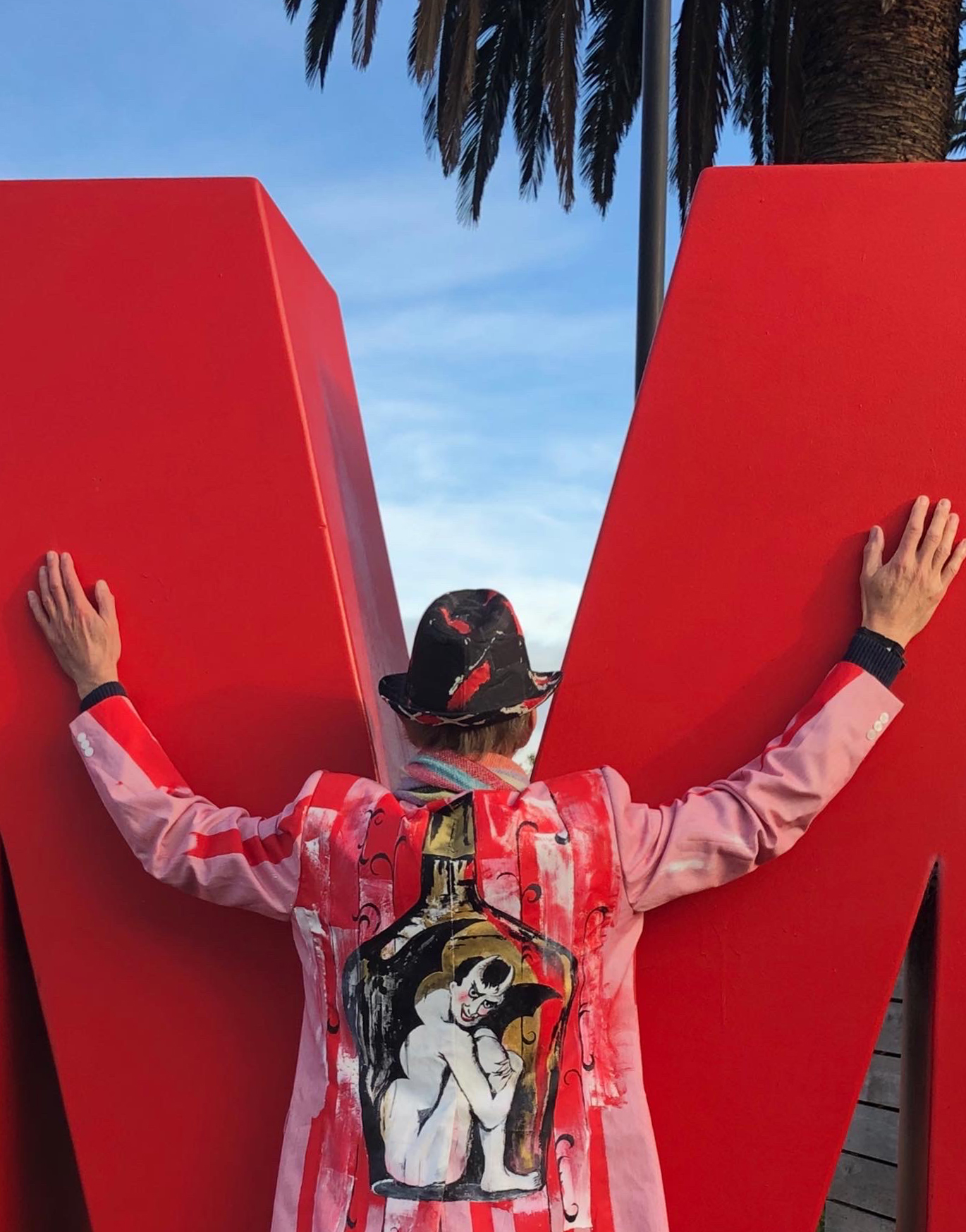
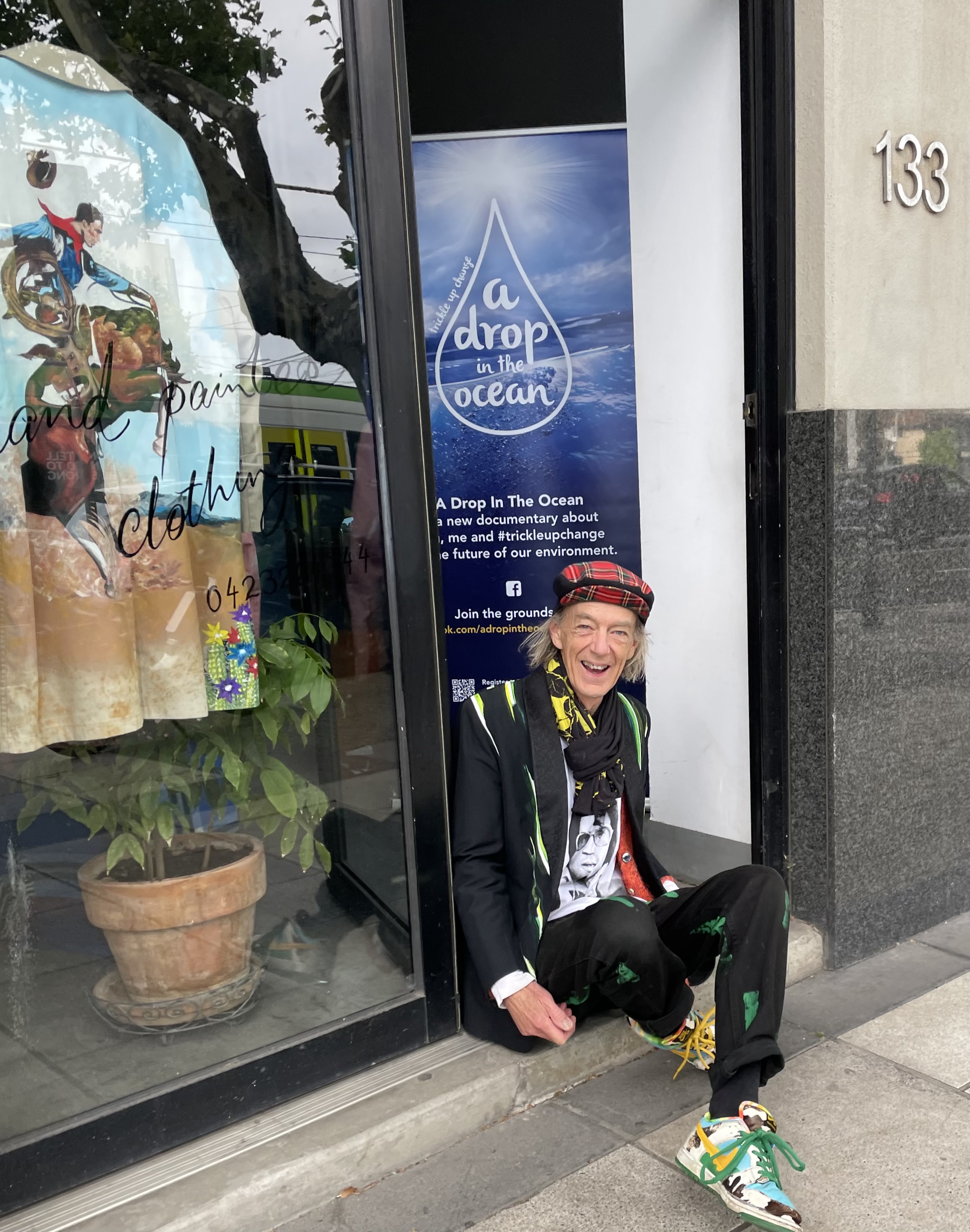
Photo: Outside Metropol, Fitzroy St., St Kilda

© 2024 Text and photos:  Pamela Reid
art and about: Amsterdam

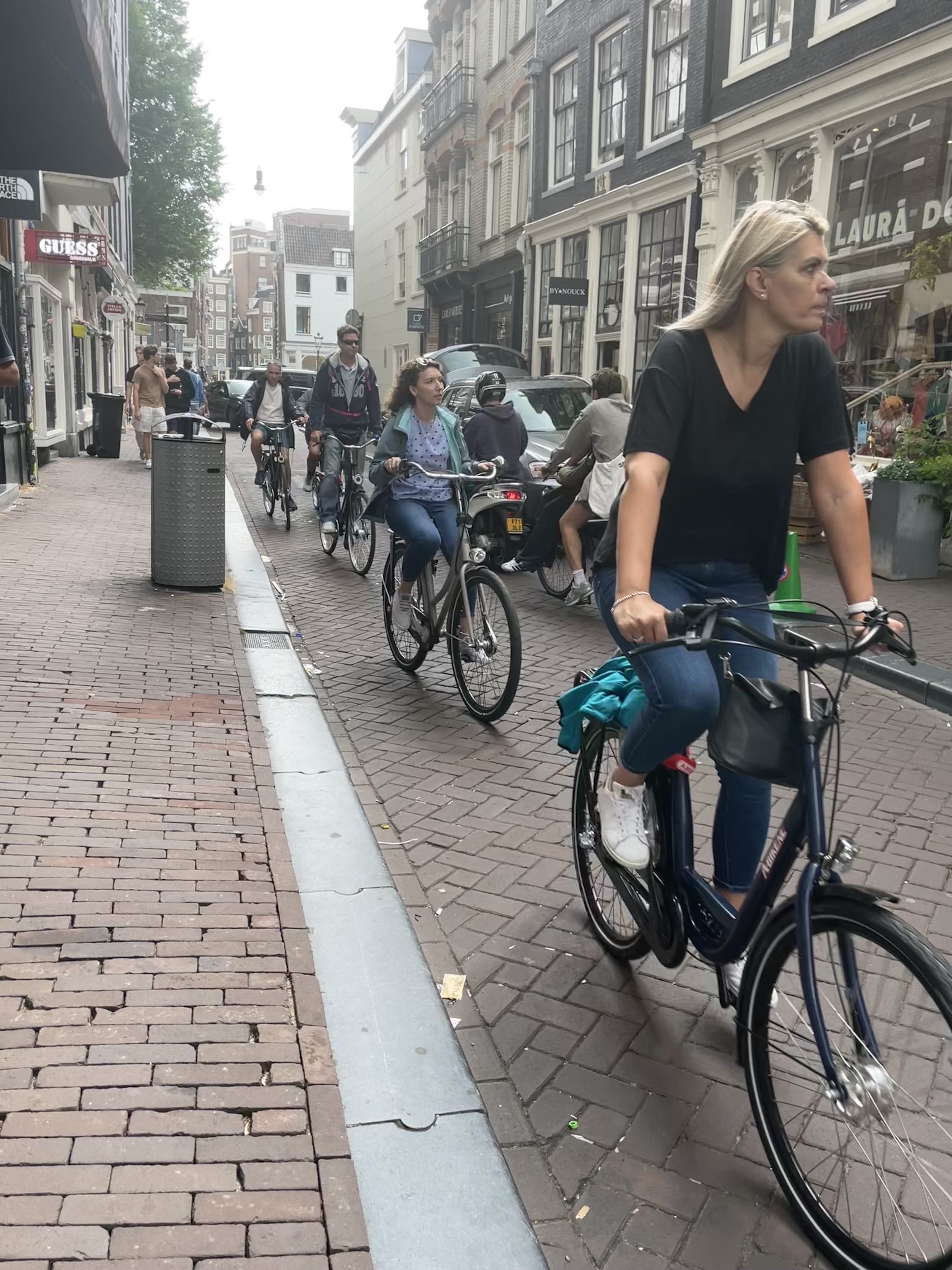
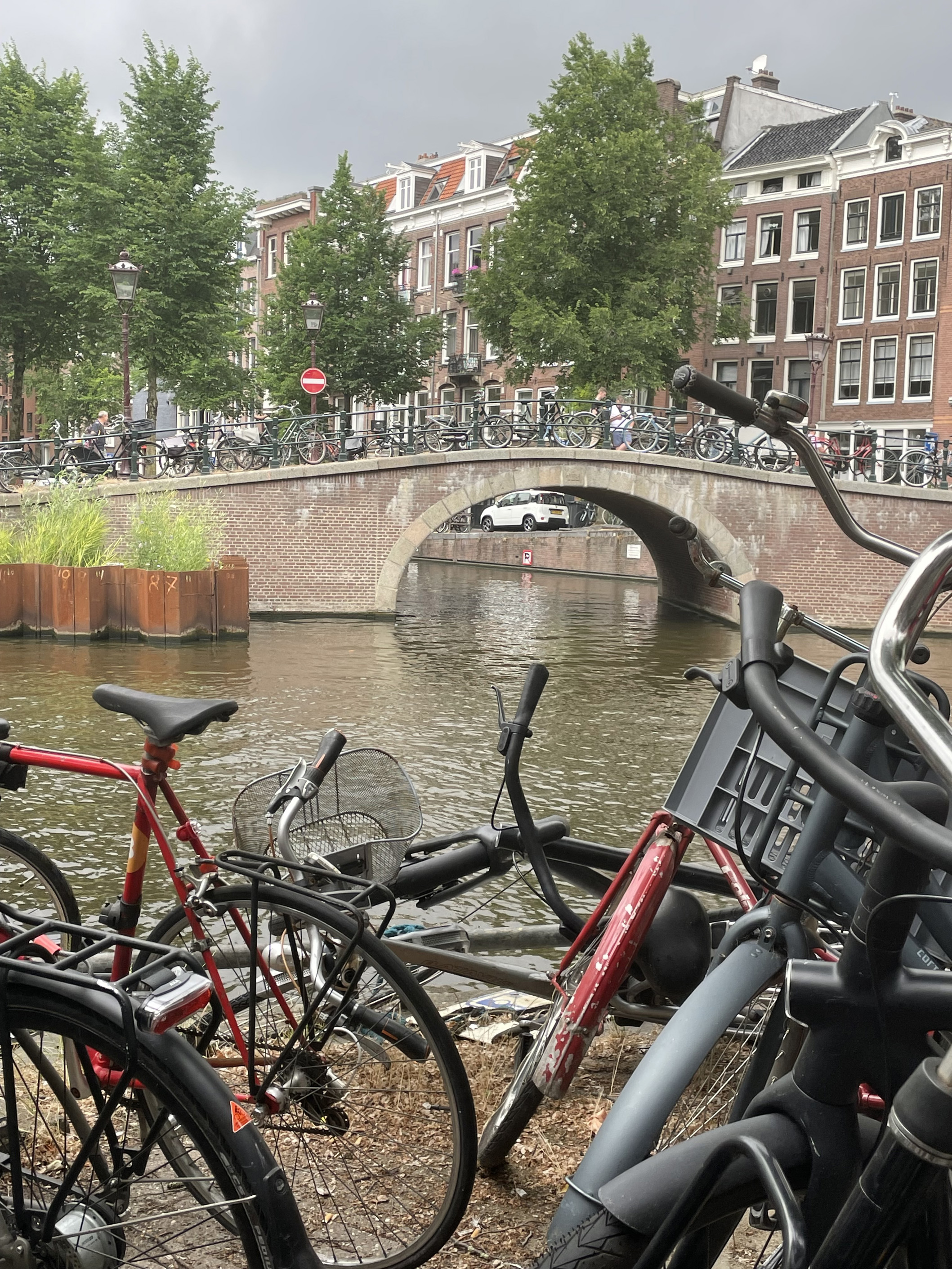
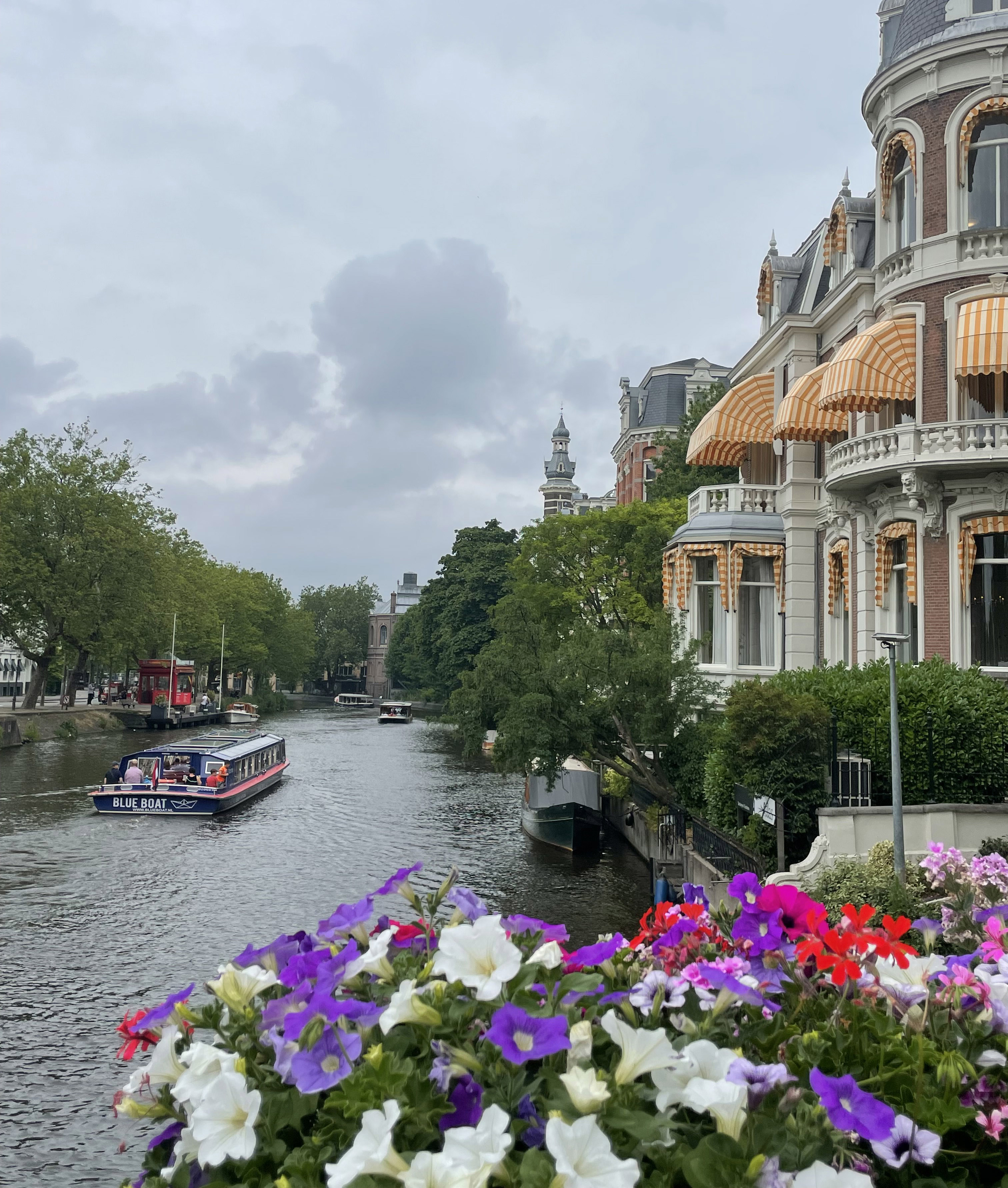
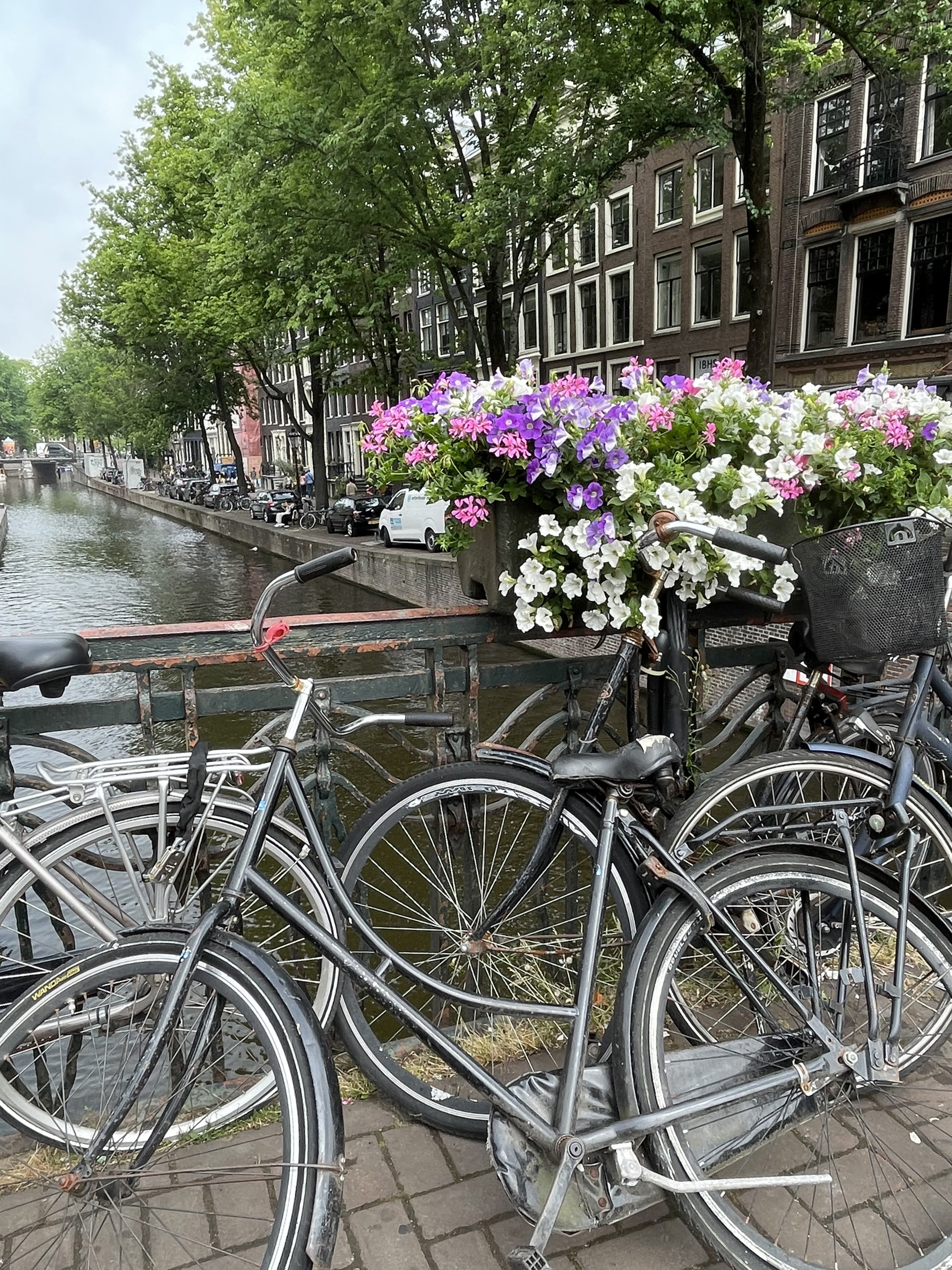
    Amsterdam: bicycles, canals, flowers.

Amsterdam lives and breathes art. Home to some of the most significant art history, strolling this picturesque city is like stepping into a chocolate box cover. Streets are lined with charming, side-by-side “dancing houses”, flowers and hanging baskets everywhere, locals bustle on bicycles. Shopfronts are enticing, smart, quality, bakeries ooze colourful delights.  Getting around is easy. If you’re not in the bicycling mix, the tram and bus systems are efficient.

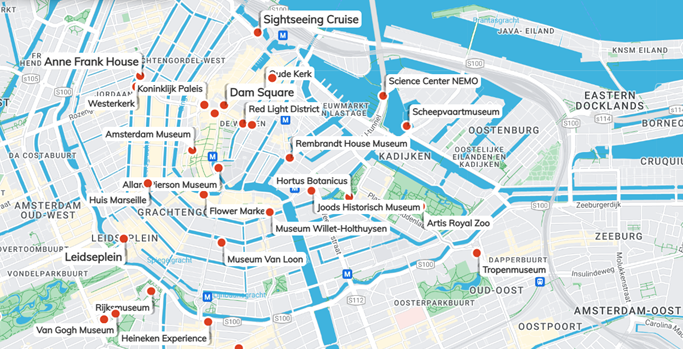
Map of Amsterdam and its canal belt lay-out

There are 100 kms of canals in Amsterdam, ambling around this relatively small city. A canal trip is a ‘must’, as only from the water can you fully appreciate Amsterdam’s fascination. Like the on-off buses in other European cities, the skipper of your canal journey tells the history, pointing out places of interest, architectural features.  You can also do a cycling guided tour around the city.  The streets of Amsterdam follow the canal belt as if curling around and around.    A look at the city’s map highlights its cultural cornucopia that includes the Rijksmuseum, MOCO museum, Van Gogh Museum, a Da Vinci Interactive experience as well as a Lumières of Dali & Gaudi, Ann Frank House and other historical museums, and a tour of the Royal Palace. For something a little different there’s an Upside Down museum, a Ripley’s Believe It or Not museum, the WONDR Immersive Playground, a Madame Tussauds. Being Holland, there is (of course) a Red Lights’ Secrets visit and a Cannabis Museum.

               
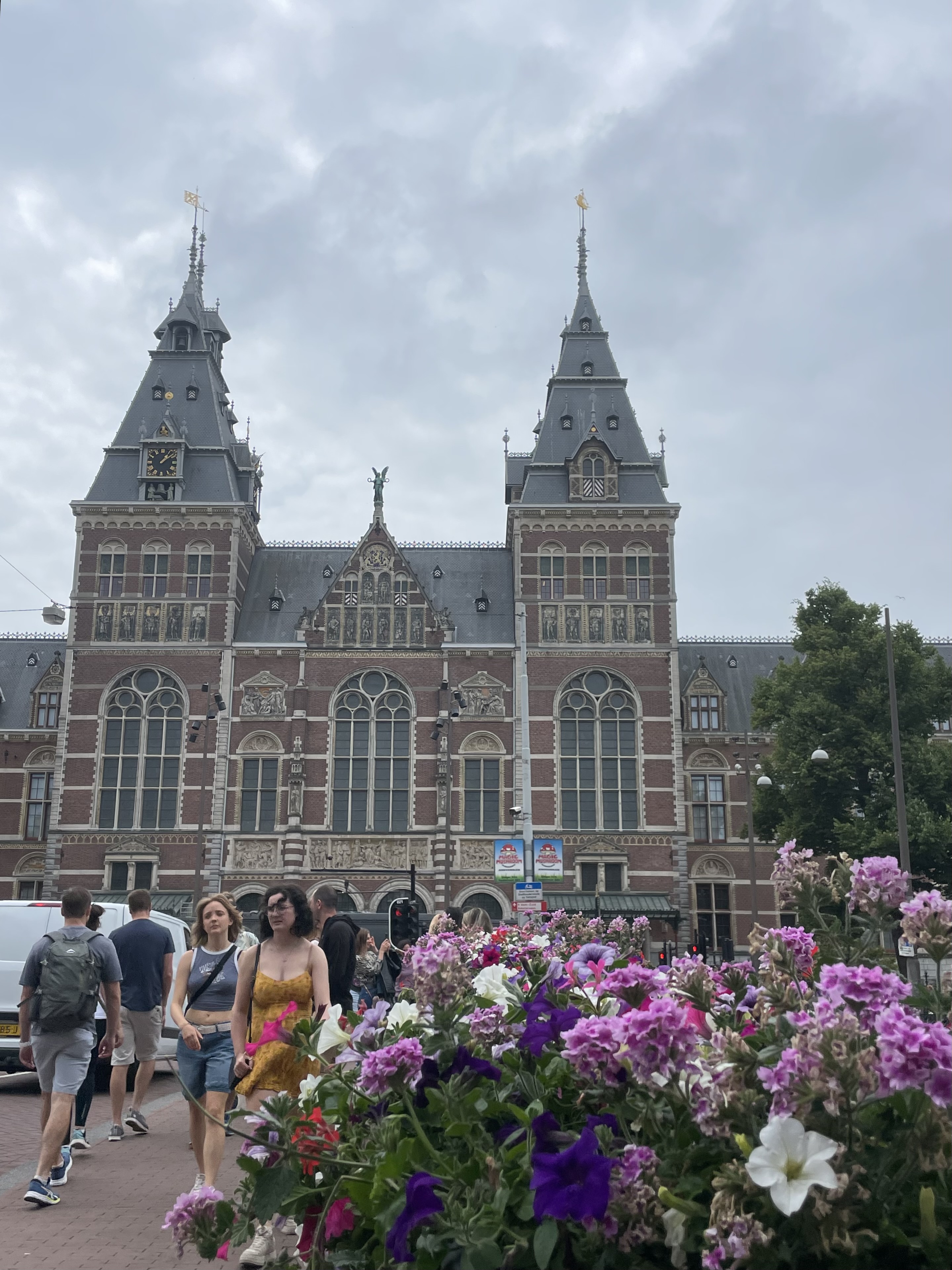
Photos: the Rijksmuseum; cyclists and bicycles are everywhere: MOCO Museum “In Art We Trust” on exterior windows; where art and history abound; looking along one of many canals. 

On my recent trip, with so much ‘old and new’ art on show, I firstly visited MOCO Museum (the Modern and Contemporary Museum) where there are lots of favourite artists, plus some discoveries.

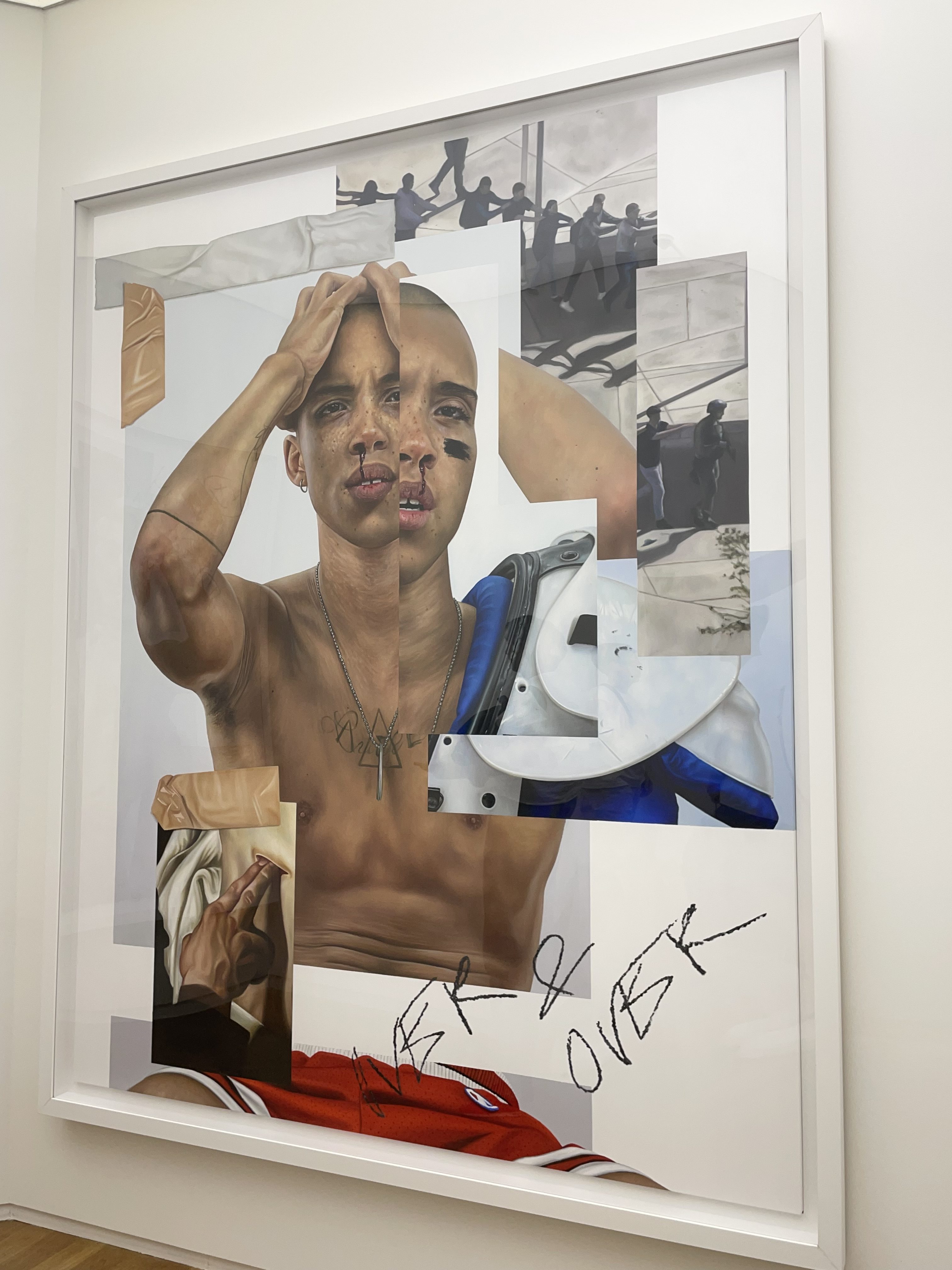
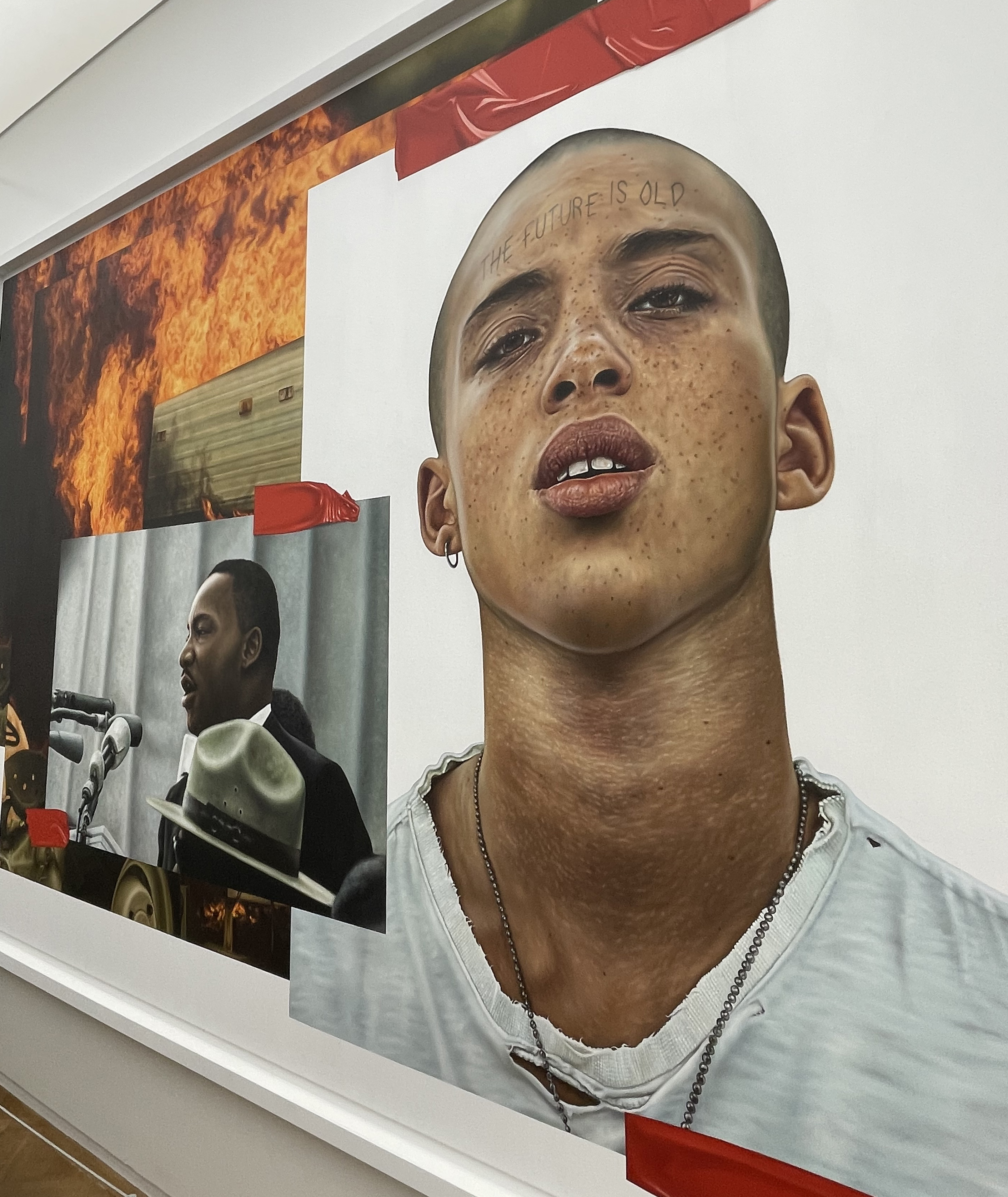
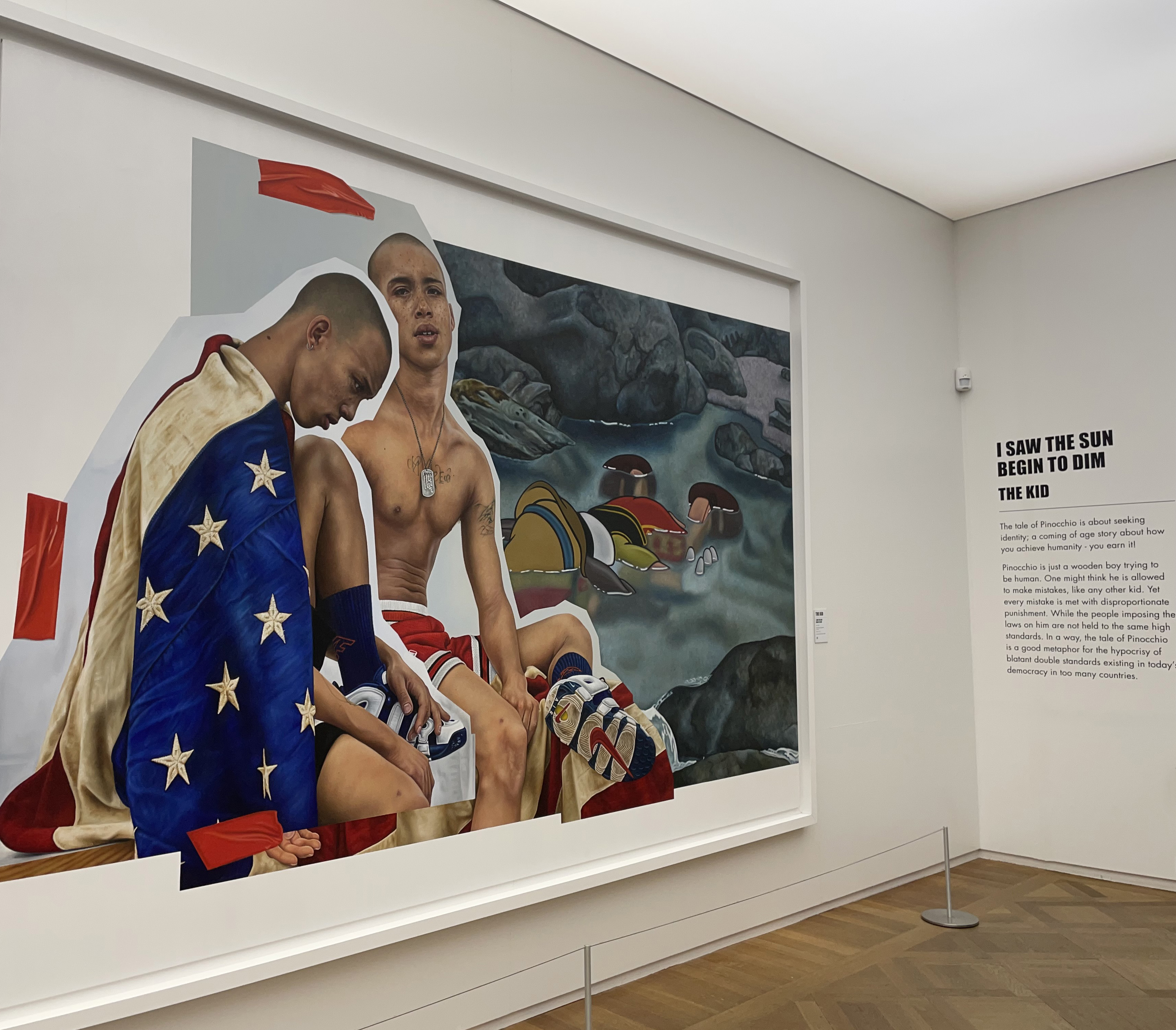
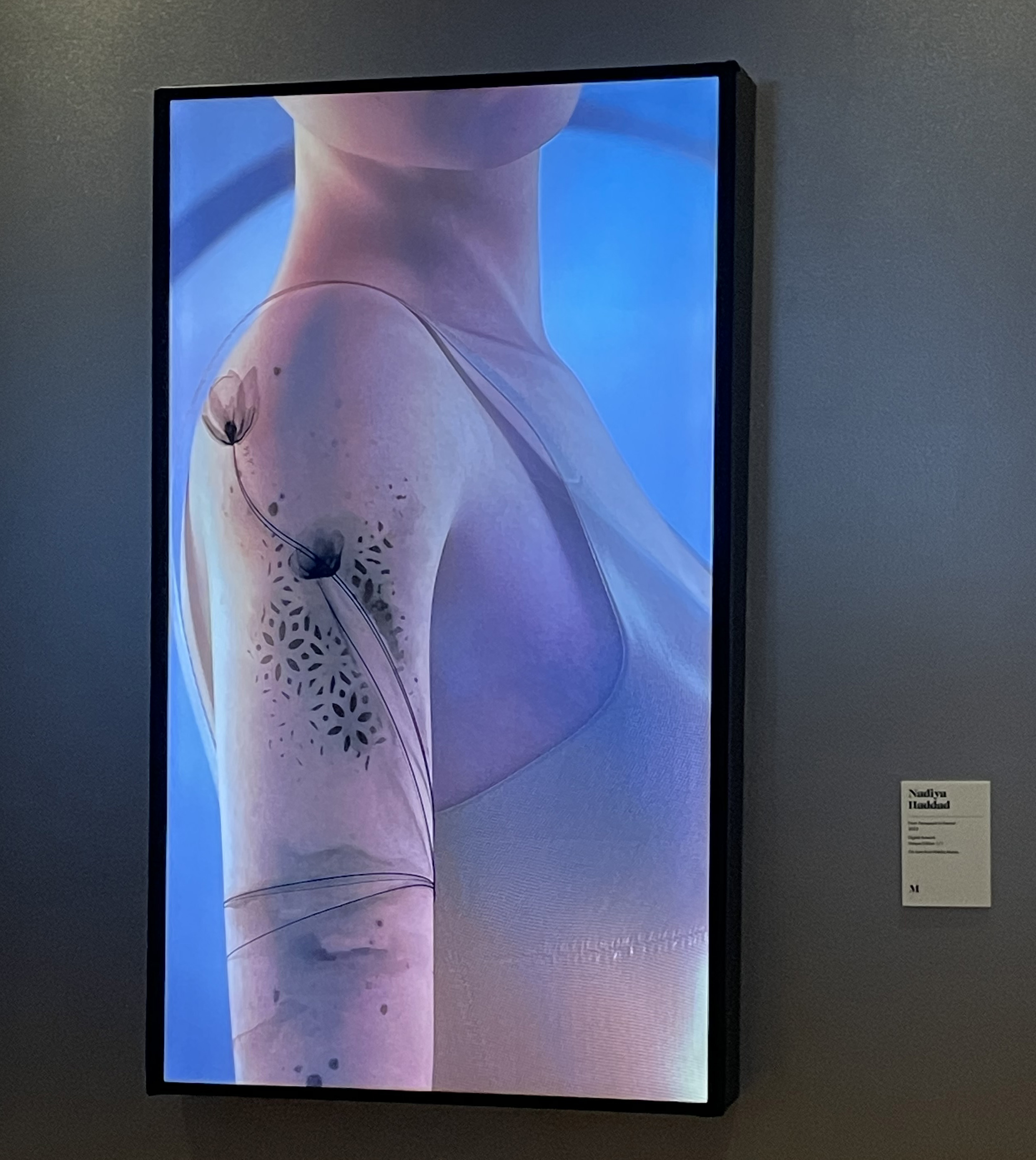
The Kid: a self-taught artist, The Kid’s large works address social and political themes facing today’s youth. His creative style is described as ‘hyper-realism’, painting, portraiture, photography, created collage-like.  I also enjoyed Nadia Haddad and Studio Irma’s exhibits.

            
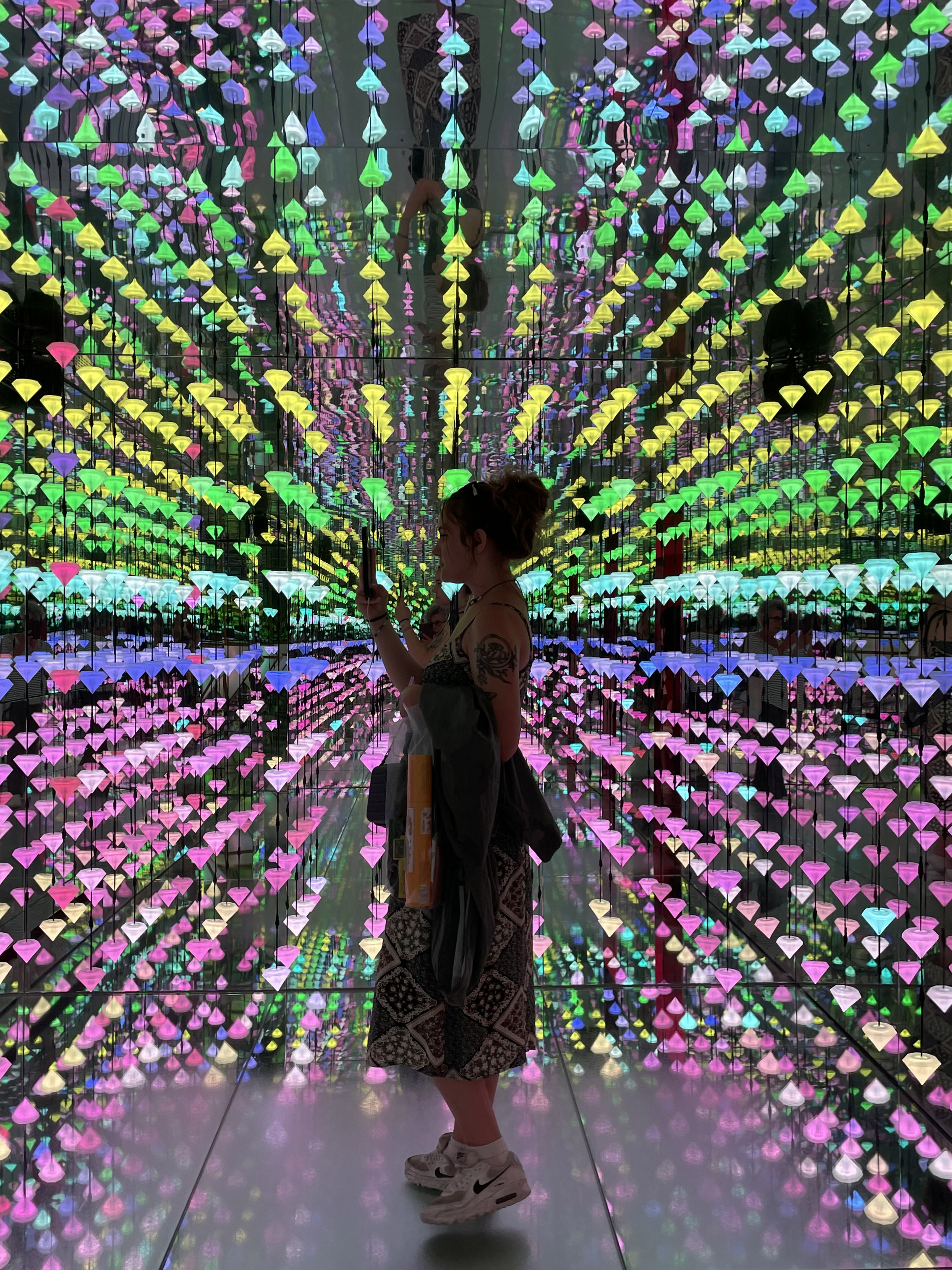
Photos: Art by The Kid.  I Saw the Sun Begin to Dim” uses Pinocchio to represent seeking identity; Nadiya Haddad “I wear my tattoos as a symbol of my own battles”; Studio Irma’s “Diamond Matrix” experience feels like stepping inside a kaleidoscope. 

What a stellar line-up at MOCO!

               
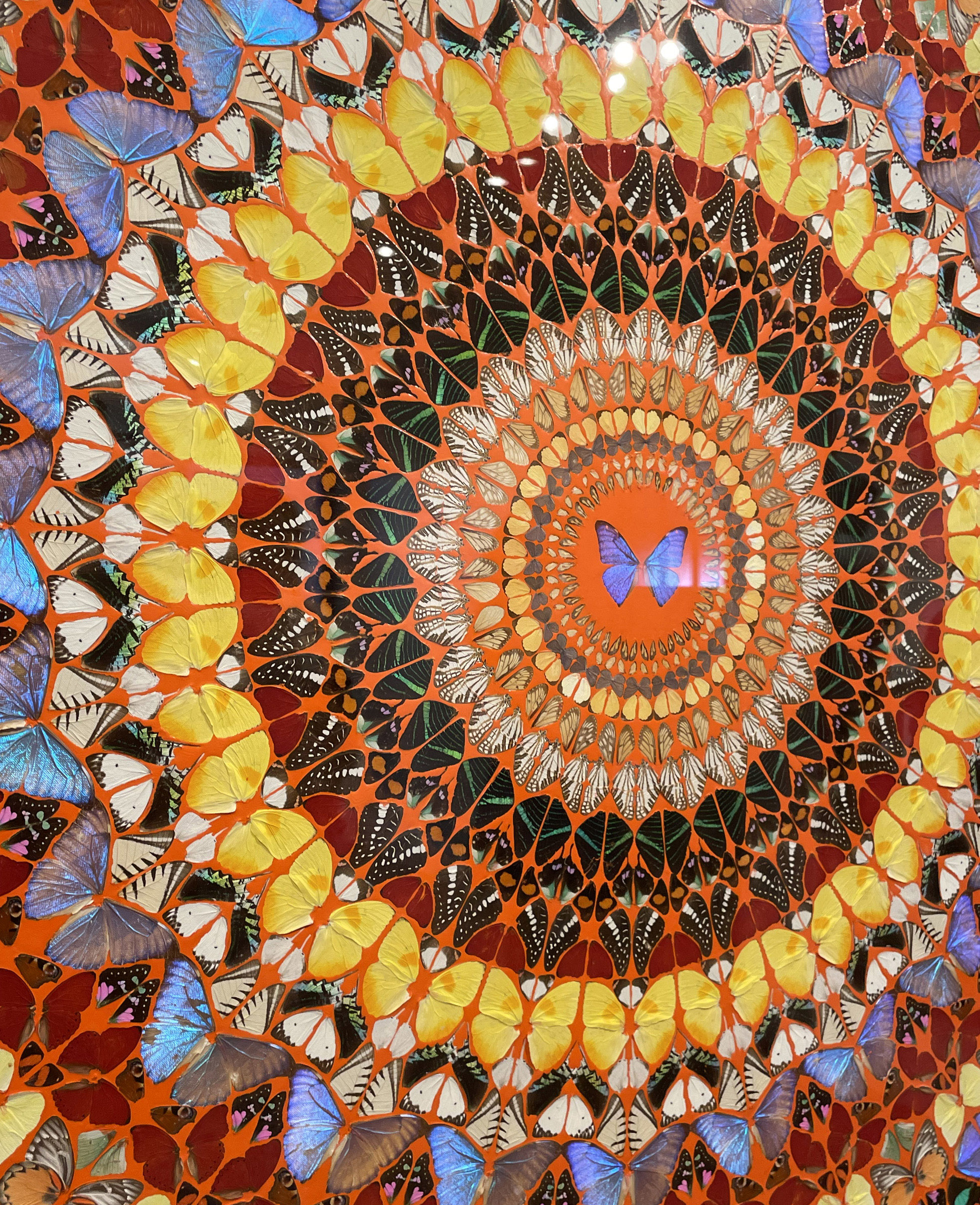
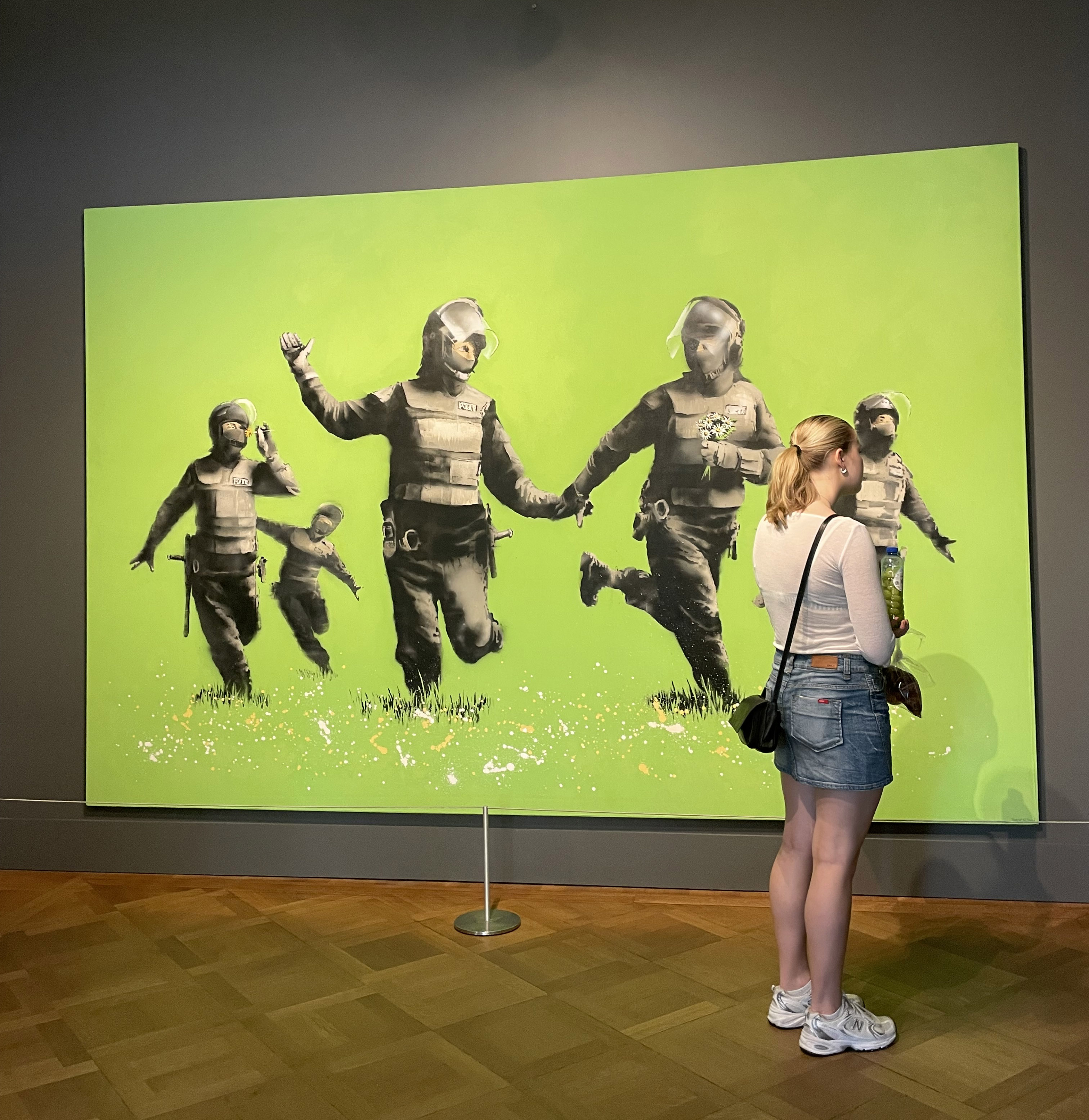
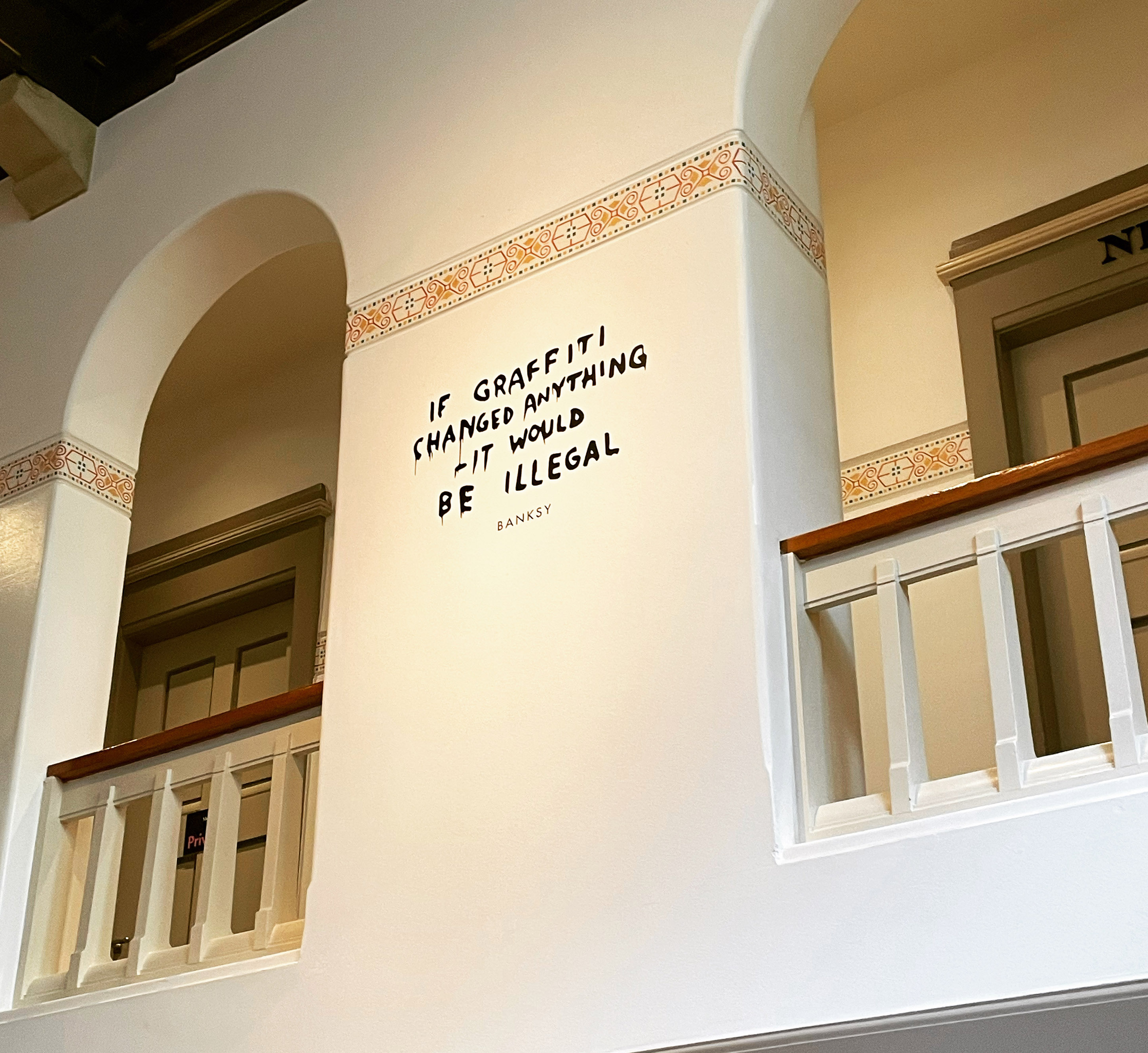
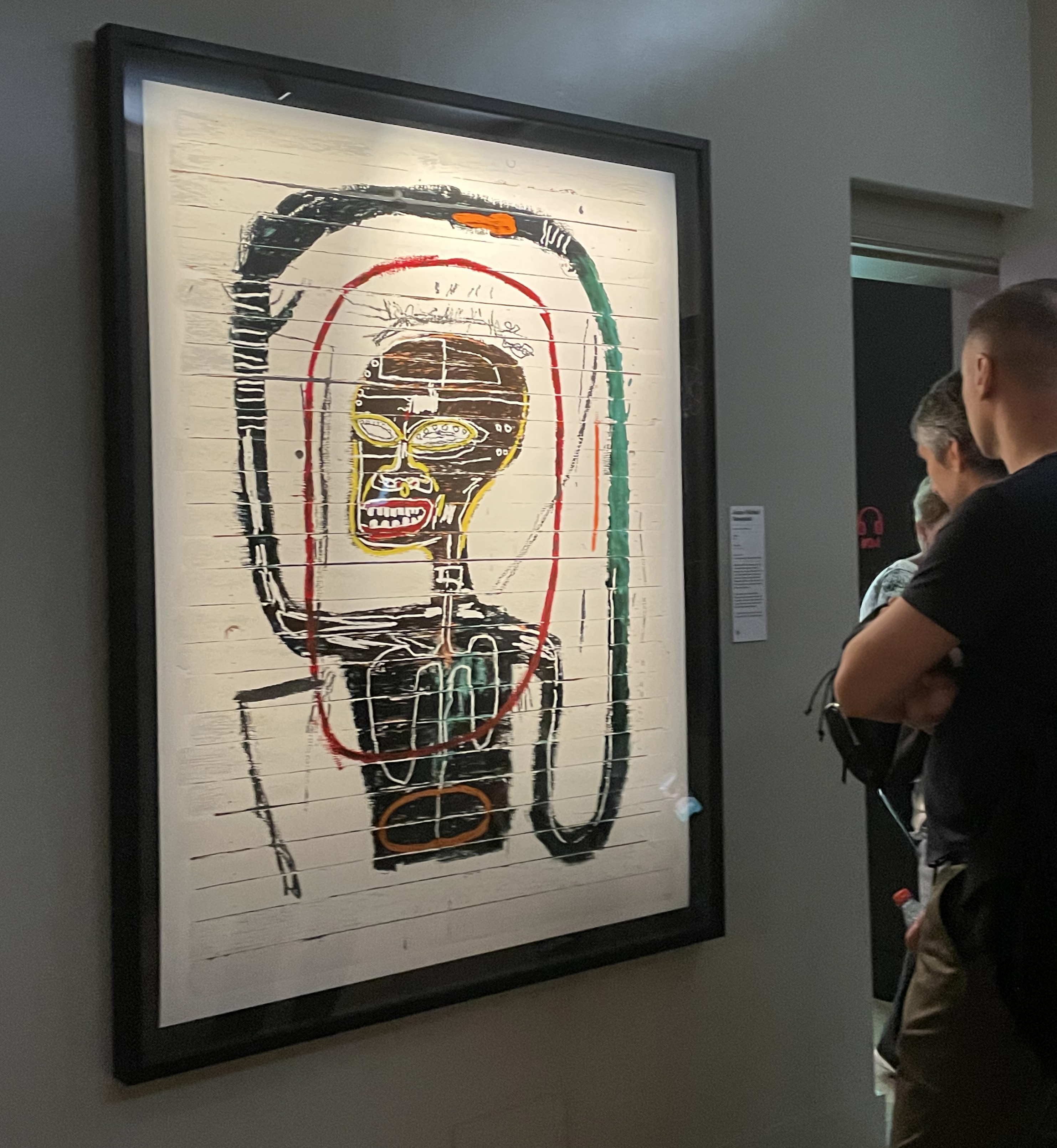
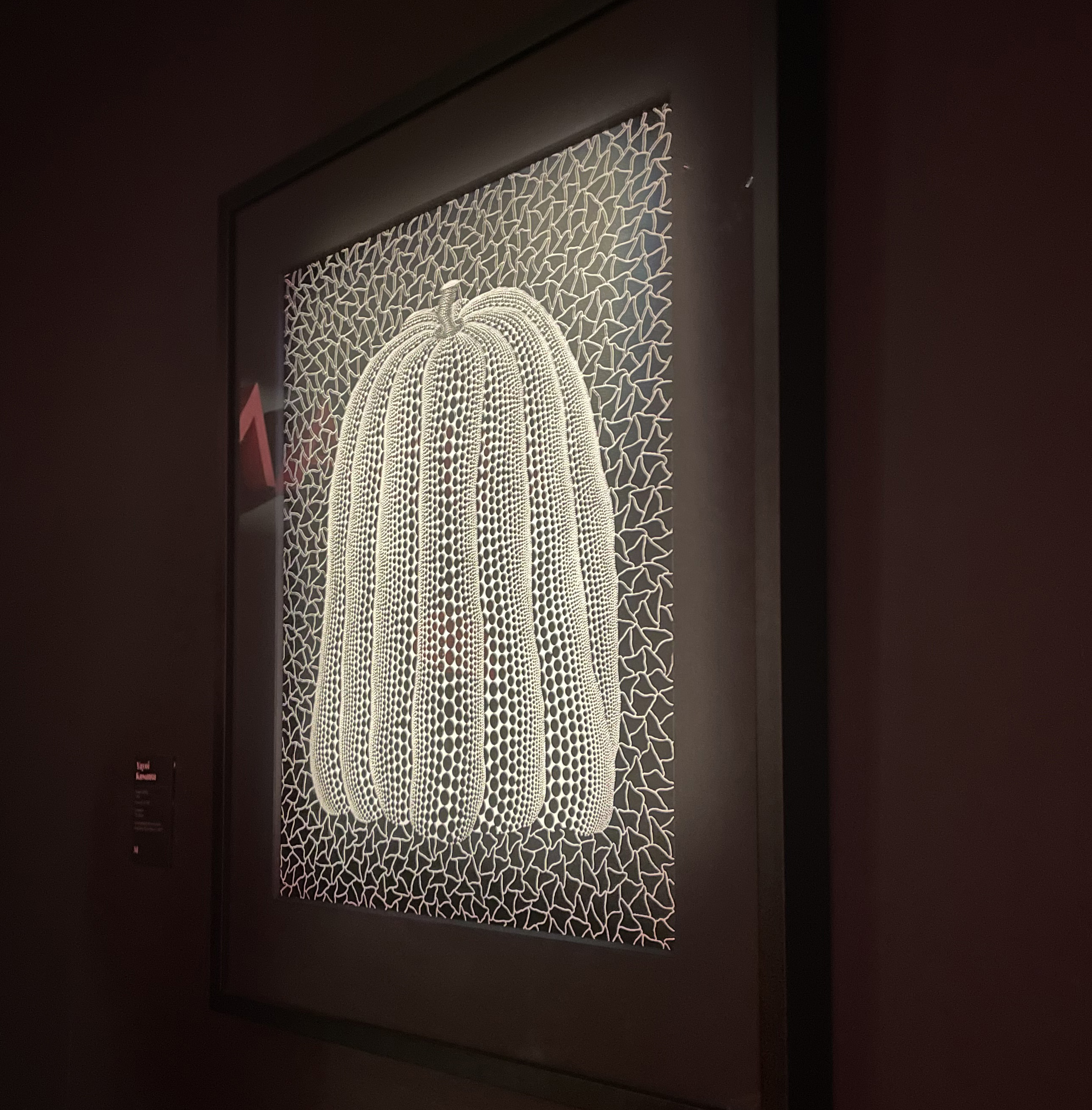
Photos: Kaws, Damien Hirst, Banksy, Keith Haring, Yayo Kusama.  

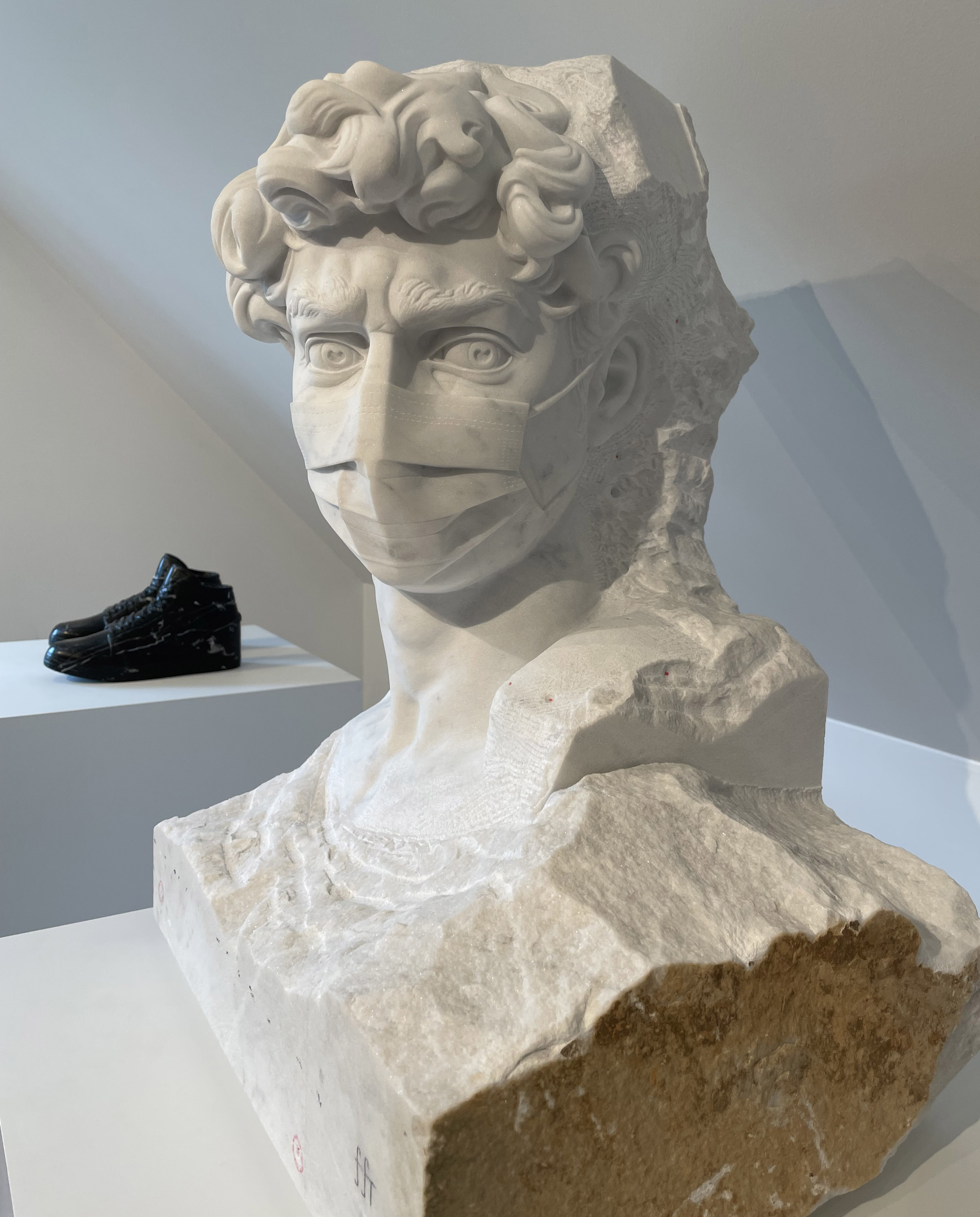
Francesco Filiberto Tonarelli’s marble sculpture “David 19” (2021) has the appearance of a Renaissance work, with a pandemic reference.


David 19 – Francesco Filiberto Tonarelli

MOCO is open daily from 9am-8pm.  website The world of Moco (mocomuseum.com)

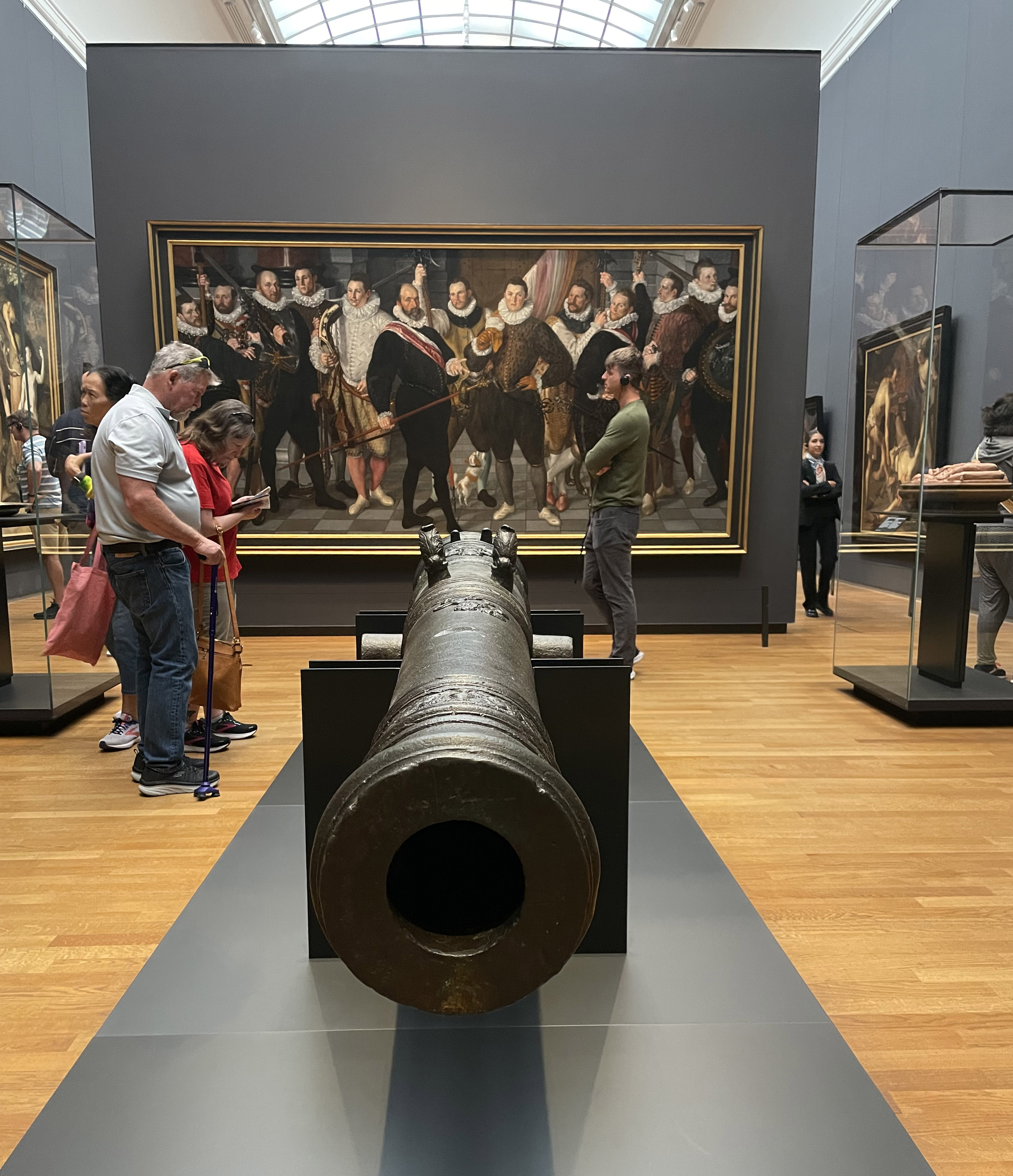
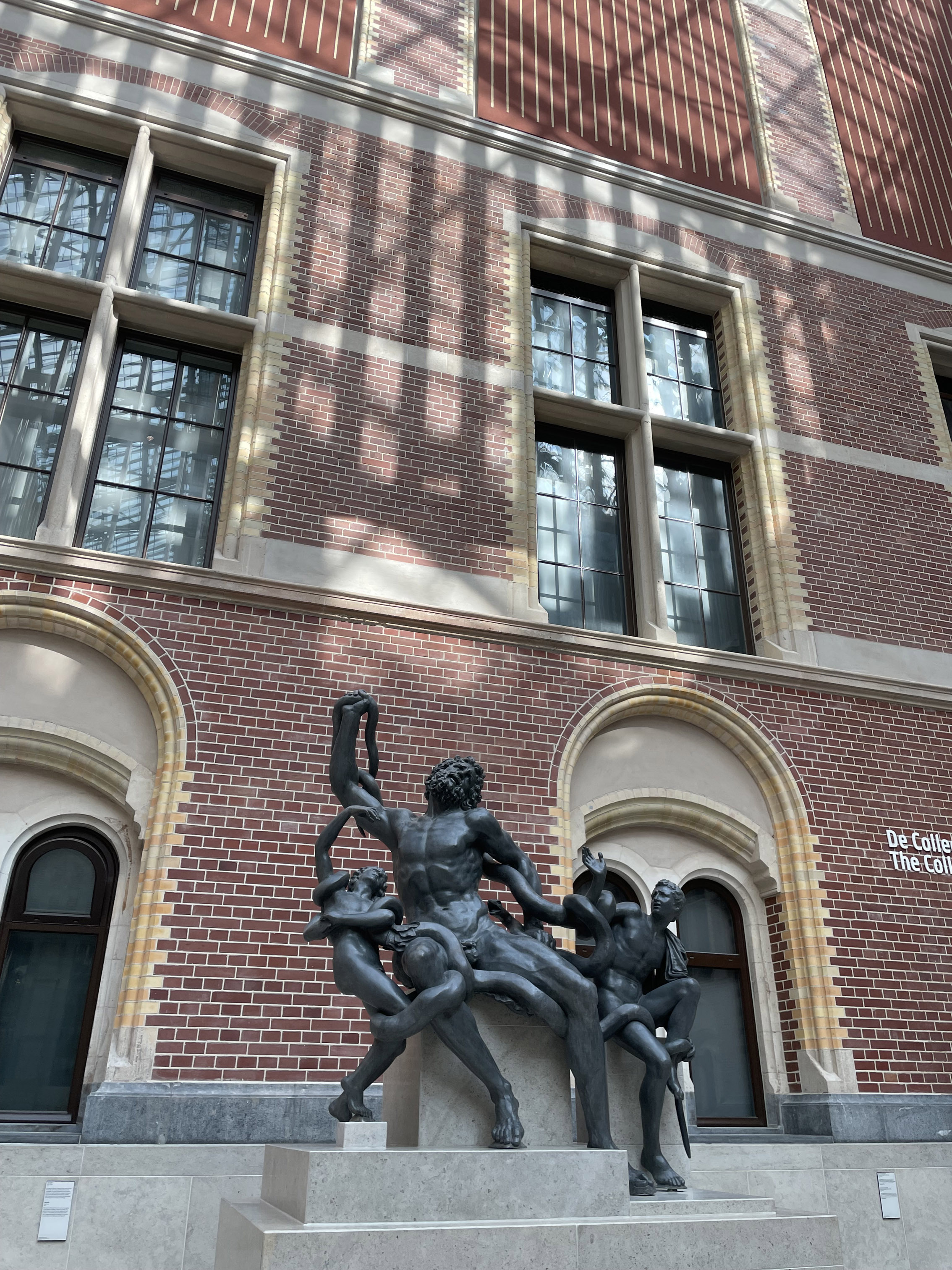
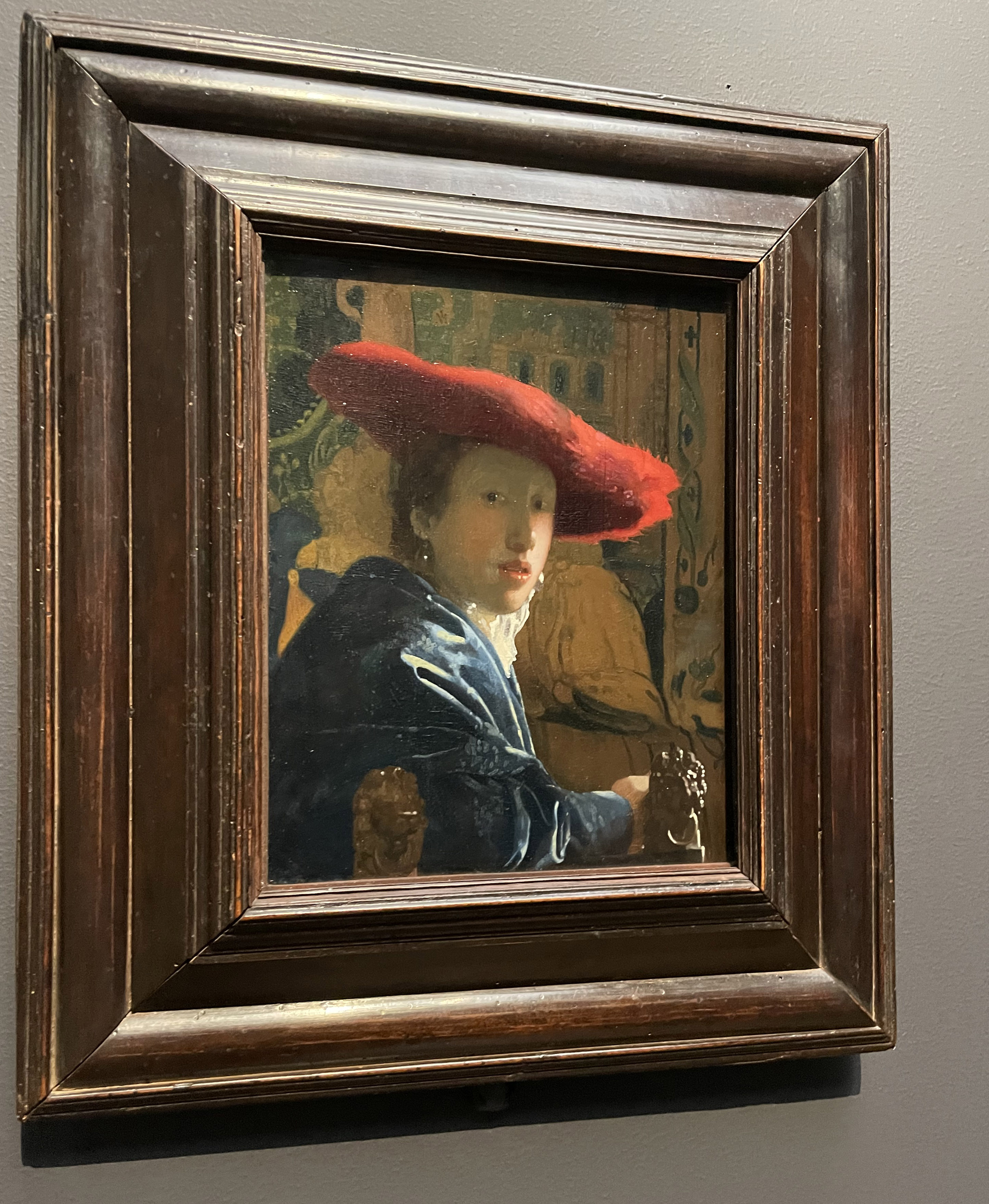
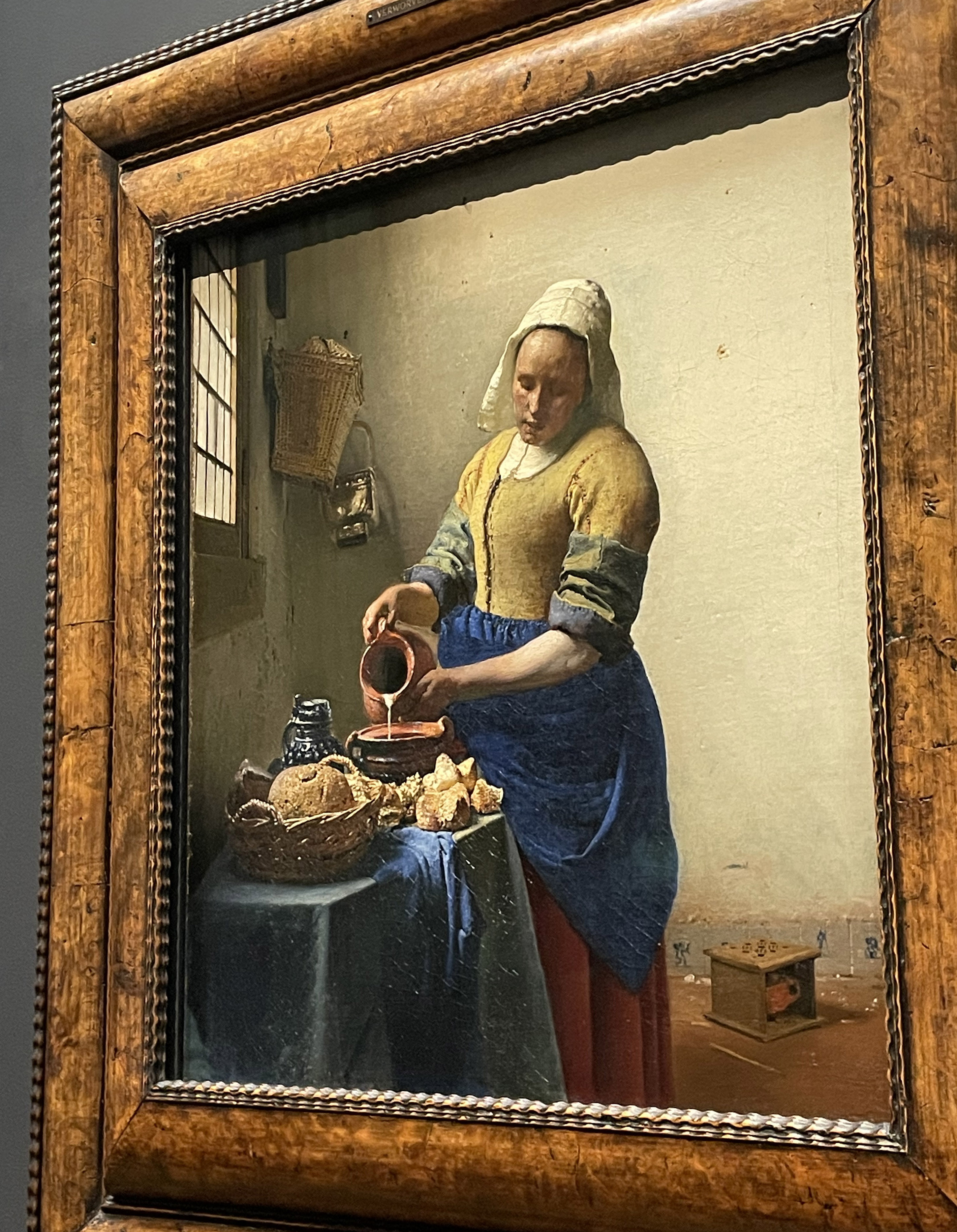
The Rijksmuseum is breathtaking on approach. It houses more than 8,000 Dutch and European works of art, covering 800 years of history. Here is the place to see all those 17th Century Dutch Masters studied at school – Rembrandt, Vermeer, Frans Hals – as well as the Dutch post-impressionists and more recent artists.

               
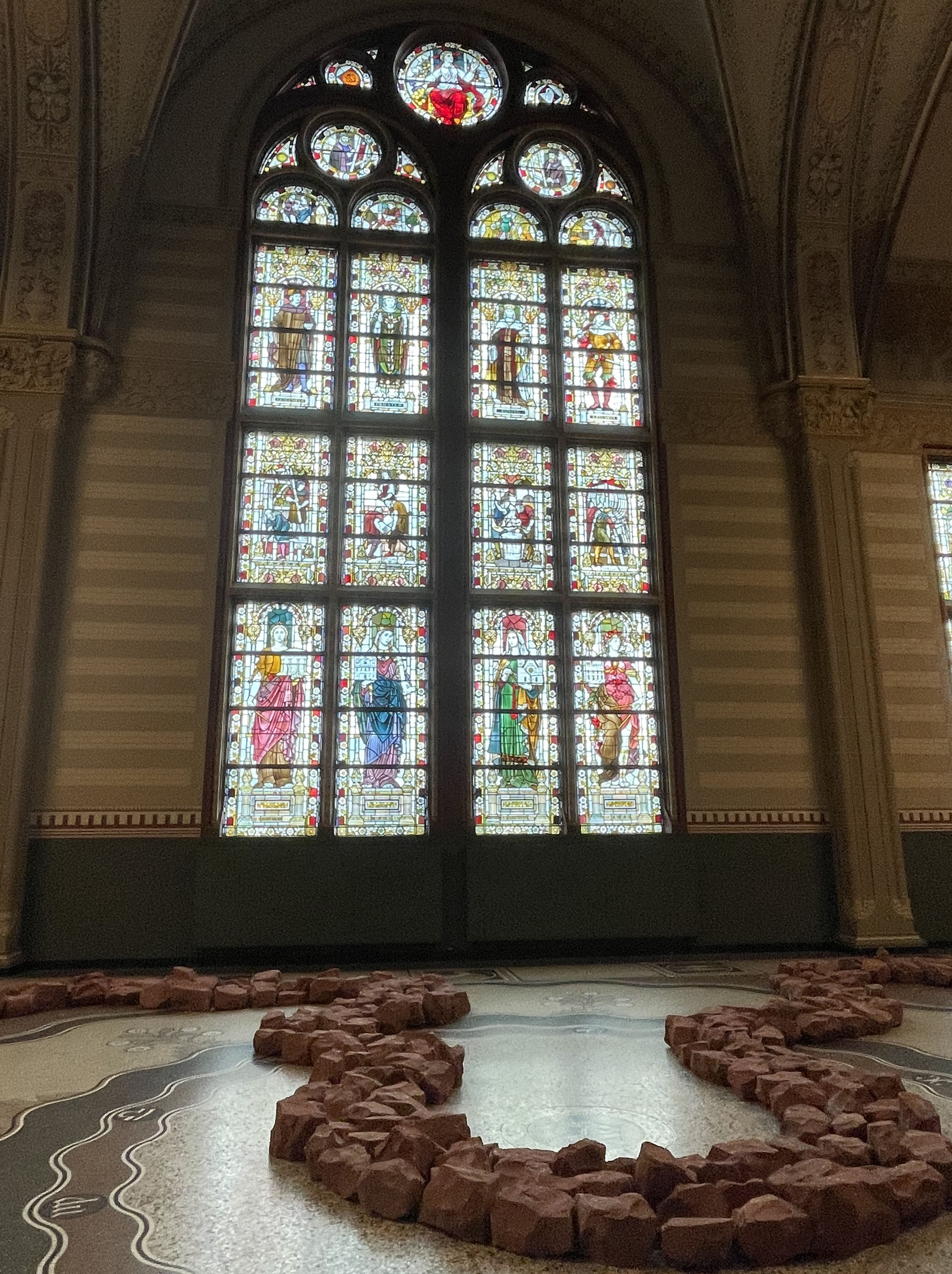
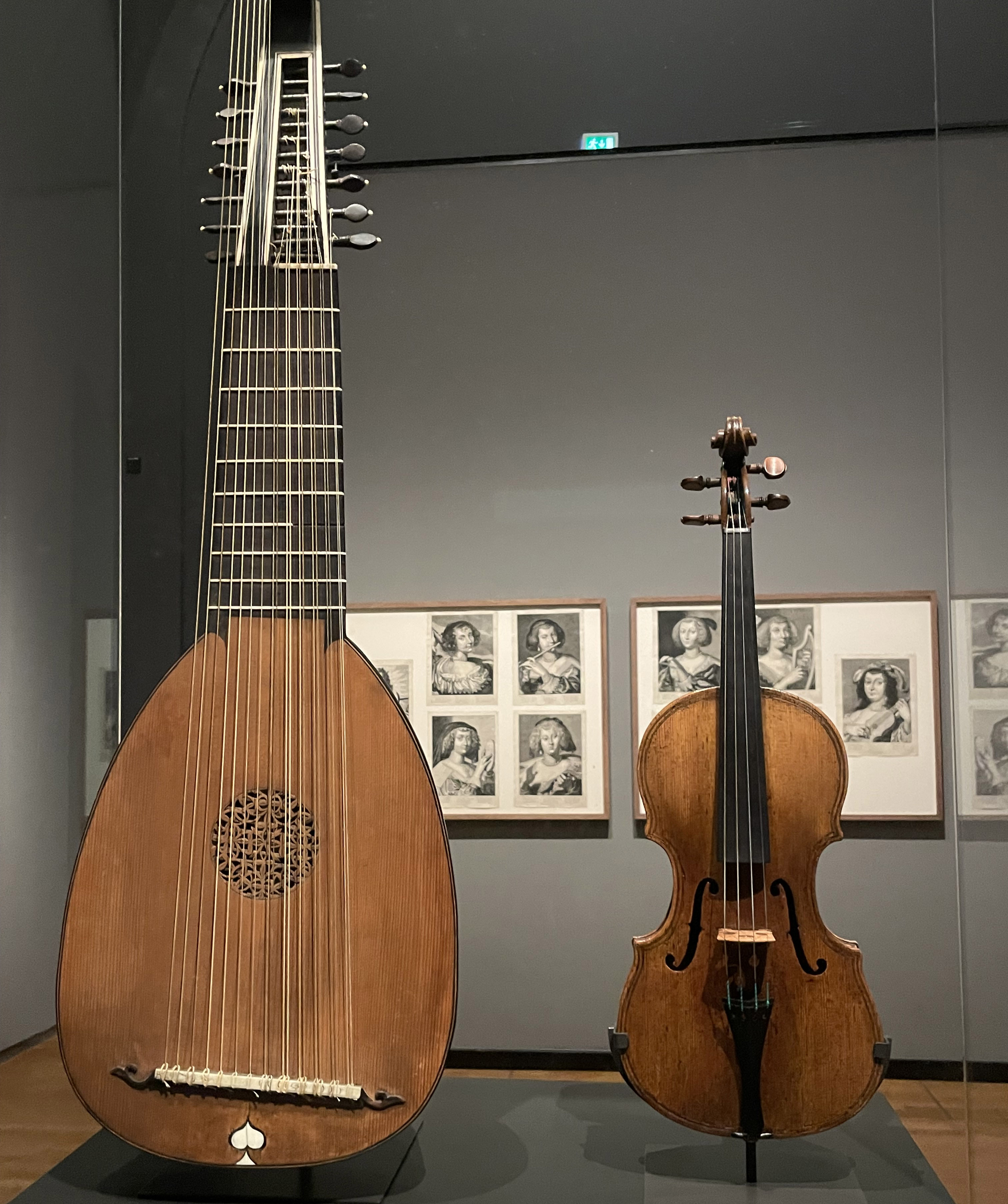
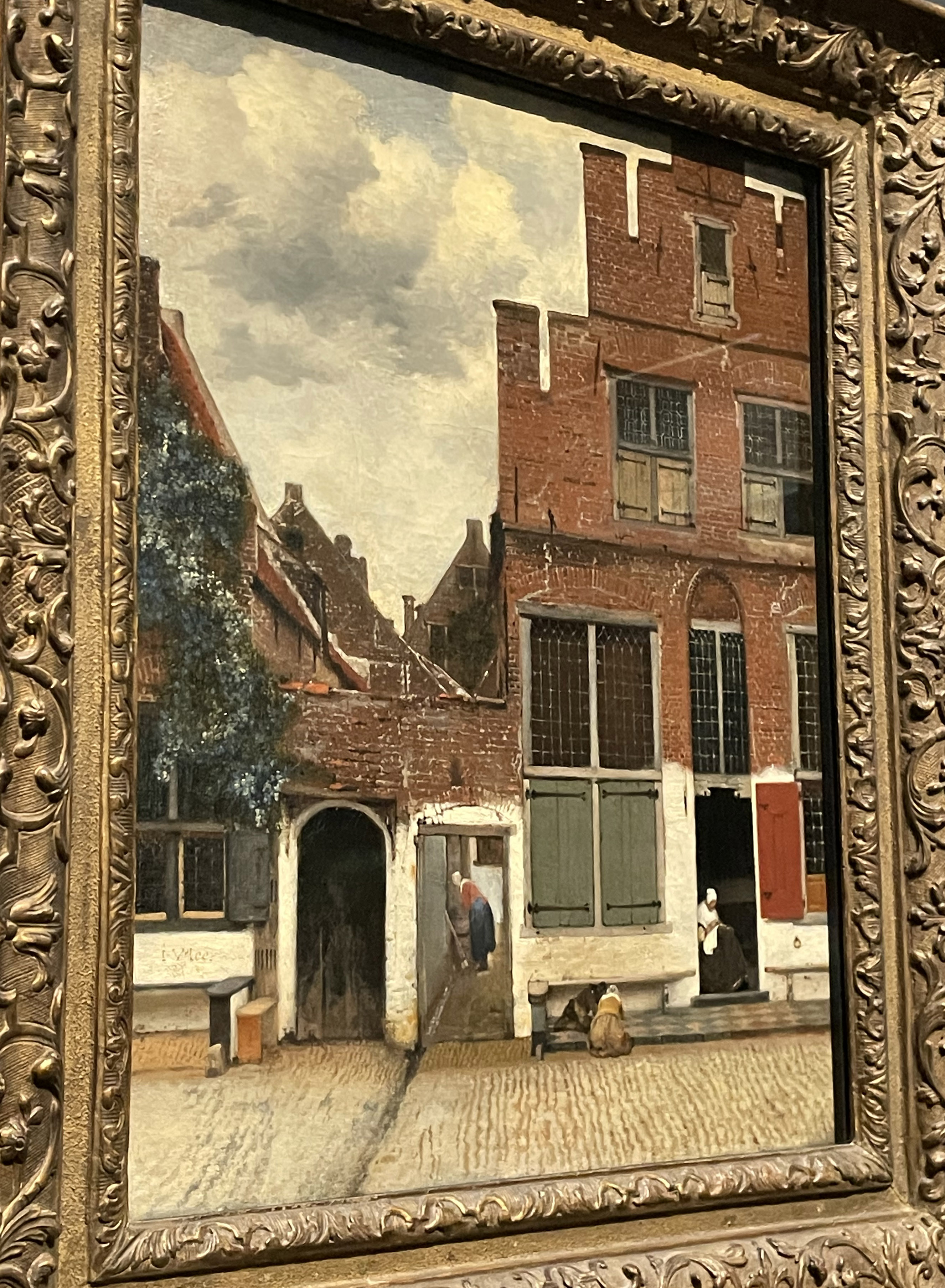
Photos:  Around the interior of The Rijksmuseum; Johannes Vermeer’s “Girl with a Red Hat”, “The Milkmaid” and “Houses in Delft” aka “The Little Street”.

Here’s a sampling of other artists whose works are in The Rijksmuseum:

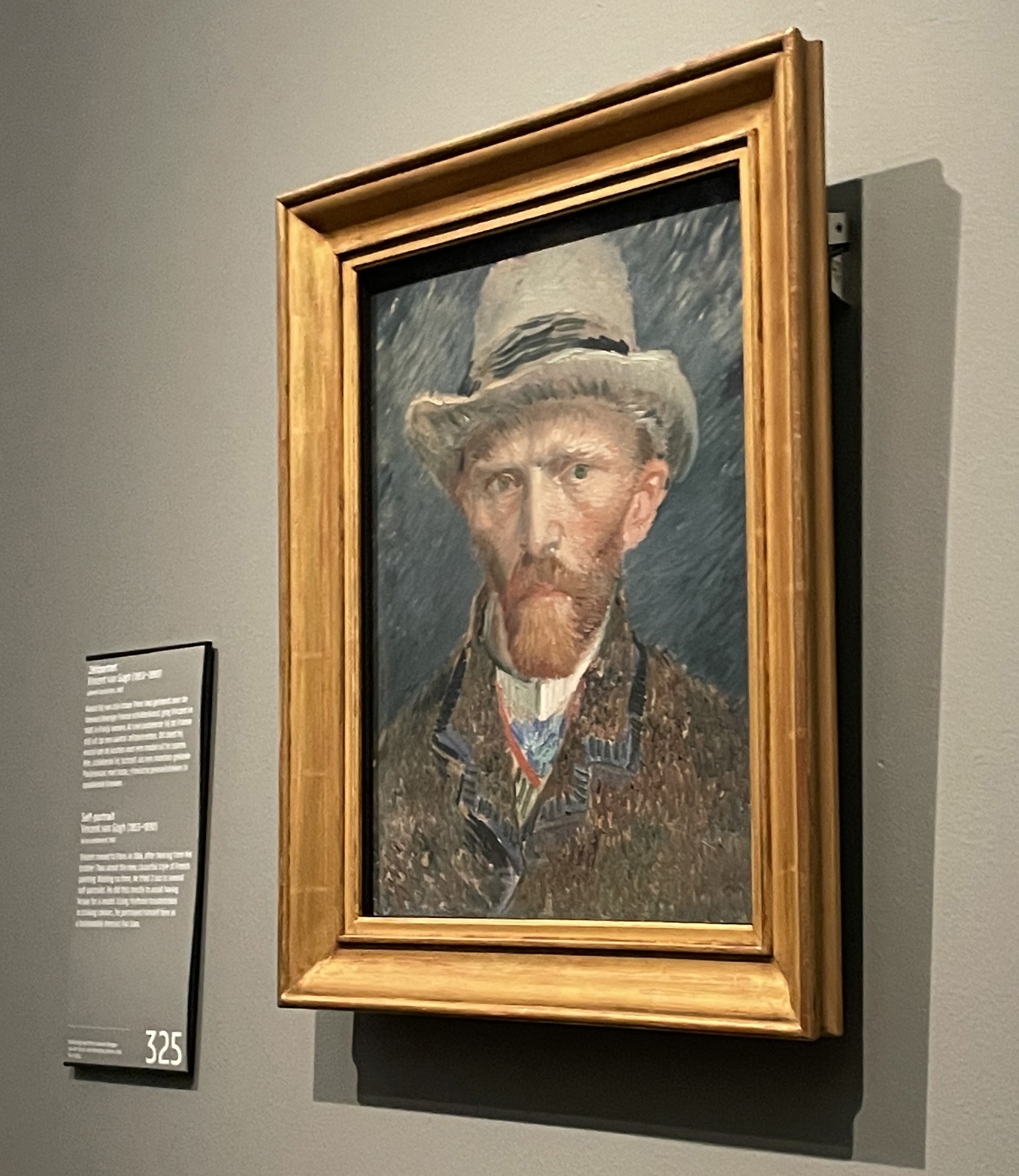
Vincent Van Gogh is there although as mentioned, there is a Van Gogh Museum in Amsterdam. While he was born in Zundert, Vincent Van Gogh spent most of his creative life in France. His works are possibly the most widely-known of all Dutch painters.
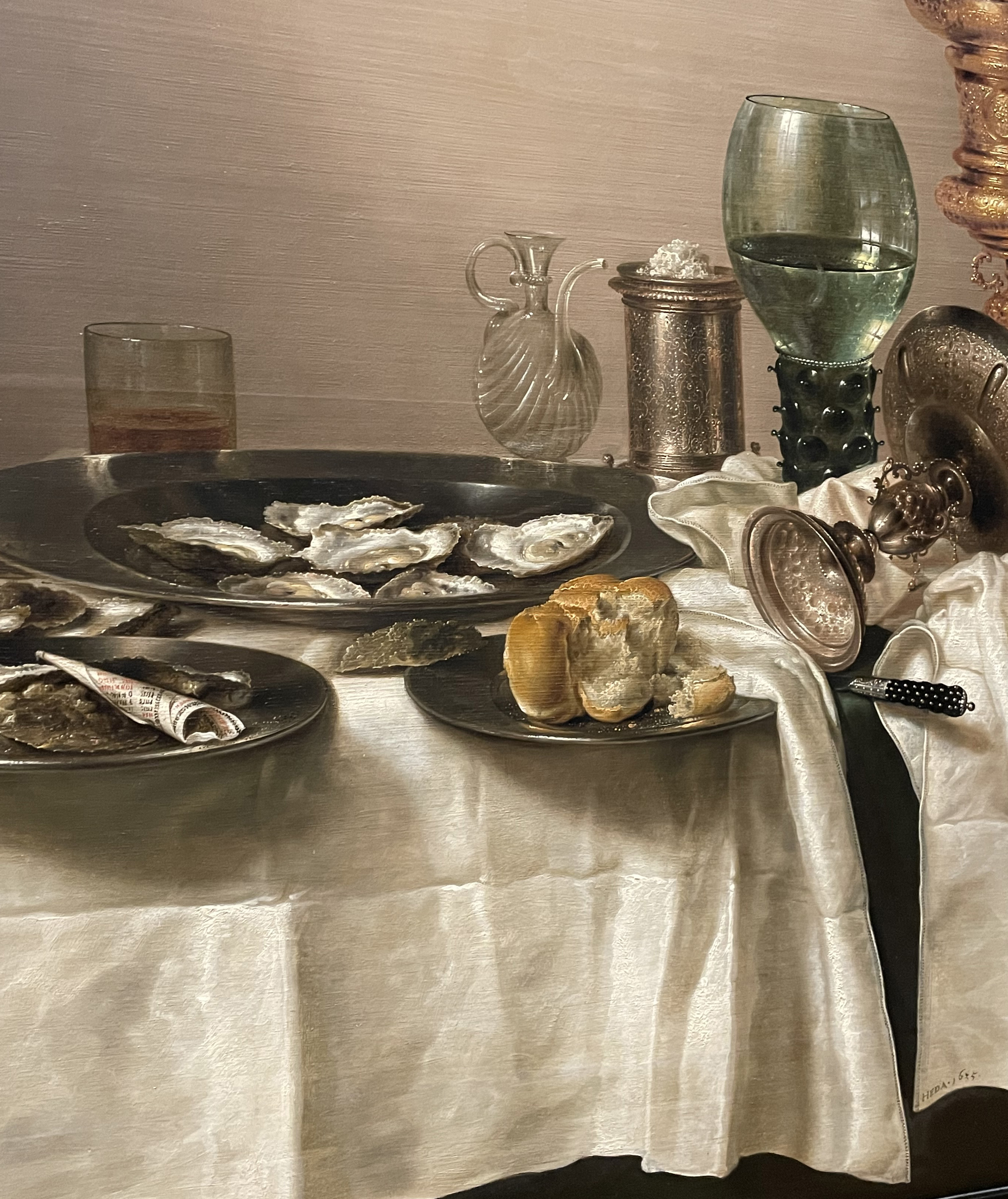
Willem Claesz, one of the principal Dutch Baroque still life painters.
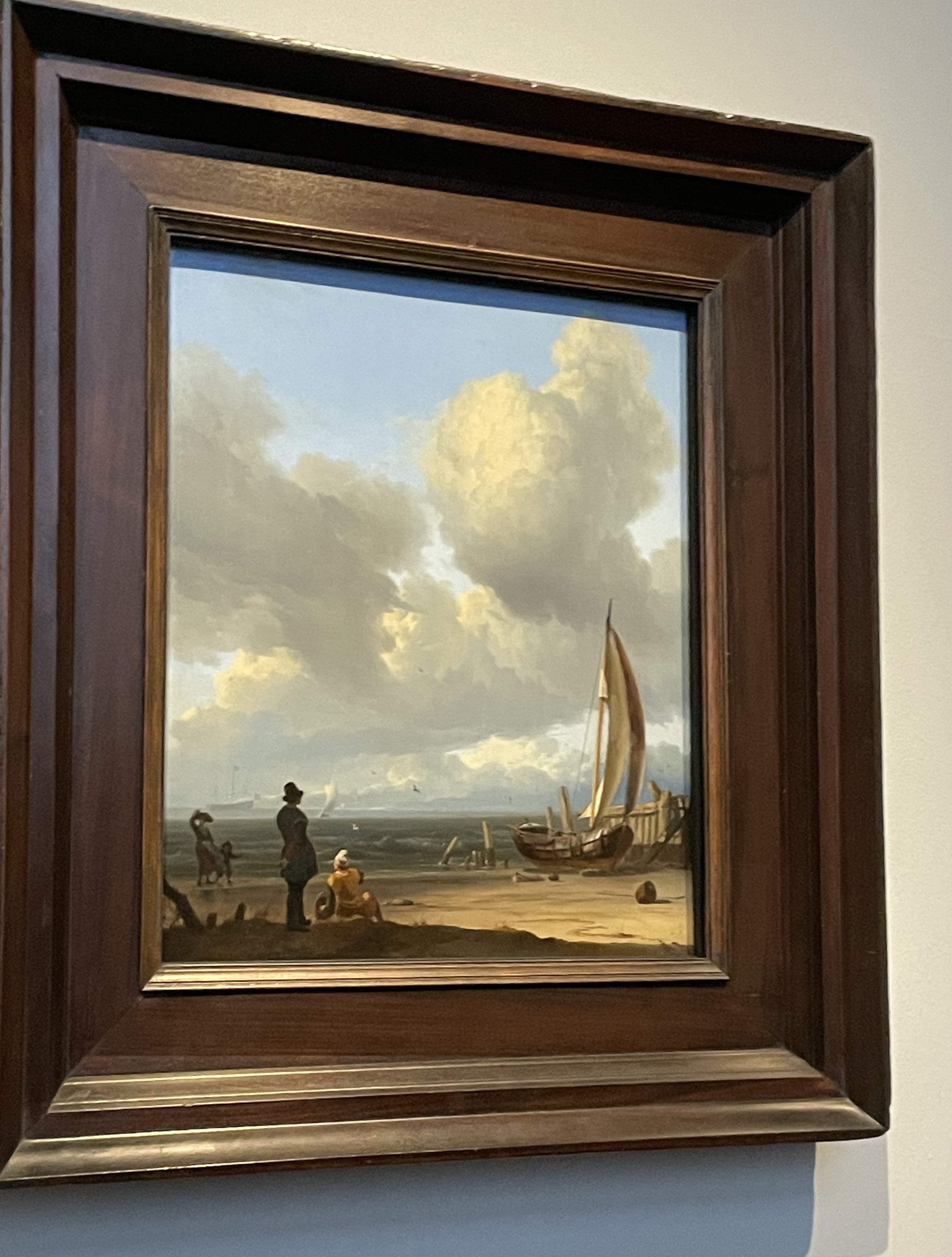
Ludolf Backhuysen was born in Germany, but studied under Dutch artists and remained in the Netherlands until his death. He was known for his seascape themes.
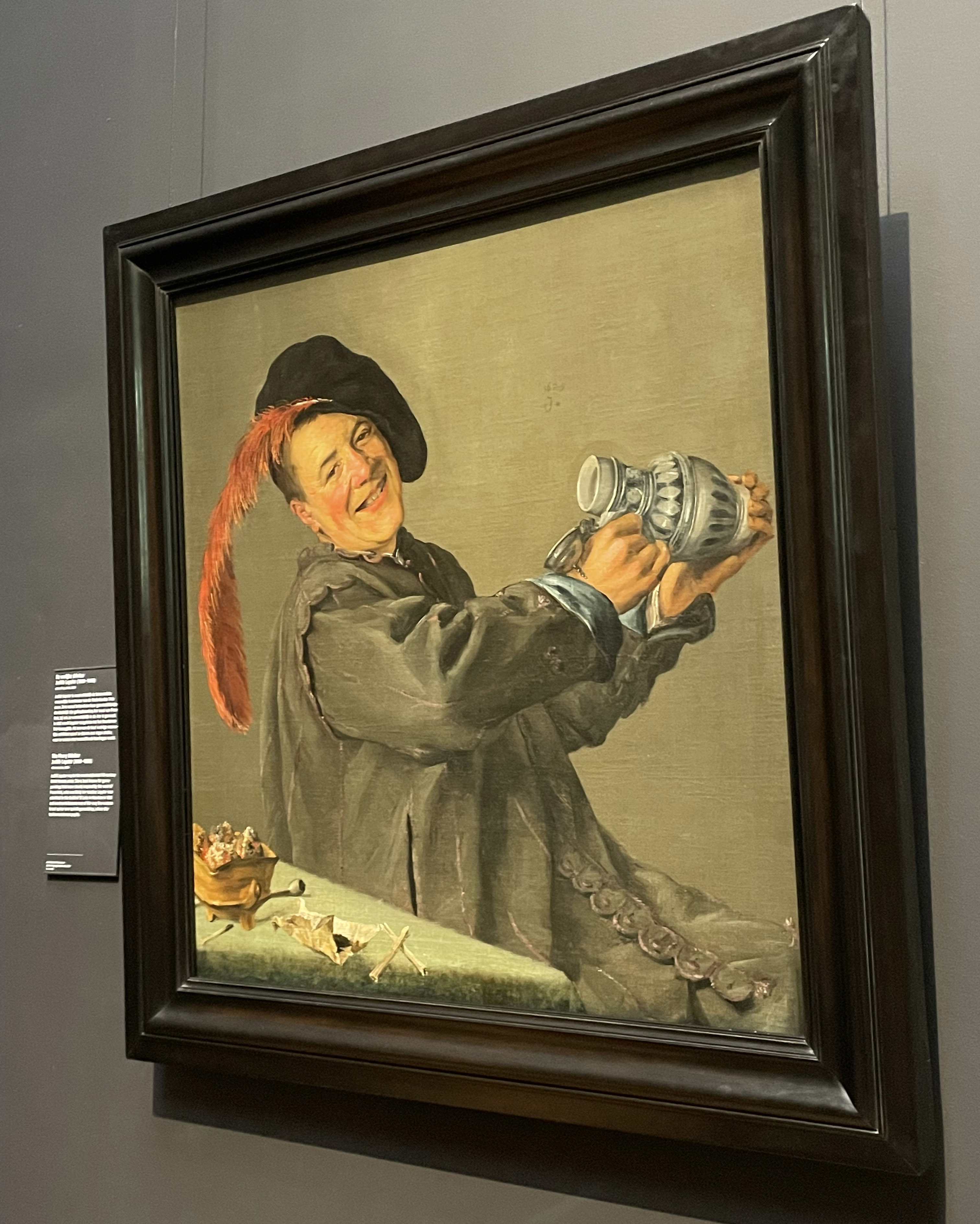
Judith Leyster painted during the “Dutch Golden Age” 1580s-1672, a time when the Netherlands’ trade, scientific developments, art was thriving throughout Europe. At that time, her work was highly regarded, but after her death, Leyster’s work was attributed to Frans Hals or her artist husband, Jan Miense Molenaer.  It wasn’t until the late 1800s that scholars attributed her name as the artist.
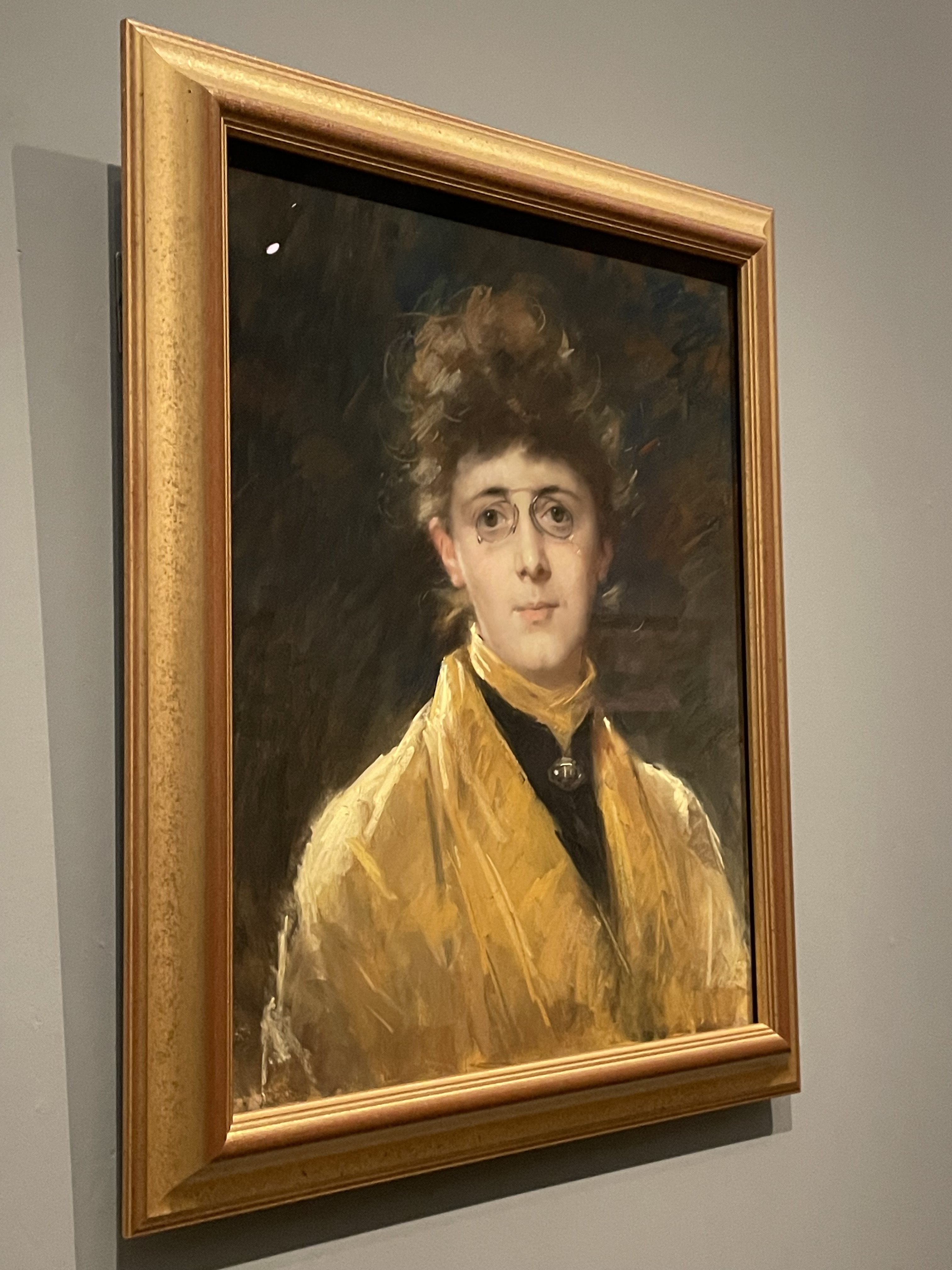
Another female artist, Thérèse Schwartze, was born in Amsterdam. Her father, also a painter, provided her early training. She went on to study at Amsterdam’s State Academy of Fine Arts.
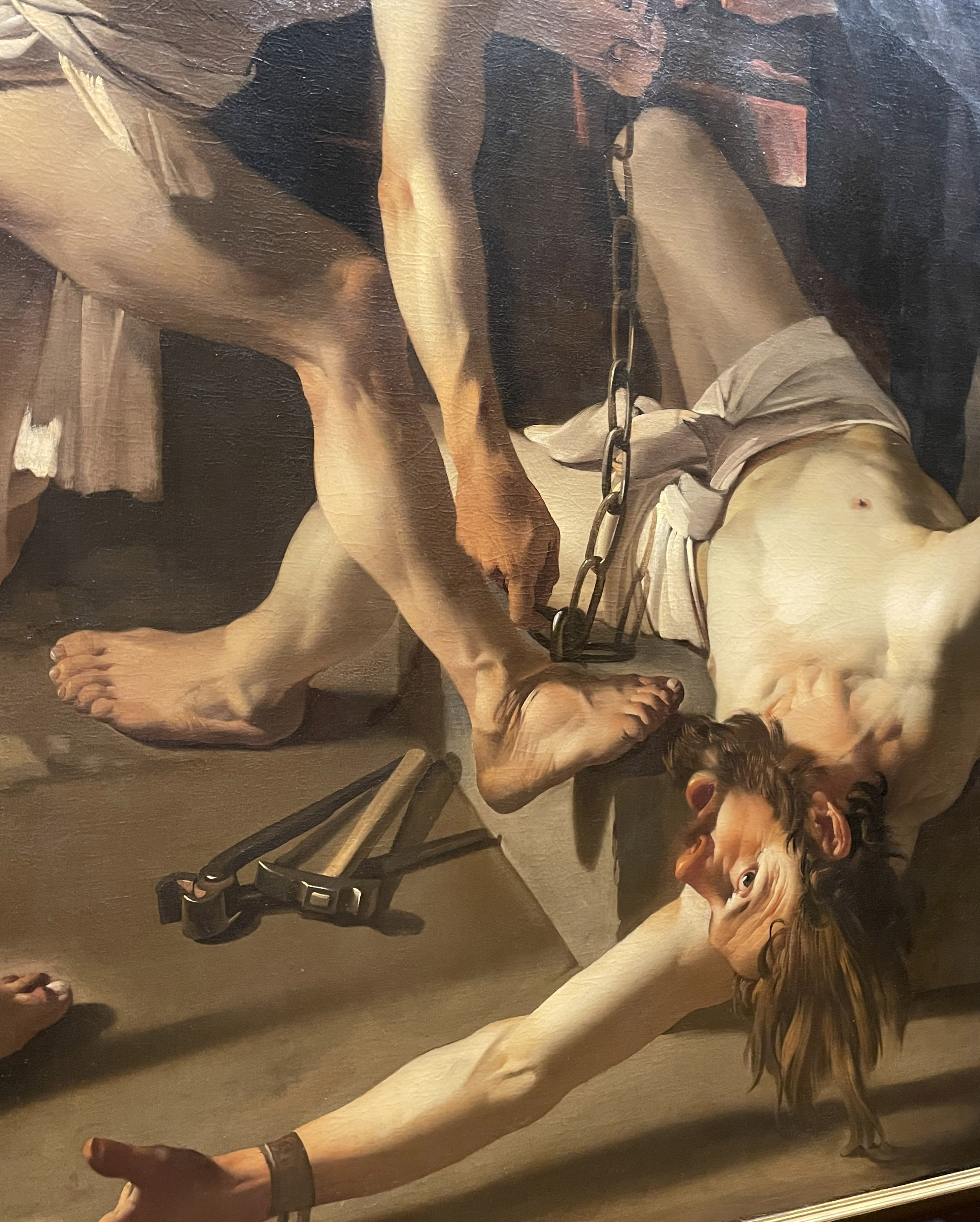
I was struck by Dirck van Baburen’s gruesome painting “Prosmethus” depicting a Greco-Roman mythology story where Mercury watches the god Vulcan punish bold and cunning Titan, Prometheus, for stealing fire from the gods and giving it to mortals. Prometheus’s punishment is to be bound to a rock and to have his liver consumed daily by an eagle!

               
Photos: Van Gogh’s self portrait; (detail) “Still Life with a Gilt Cup” by Willem Claesz; “A Seascape with Figures by a boat on a shore” Ludolf Bakhuysen; Judith Leyster’s “The Merry Drinker”; Self-portrait Thérèse Schwartze; (detail) from “Prosthemus” by Dirck van Baburen.

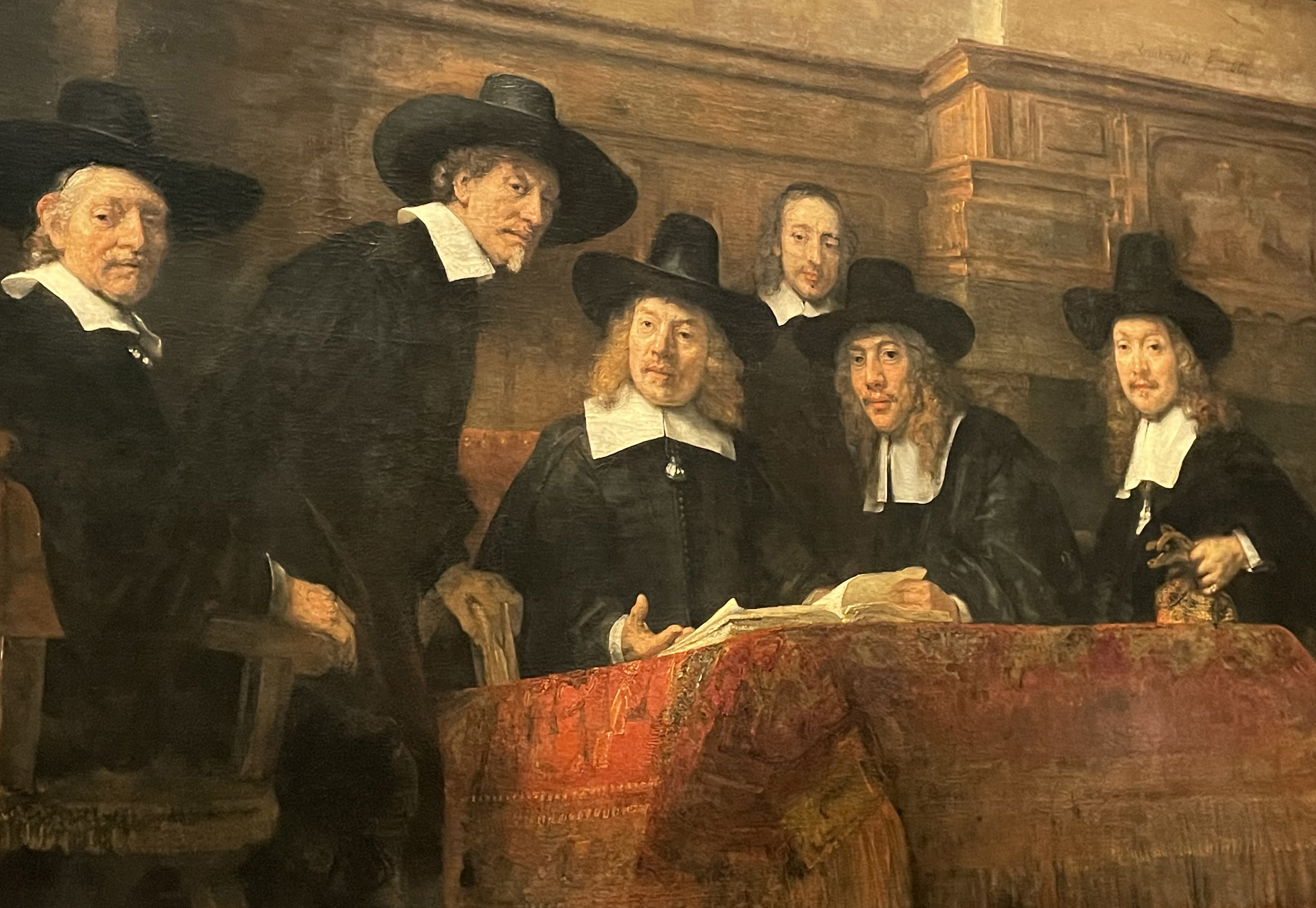
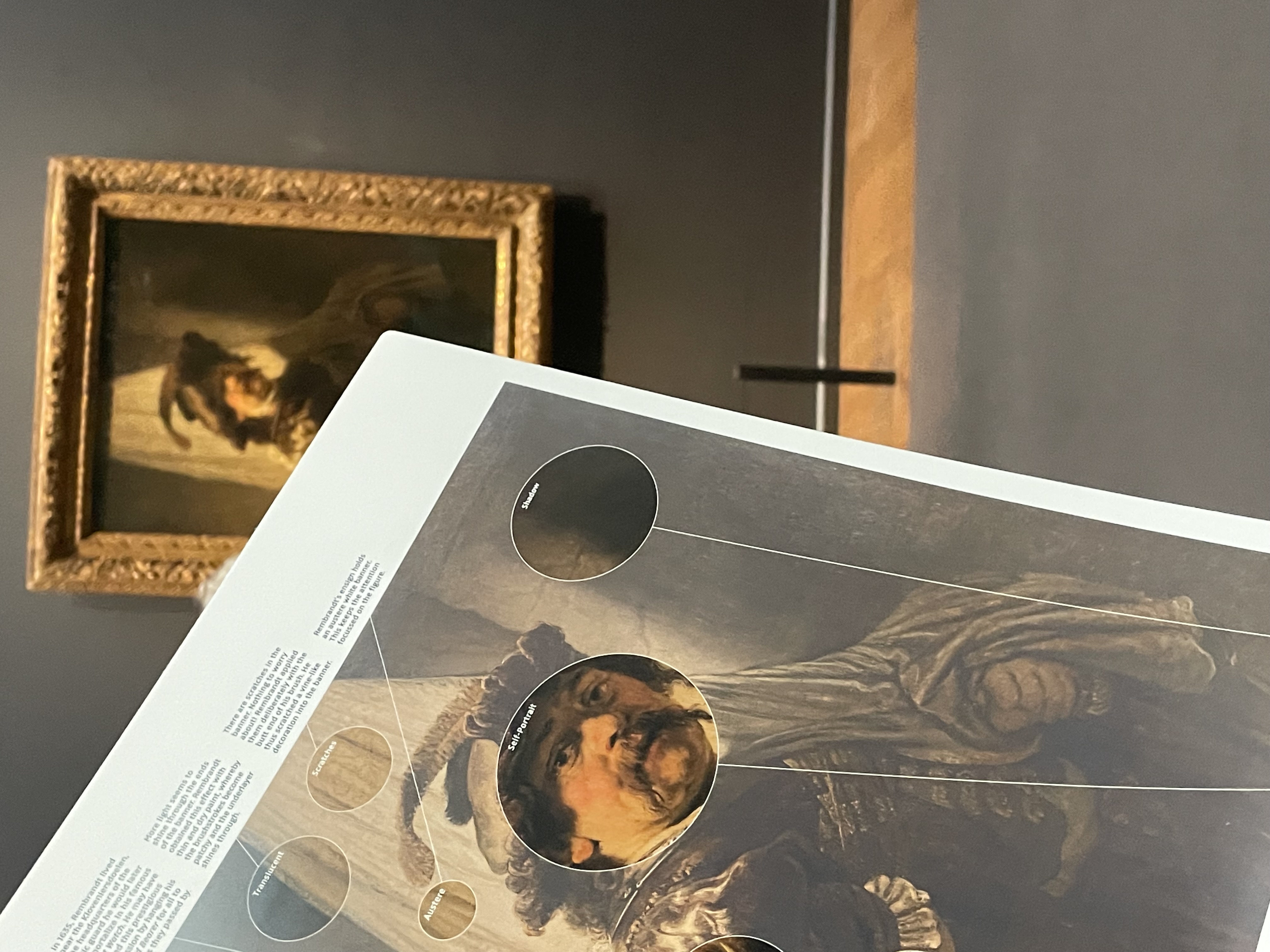
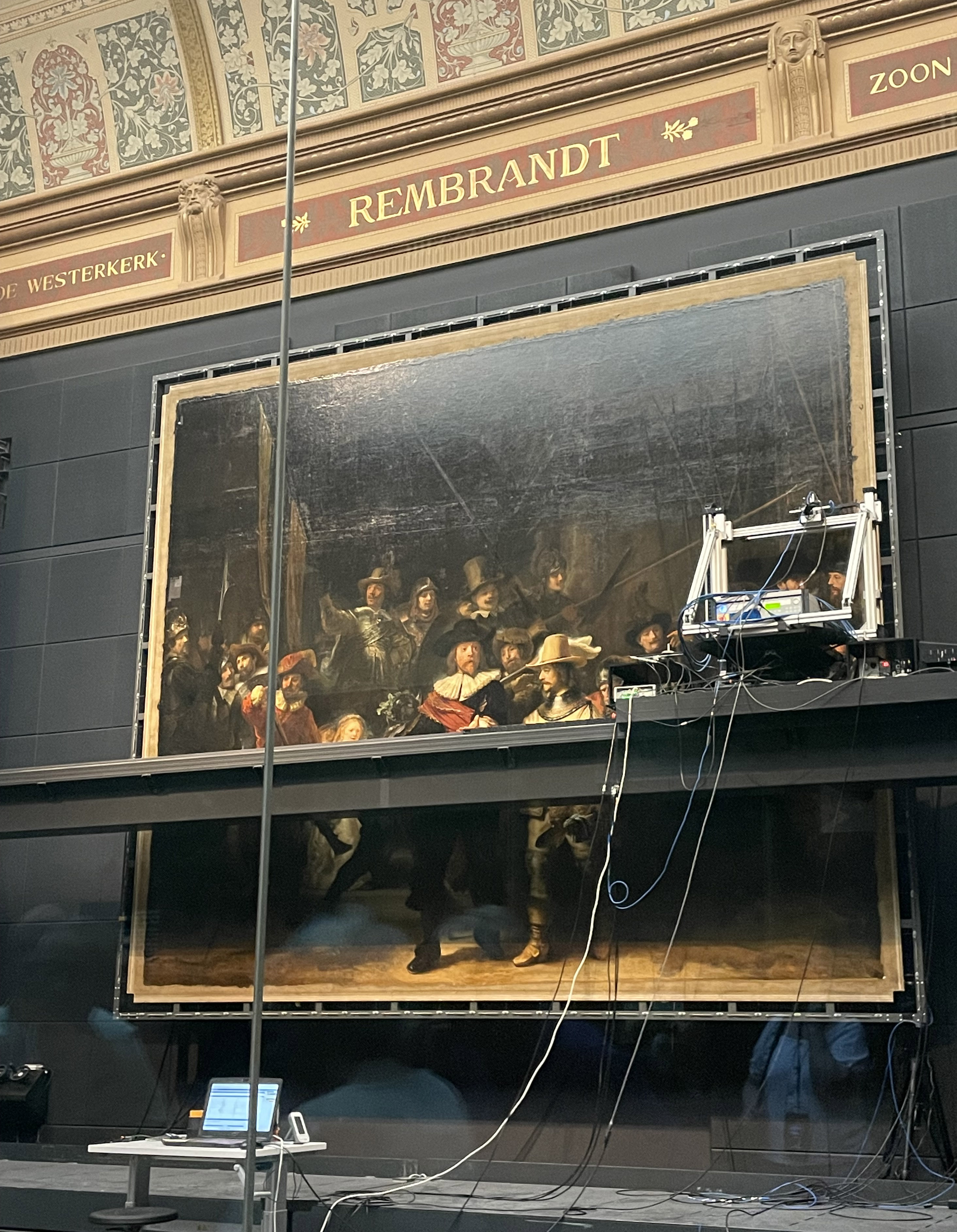
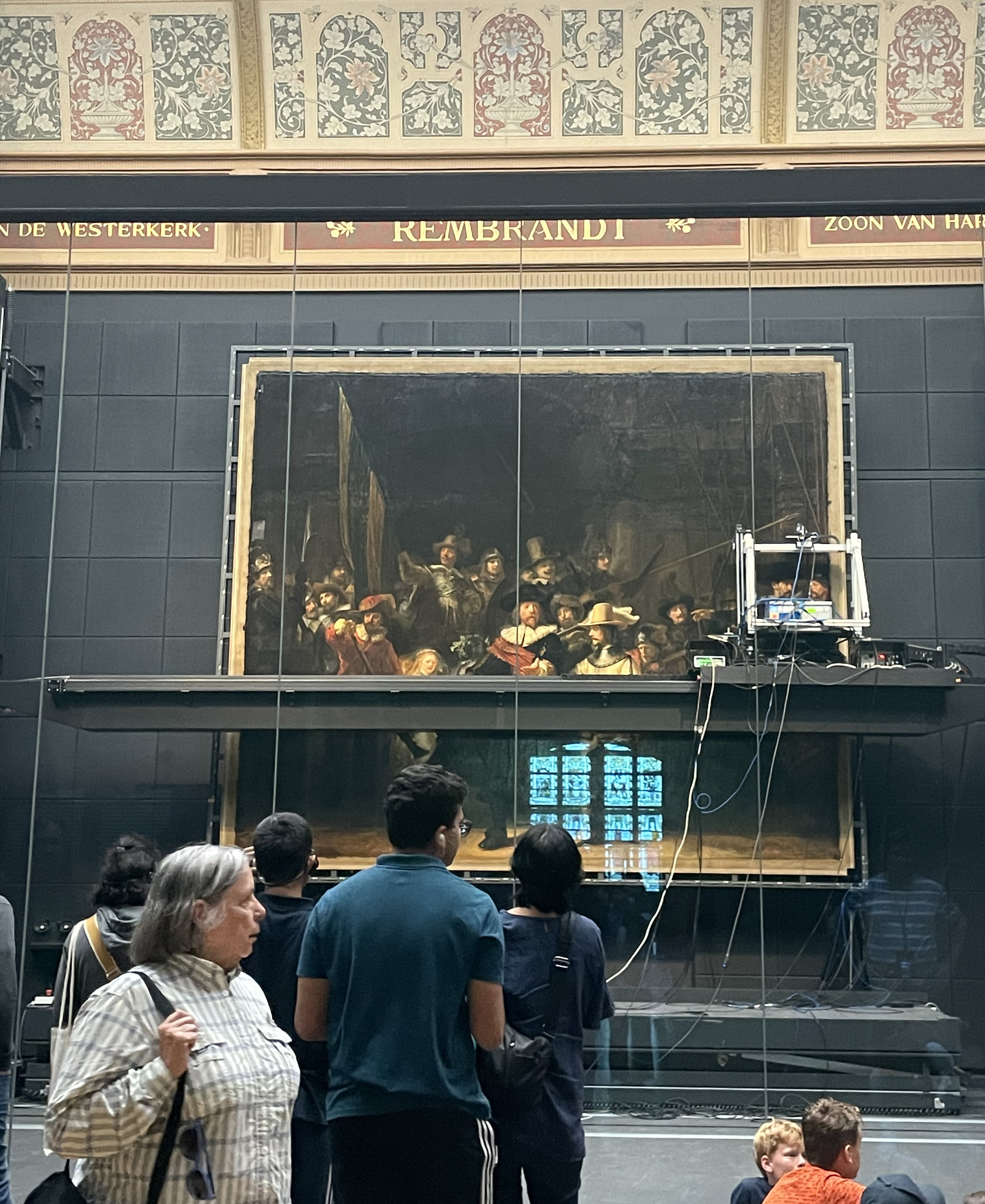
Of all the Dutch Masters, Rembrandt van Rijn is considered by many as the most important. Art students today are taught the step-by-step of painting like Rembrandt, to understand those techniques for paint mixing, application, portraiture. His works and structure are endlessly learned and explored. Since 2019, the Rijksmuseum has publicly undertaken the largest ever conservation study of an artwork, Rembrandts’ Operation Night Watch (1642).  Their process zooms in to the smallest detail, creates 3D scans, examines the layers, paint, effects of vibration on the 380 year old canvas. Information regarding the results of this research is on Results of the research (rijksmuseum.nl)

        
Photos: Rembrandt’s The Syndics (1662); educational information on Rembrandt; research project on Operation Night Watch.
The Rijksmuseum is open daily 10am-5pm   https://www.rijksmuseum.nl

At home in Holland
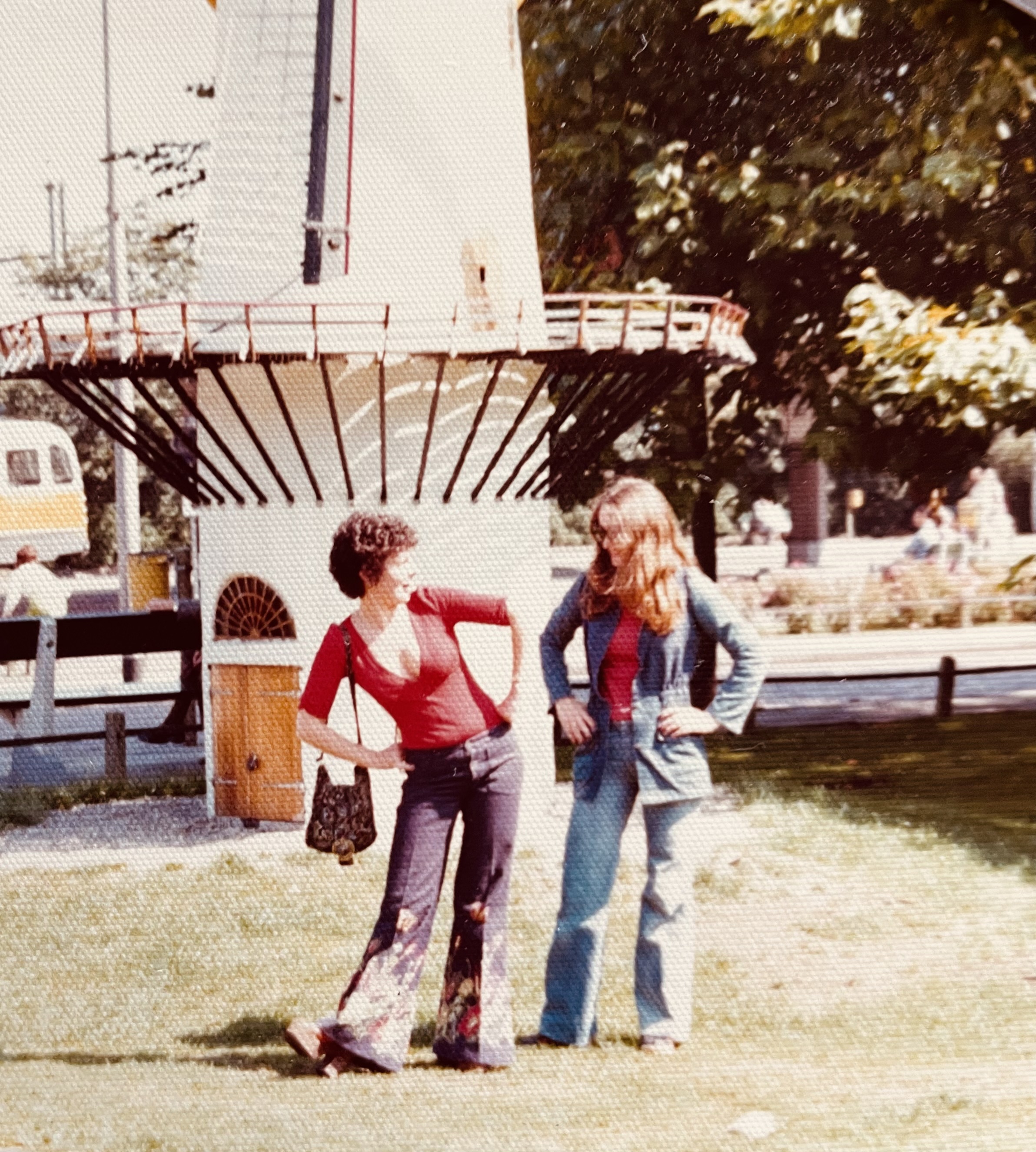
It’s 50 years since I lived in Holland. Returning in 2023 put a big smile on my face, familiar sights, the welcoming sounds of Nederlandse spraaker.

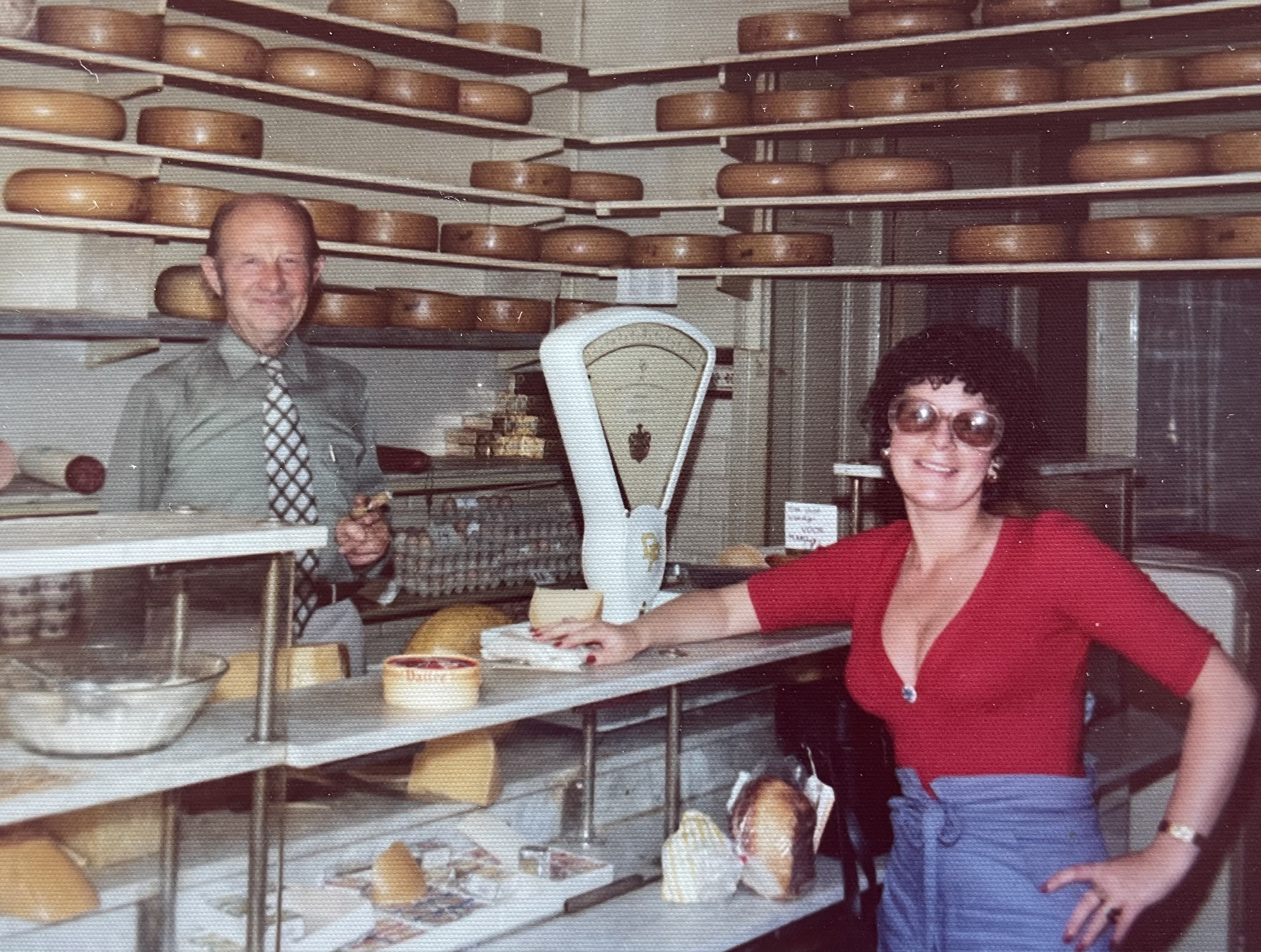
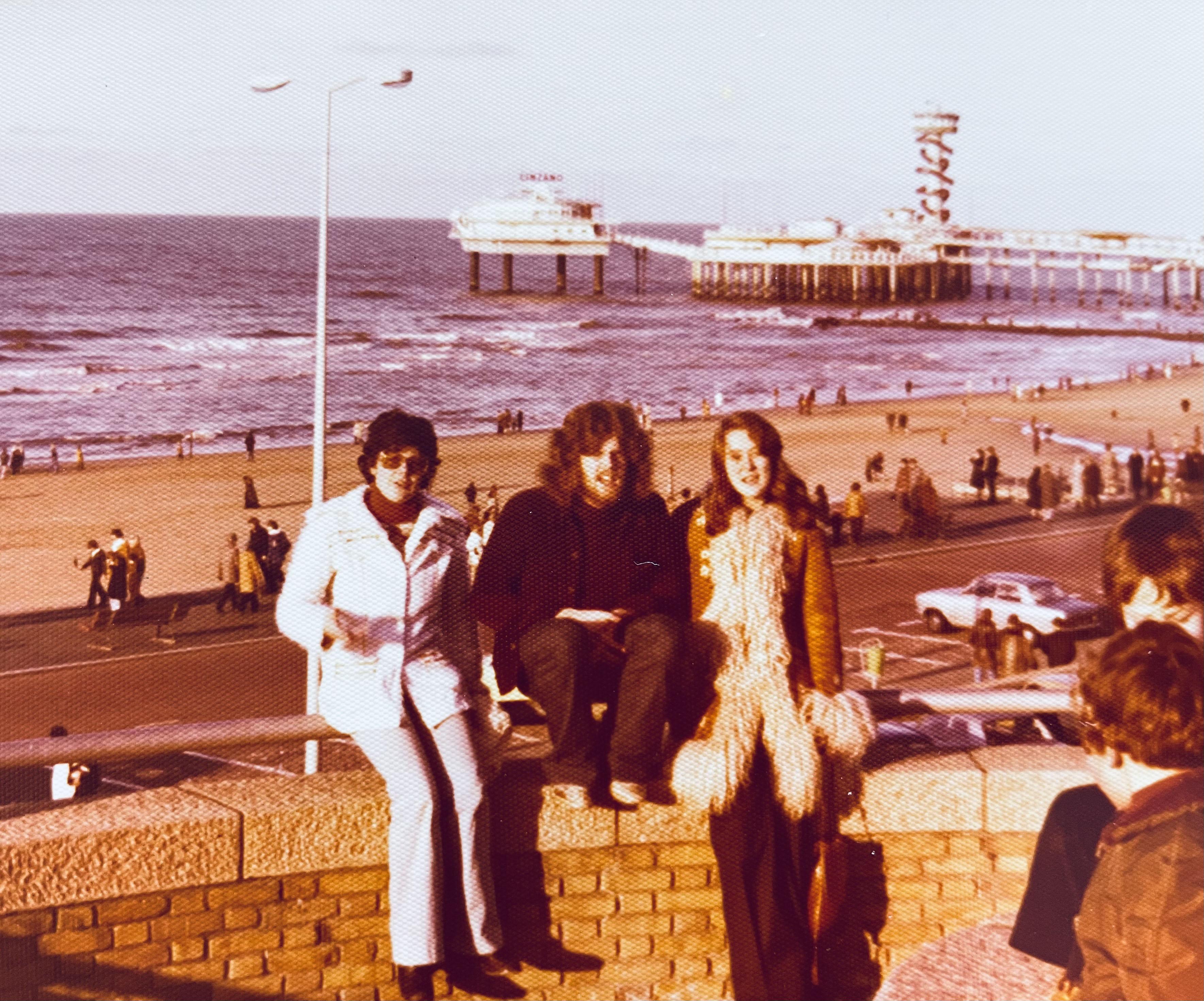
I left England on a ghastly overnight Hull to Rotterdam crossing, where the ferry heaved through the North Sea, the stench of vomit everywhere, and the ‘kitchen’ didn’t reopen for a much-needed cuppa until 9am. I arrived with a suitcase, my flight ticket home to Melbourne and £8! My boyfriend had gone ahead to organise our accommodation and had secured a job as Lighting Director at the Circustheater in Scheveningen, Den Haag. Business in The Hague was almost entirely embassies and petroleum industry. Secretarial office work was in demand, Australians had a good reputation and I was placed at ARAMCO (Arabian American Oil Co) on my first day. To secure my visa and stay, I had to hand my flight ticket over to Police/Customs officials at the Stadhuis. They held onto that ticket until I advised I was leaving. My ticket was returned and my visa status changed to the date of flight booked.

What fun it was for a girl living in Holland in the ’70s. I made friends who remain close and I still see. Work life was easy, bars were vibrant, serving saté and bitterballen as bar snacks. The Brain Box had chocolate carpet on the floor, walls and ceiling, with a large table of cheese selection. Waitresses at the Playboy bar wore black leotards with bunny ears (I danced a lot to Lady Marmalade’s Voulez-vous choucez avec moi?).  Friday nights at the British ex-pats club was wine and playing darts.

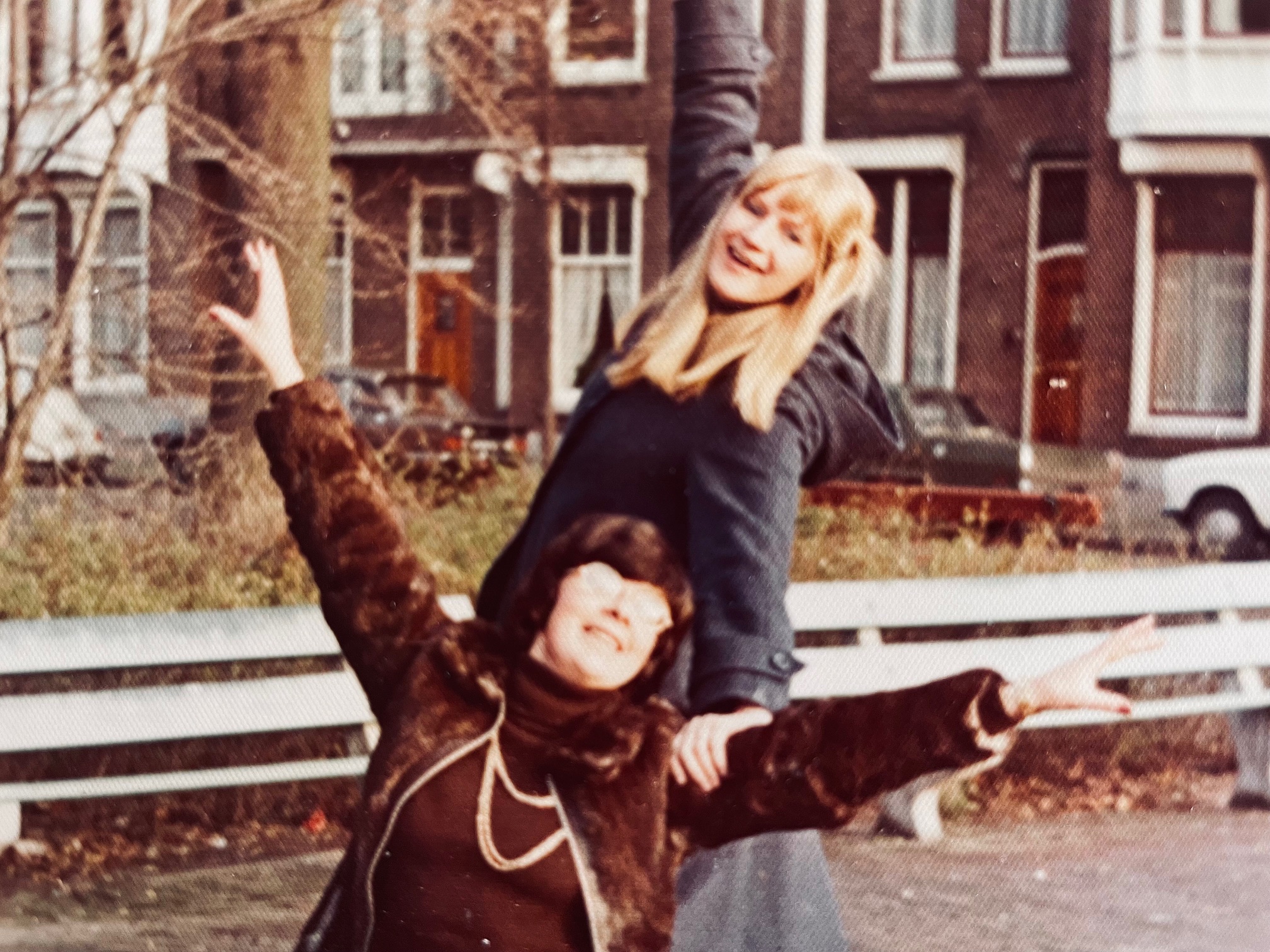
I fell in love (again) and moved into van Leeuwenhoekstraat with Karin (Dutch, but had grown-up with her family in Uganda), René (Dutch), Mimi (Swiss-French) and Patrick (Irish). Our own little ‘league of nations’.   Many happy memories. One snow-filled night, I sat on the back of Patrick’s bicycle, carrying a flagon of red wine home. I did Joke’s weekly Jazz Ballet classes, and can still remember the first ‘travelling’ steps to “Rock the Boat” (The Hues Corporation).

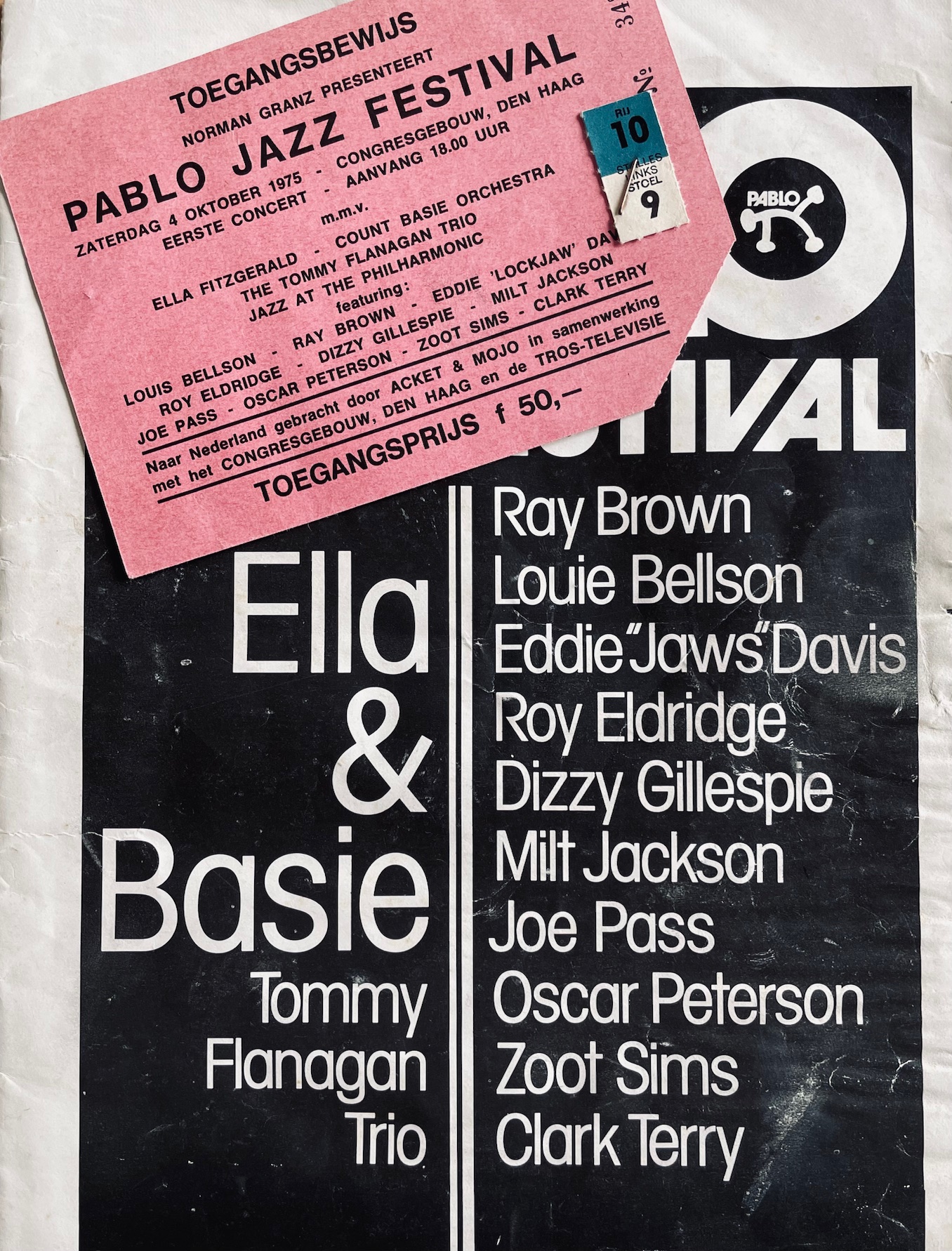
The Pable Jazz Festival was the best music concert I have ever been to. First two hours commenced with Oscar Peterson, he was joined on stage by Milt Jackson, Joe Pass, Louie Bellson, Dizzy Gillespie and more. Second half, another two hours of Count Basie, a big brass blast and ELLA FITZGERALD!!

               
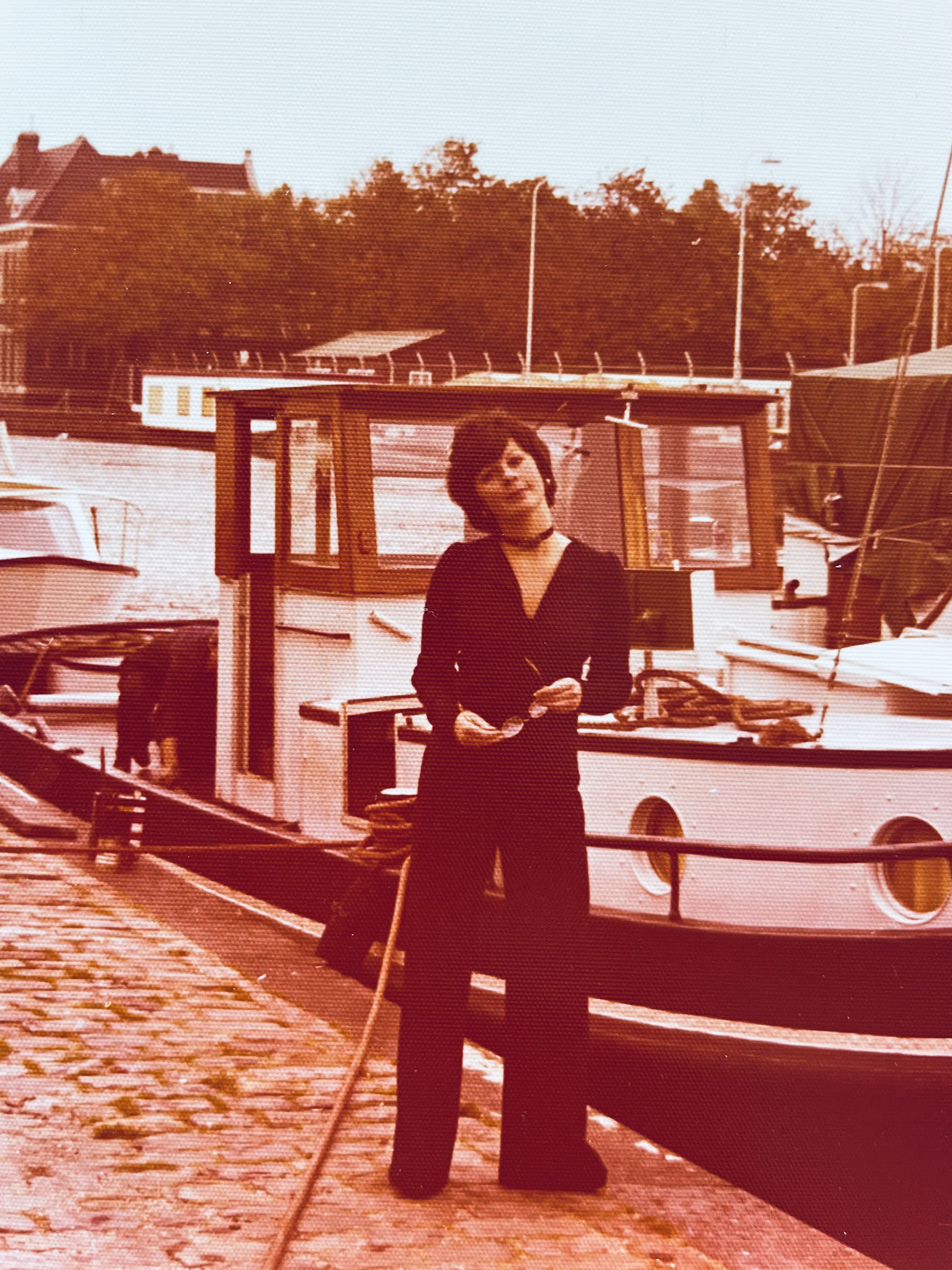
Photos from Den Haag: fun in my Fiorucci flares; local cheese vender; Scheveningen beach with René and Karin; jazz ballet teacher Joke; ticket and program from the Pablo Jazz Festival; on van Leeuwenhoekstraat.


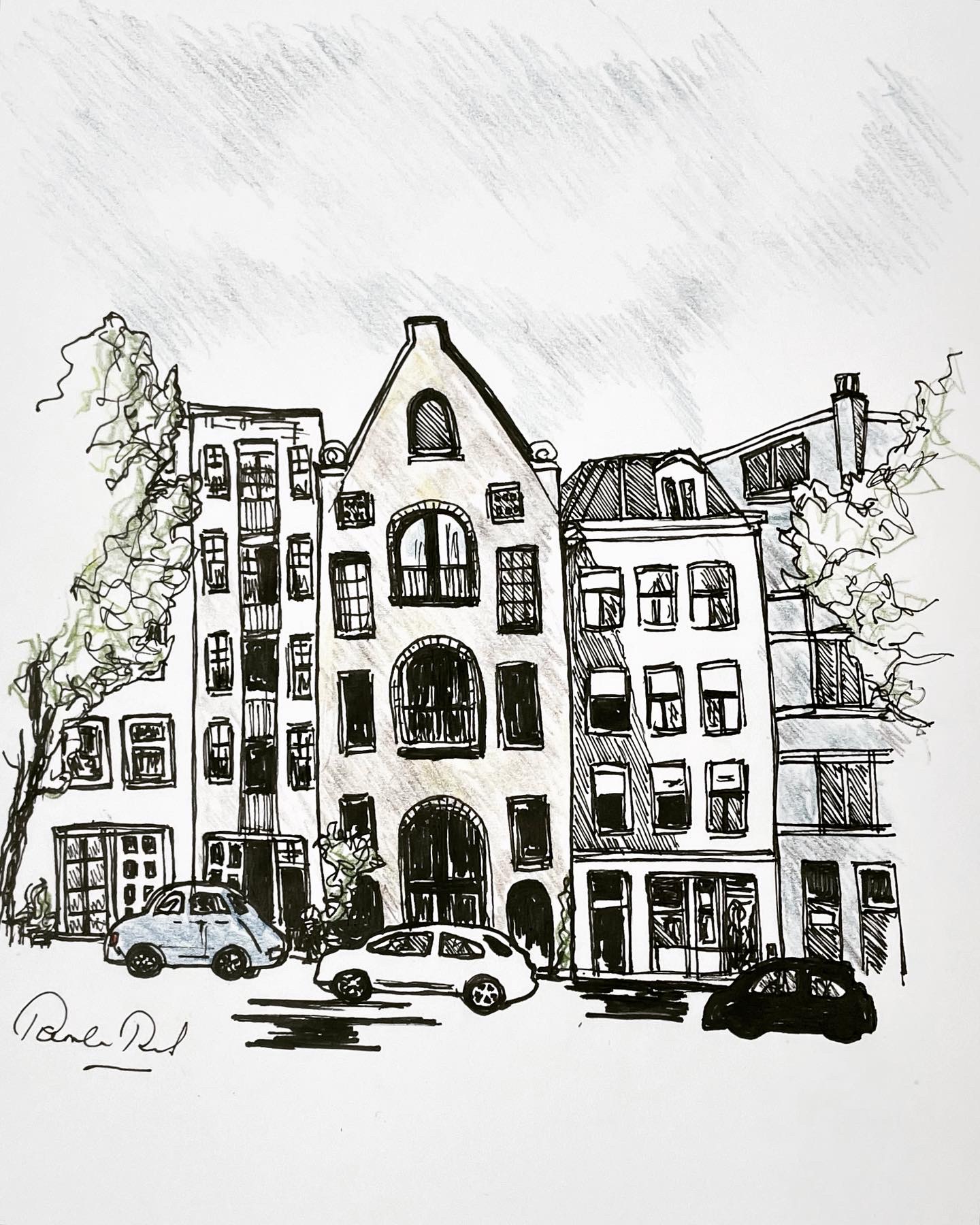
“Dancing Houses” of Amsterdam (ink pen and colour pencil) 2023

 © Photos and text Pamela Reid 2024